A closer look: In-Context Review and LQA look similar, but they are not!

The world of localization is full of small, hidden details.

Some things are deeper than they seem, and I often see between in-context review and LQA in the world of Localization. They might seem the same, but if we scratch beneath the surface, we'll see they're not what they seem.

In this post, I want to focus on explaining the differences between in-context review and LQA, which is something I see being confused quite frequently, and although the tasks are similar ... they are not the same.

Localization's impact on the awareness phase in the Customer Journey

The awareness phase, the first step in any customer journey, introduces potential clients to our company, product, or service in a new market. Despite its importance, localization is often overlooked here. Neglecting localization while entering a non-English-speaking international market means missing a key opportunity to build trust, establish a strong presence, and effectively connect with a global audience right from the start

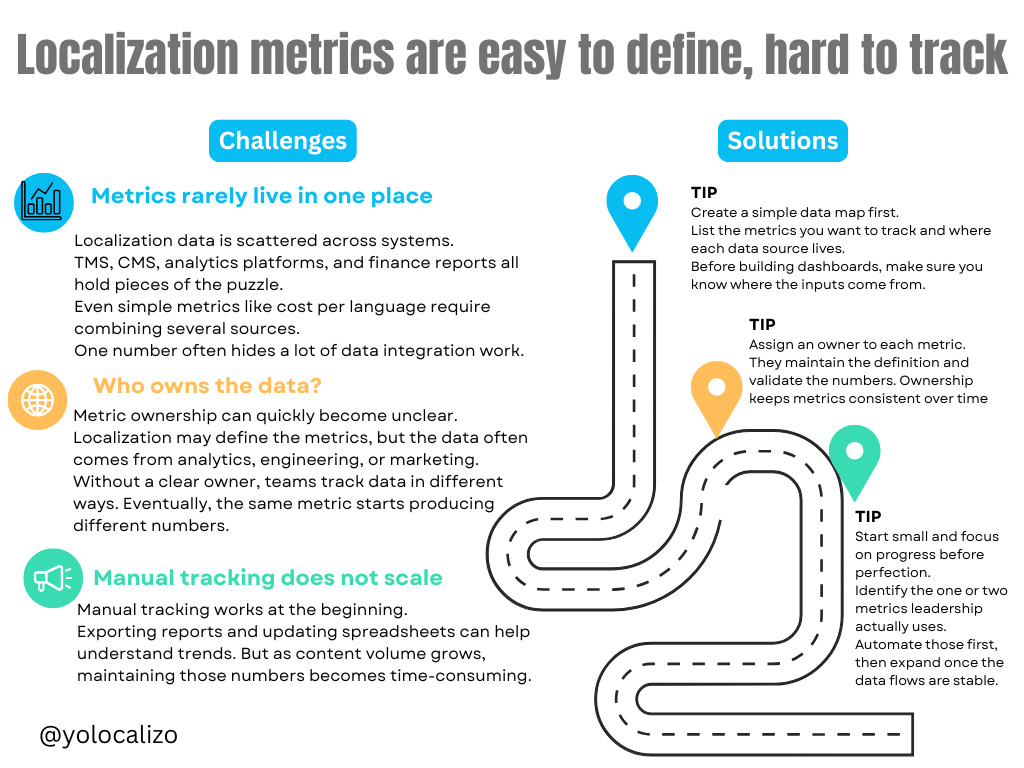
Common Localization KPIs pitfalls

I'm passionate about Localization metrics, but it can be frustrating. We live in a data-rich world, allowing us to measure our impact better. However, this data abundance brings challenges when building a Localization metrics system.

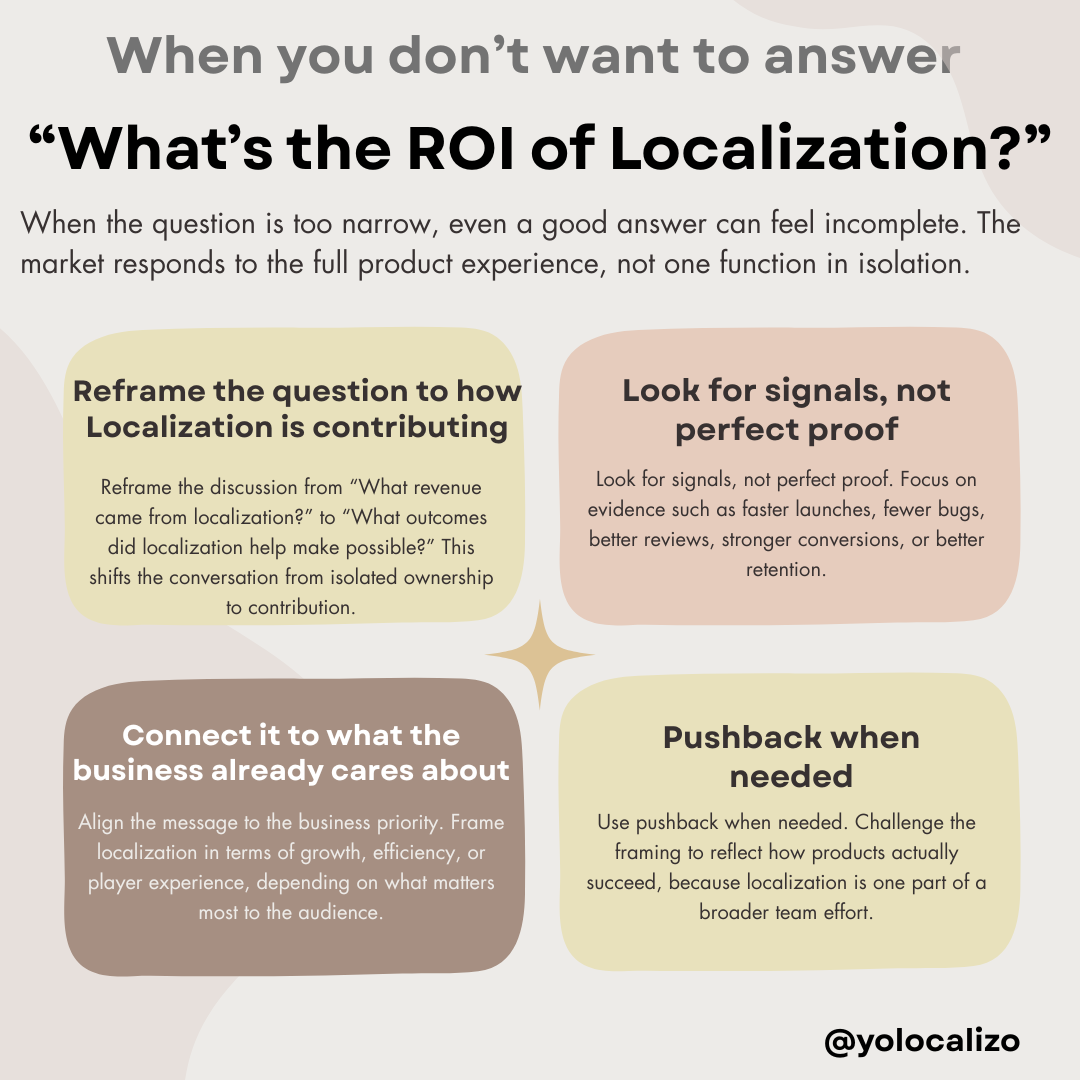
In my experience, two main pitfalls emerge (but they are not the only ones 😅). One is overemphasizing Localization ROI, which can lead to unproductive discussions. The other is tracking effort-related KPIs without translating their impact on company success into terms that matter to leadership and product owners.


Knowing when to walk away from a Localization client

What happens when we can't say NO to clients because we need them, and their payments are essential to meet the company's financial goals?

What happens when an aggressive client disrespects an LSP because they know that the thousands of euros they're paying to localize their product are vital to the LSP's bottom line?

 In this blog post , I reflect on the most challenging moments in my career in the localization industry and provide some tactics that might help us handle the emotional aspect when it's time to end a client relationship.

Globalization Project Managers: tasks they do beyond just moving files for translation

A Globalization/Localization Project Manager is responsible for making sure a digital product works well in different languages and cultures. They do this by managing projects, setting goals, handling money, and planning how to work with language experts.

This might be the part of their job you see the most, but there are two other really important things they do that many people don't know about.

Are we solving the problems we need to solve?

The professionals of the Localization industry are usually always solving problems and putting out fires ☺️ but how do we know if we are solving the problems that we really have to solve? How do we know that we are correctly defining the problem to be solved?

How to define a problem correctly, some thoughts to focus on the right problem to solve; happy Sunday/week everyone!!

LSP culture and why it matters to Localization buyers

Imagine a world where the most crucial aspect of an RFP is not the price, flexibility, or technology offered by a language service provider (LSP), but rather the shared values and ethical standards they uphold. In such a world, what specific areas could we consider when evaluating an LSP in terms of culture and ethics?

In this post, I delved into culture and ethics, exploring the facets we can include in an RFP to investigate these areas thoroughly.

The 12-Step Guide to Bringing Your Video Game to Millions of Players

Have you ever thought about how much work goes into developing a video game? It's not just about creating a fun and visually appealing experience - there's a whole world of complexity beneath the surface. And if you want to reach a global audience, the challenge only multiplies.

Perhaps one day, ChatGPT will learn to localize and make us irrelevant 😛, but until then, I've compiled a list of 12 essential steps to help expand the reach of your video game. Localization is no easy feat, but with these steps, you'll be well on your way to breaking into new international markets and reaching millions of players worldwide.

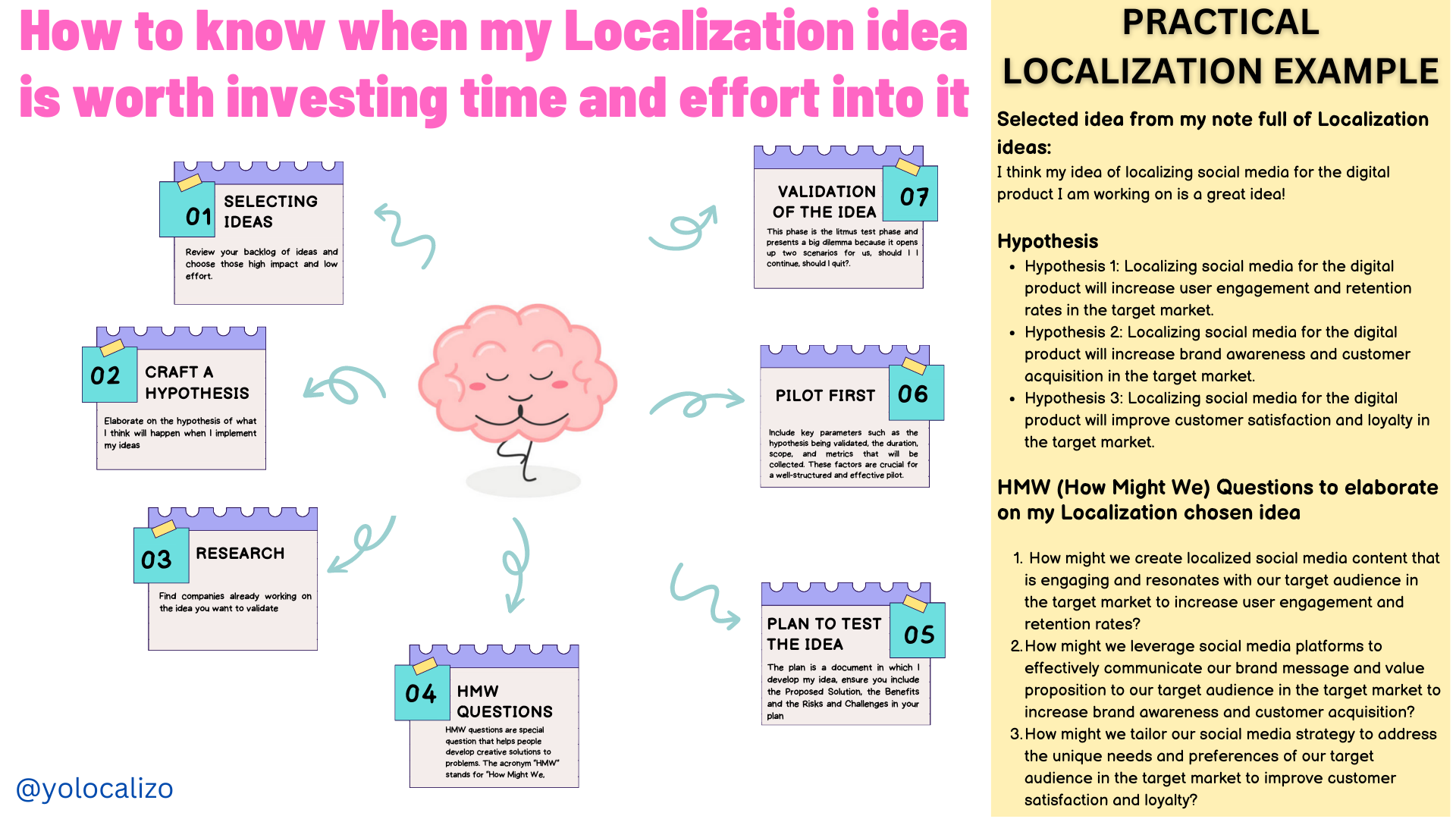
How to know when my Localization idea is worth investing time and effort into it

Localization teams within a company have contact with many stakeholders and initiatives related to localized content, customer support, entering new markets, and more. Such exposure means that if you are curious, you likely have more ideas related to Localization than you have time to pursue. And that's where the dilemma arises - how do you know if your Localization idea is worth investing time and effort into? Of all the ideas that come to mind, how do you select the best ones to pursue?