



What buyer-side teams may really need from LSPs in 2026
Last month I had a Google Meet call with a friend who owns an LSP. At some point, we started talking about AI, obviously. It is hard not to right now in this industry. He told me his company is doing better now than last year, and even better than the year before that, which was good to hear!. He told me that 2024 had been really bad. Bad enough that he had even started thinking about closing the company if things did not improve the following year. Hopefully, that decline has stopped now. What stayed with me from that call was that he was struggling to find a way to explain what the role of an LSP even is in 2026.
“I don’t know what else I can offer Miguel,” he told me, with clear frustration in his voice.
… and I understood what he meant.
He continued explaining that in some of the RFPs he had been invited to, it was no longer clear what buyers really valued. Of course, they still need language services. Of course, they still need the translation work to get done. But beyond that, the value proposition no longer feels as obvious as it used to.
I shared a few thoughts with him. Just my perspective. He has a lot of experience, so I was not trying to explain the industry to him. But I have been on the buyer side of localization services for the last (almost) 20 years, and I also spend a lot of time thinking about how AI is changing our space. So I thought I would offer a few ideas for him to consider.
That is really all this post is about. My perspective. Others may see it differently, and that is fine.
If we go back before the AI boom, the role of an LSP was easier to explain. A company had content to localize. The LSP had the people, the process, and the setup to handle that work across languages. The value was easy enough to see. You needed support, capacity, and some confidence that the work would get done properly. That part has not disappeared, but what has changed is the context around it.
From the buyer side, many of the hardest problems today are not only about getting content translated. A lot of the friction sits around the setup. Content comes from too many places. Different teams have different expectations. Tools do not always connect the way they should. Automation gets added, but not always in a way that makes the whole workflow simpler. And in many companies, the localization process has grown over time without anyone really stopping to ask whether the model still makes sense.
That changes the kind of help buyers may need.
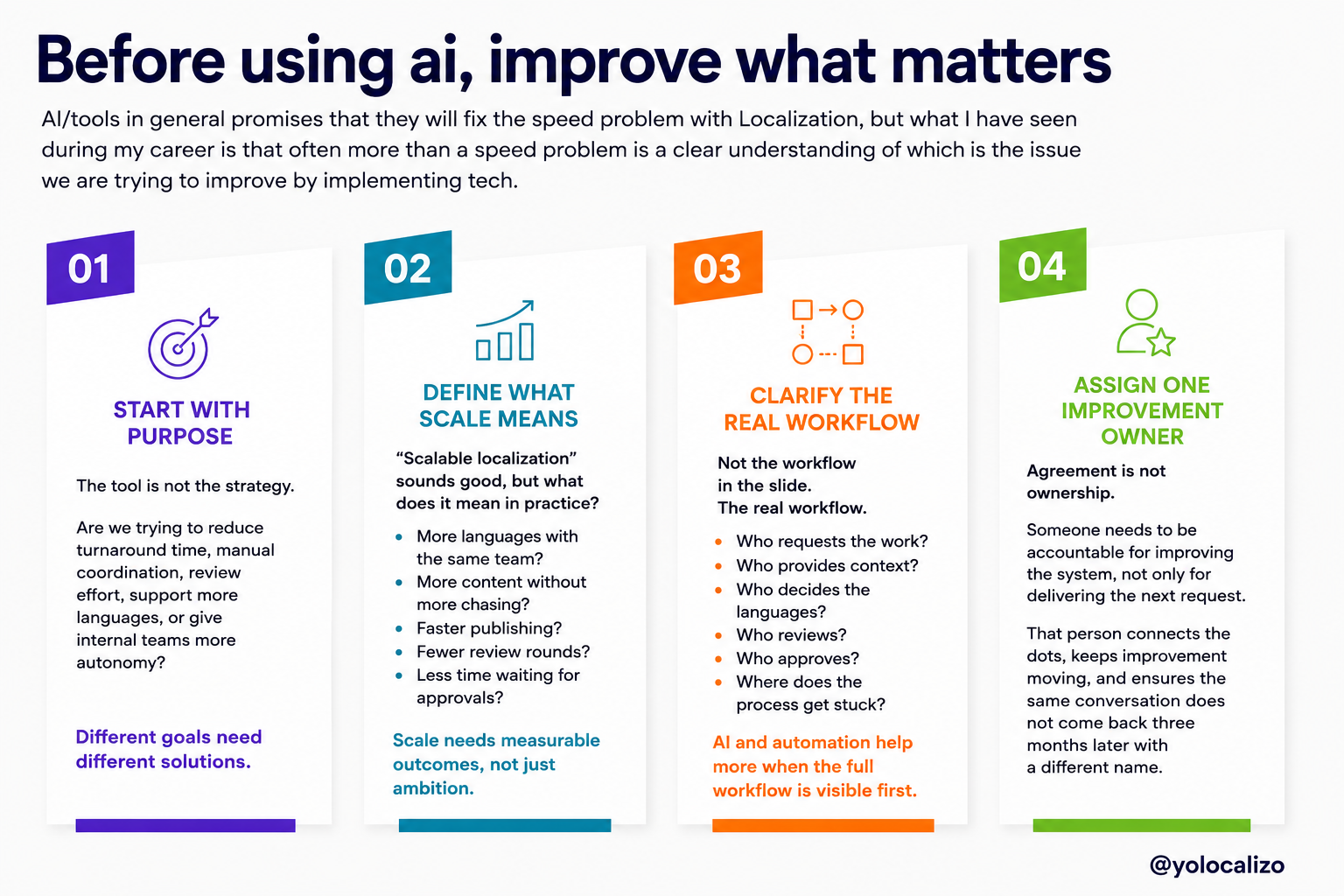
Sometimes the real issue is not the translation work itself. It is the setup around it. The workflow is messy, ownership is unclear, and teams are still patching things manually because the systems do not connect as they should. Then AI gets added on top of that, which helps in some places but also exposes how fragile parts of the process already were. And on top of that, many teams are still trying to decide where human review actually adds value and where they are just repeating effort because nobody has really challenged the old model.
Many buyer-side teams are no longer seeking only execution.
They may still need execution, of course. Quality, reliability, and delivery still matter. Nobody wants a provider that creates more work internally or complicates the process, but execution alone cannot be positioned as the primary value story.
I believe this is the core tension my friend faces.
If an LSP says, “We can handle volume, we can move fast, we have the resources,” that is still relevant. I am not dismissing that. But in some buyer conversations, I am not sure that part carries the most weight anymore. Because in the end, every LSP is saying that, so that’s not differentiating value anymore
That is where I think the LSP's role may need to evolve (or at least be explained differently)
Not every buyer wants the same kind of support. In some cases, strong execution is enough. In others, capacity is still the main need. But I do think more buyer-side teams are starting to value something else as well: partners who can help make the setup around the Localization work easier to run, not only complete the translation itself, but also provide support with the workflows, with the files that go from content creators to translators and back to the software.
This “something else” will not look the same for every buyer. For some, it may be help connecting systems better. For others, it may be fewer handoffs or better conversations around automation, quality, or routing. Sometimes the most useful thing is much simpler than that: helping untangle a process that has become too complicated.
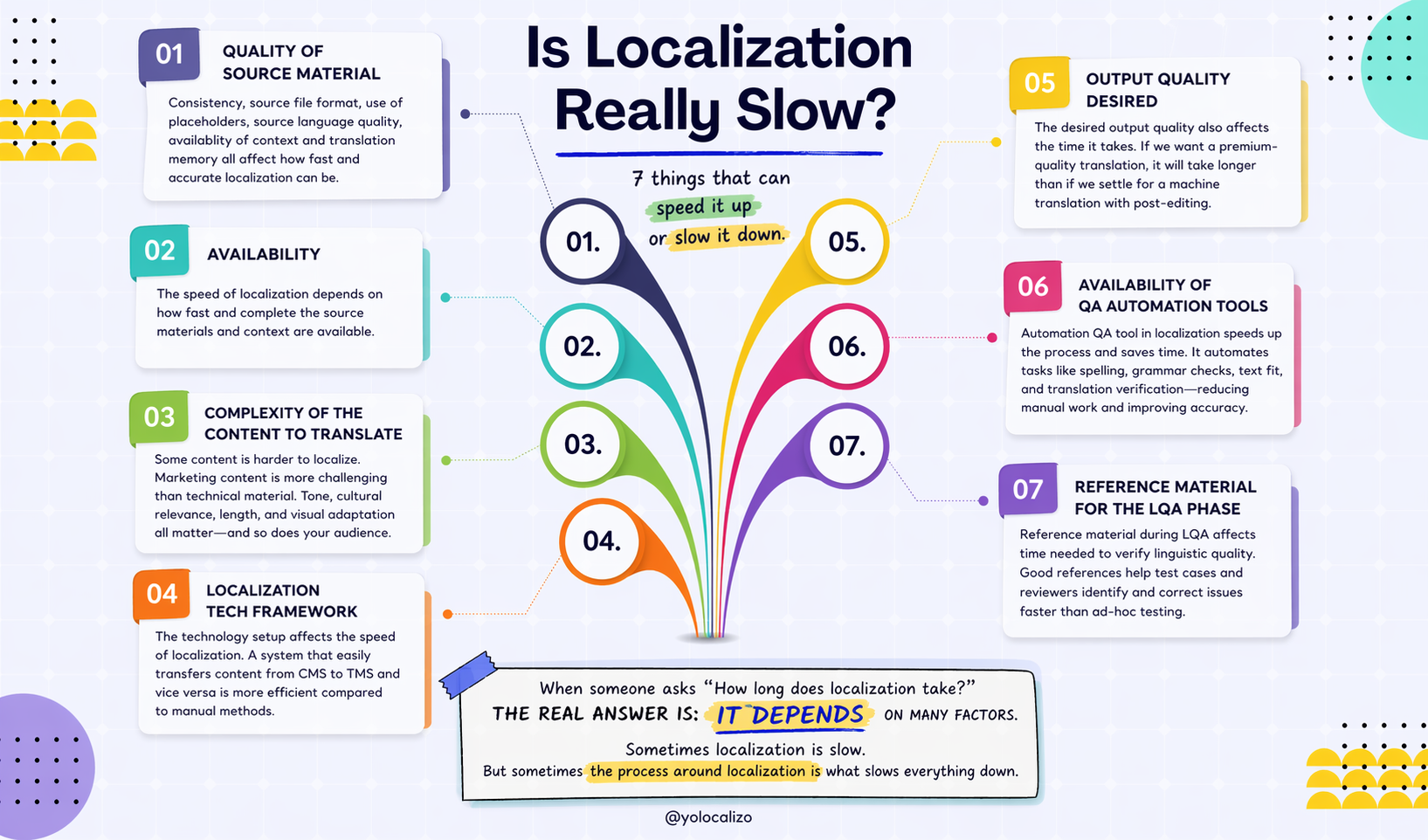
From the buyer side, that kind of help can be very valuable. When the setup is already messy, adding more execution capacity does not always fix the real issue. Sometimes it just makes a broken machine move faster
And maybe that is where the challenge starts.
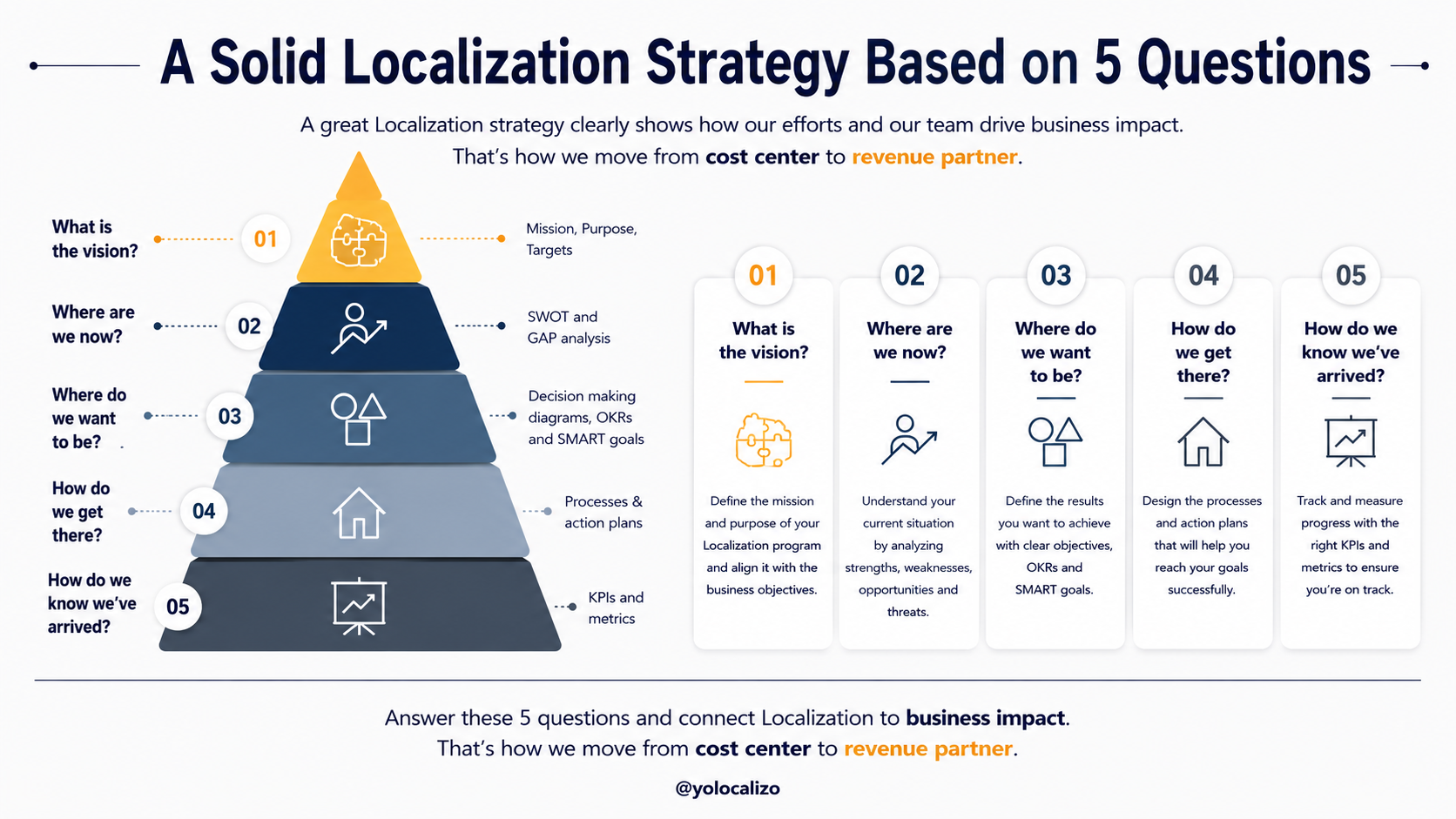
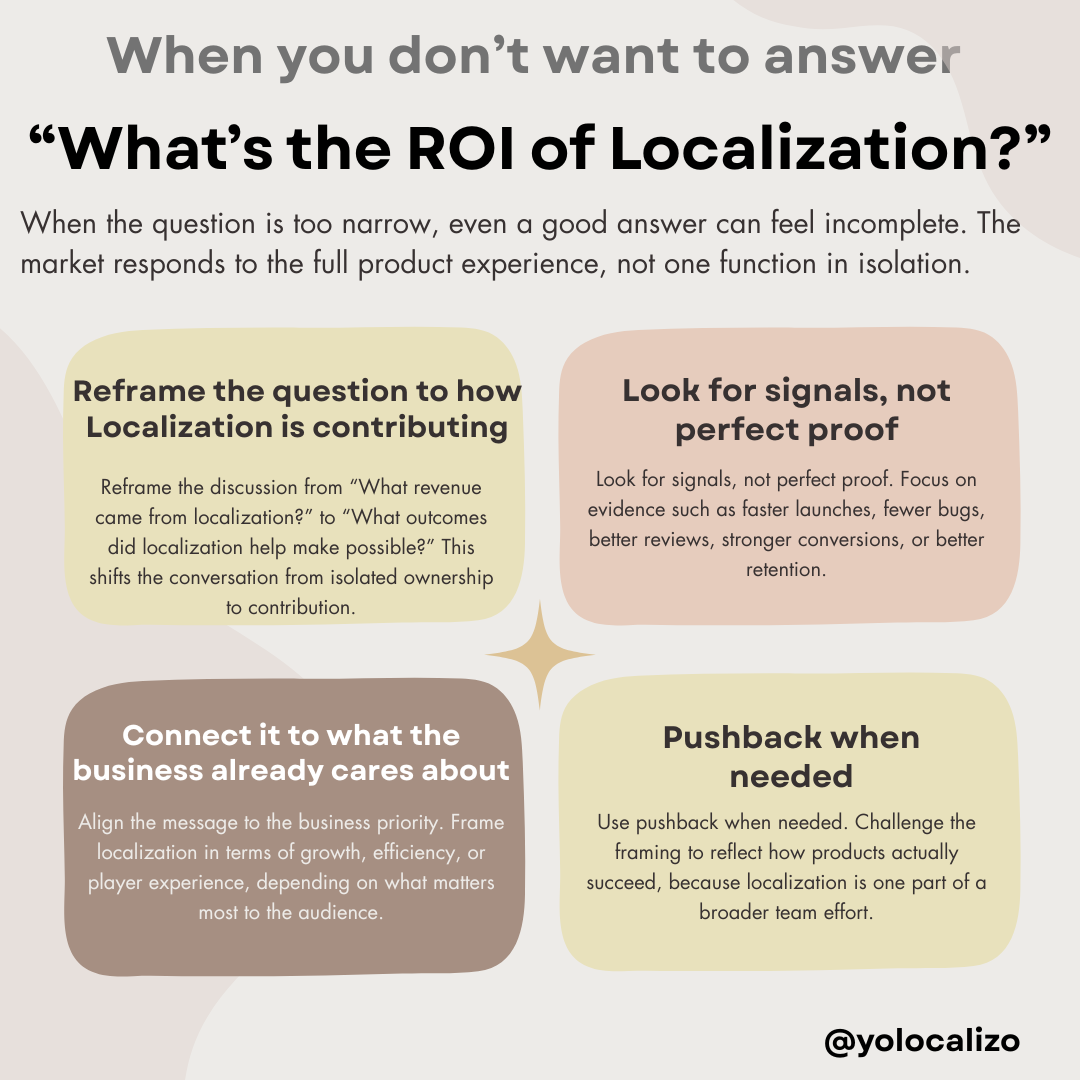
Click HERE to download the infographic
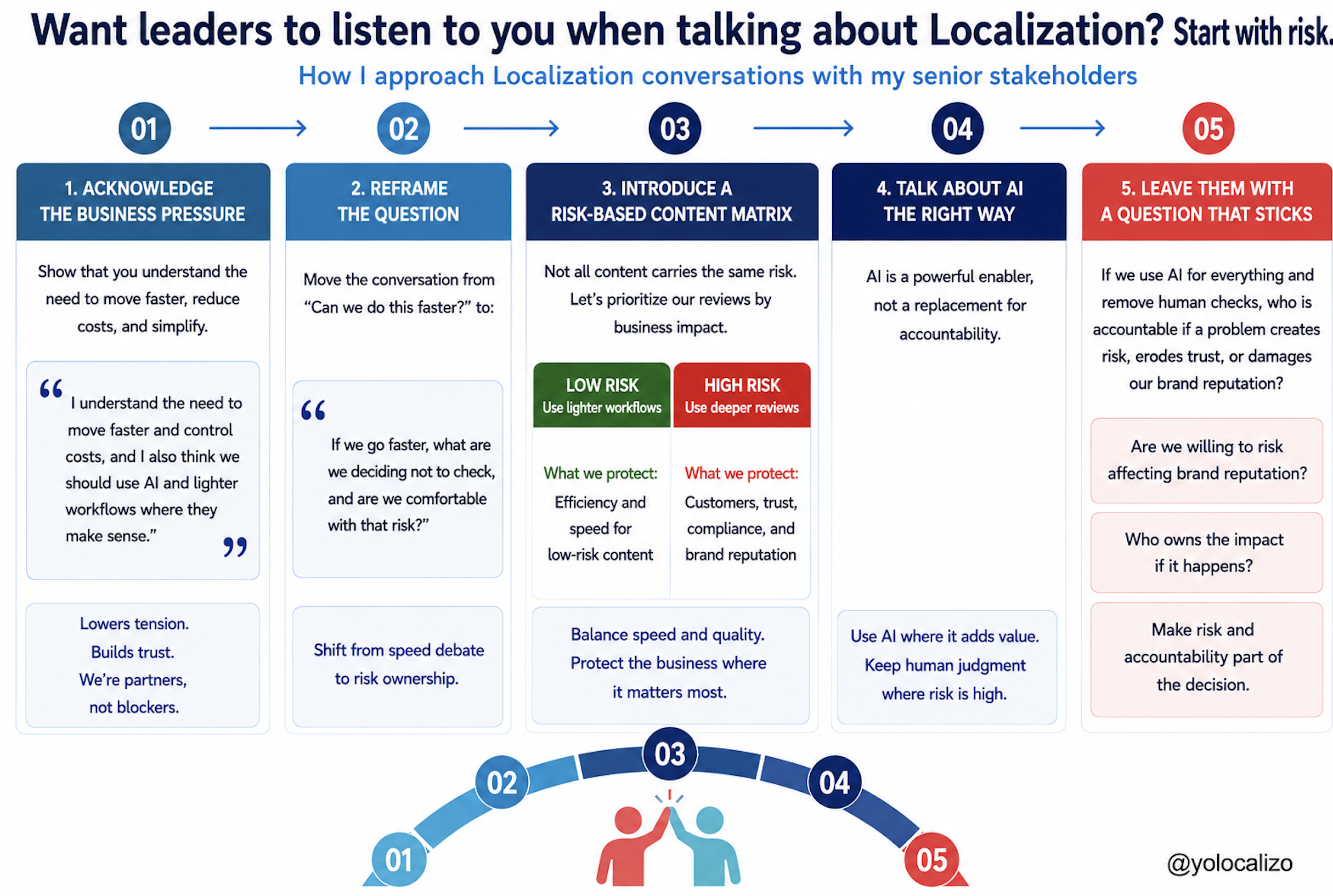
If this is where the value is moving, then the next question is how an LSP explains that value in a way buyers can quickly understand. It is hard to explain simply. The number of words translated is easy to explain. Delivery capacity is easy to explain. Rates are easy to compare. But helping a client reduce friction in a multilingual operation is not as simple to package. It requires a better understanding of the client’s environment. It requires better questions. It also requires seeing the process around the work, not only the task itself.
I do not mean every LSP now needs to become a consulting company. I do not think that is realistic, and I am not sure every client wants that either. But I do think providers who understand workflows, systems, automation choices, governance issues, and the trade-offs behind them may have a better chance of staying relevant in a Localization industry that is moving quickly.
Buyers are changing; even when an RFP looks familiar on paper, the underlying expectations may have shifted. A buyer may still be asking for language services, but what they really value may now include things that were not always front and center before. Flexibility. Better understanding of the client-side setup. Smarter use of automation. Simpler workflows. Less friction.
That is why I kept thinking about what he said. It was not really a question about whether LSPs still matter. It was more about what buyers will actually value from them going forward.
My view is that buyers will still need strong execution, of course. But that alone may not be enough anymore. The providers that stand out will likely be those that help clients make the entire setup work better. And that’s the tricky part, because that is not as easy to sell as “we can handle volume.”
Final Thoughts
After that call, I kept thinking that his question was bigger than his company. It feels like part of a broader shift in the market. The work is changing, the tools keep changing, and buyer expectations are moving with them. So the value story for LSPs probably needs to change too.
@yolocalizo
Many companies claim to be customer-centric, but too often that promise stops at English. Surveys and focus groups are run in the US or UK and treated as if they represent the entire customer base, leaving most global customers unheard. In this post, I share a practical framework 5 audit questions to help leaders test if their strategy is truly customer-centric or just a slogan.