Featured Posts
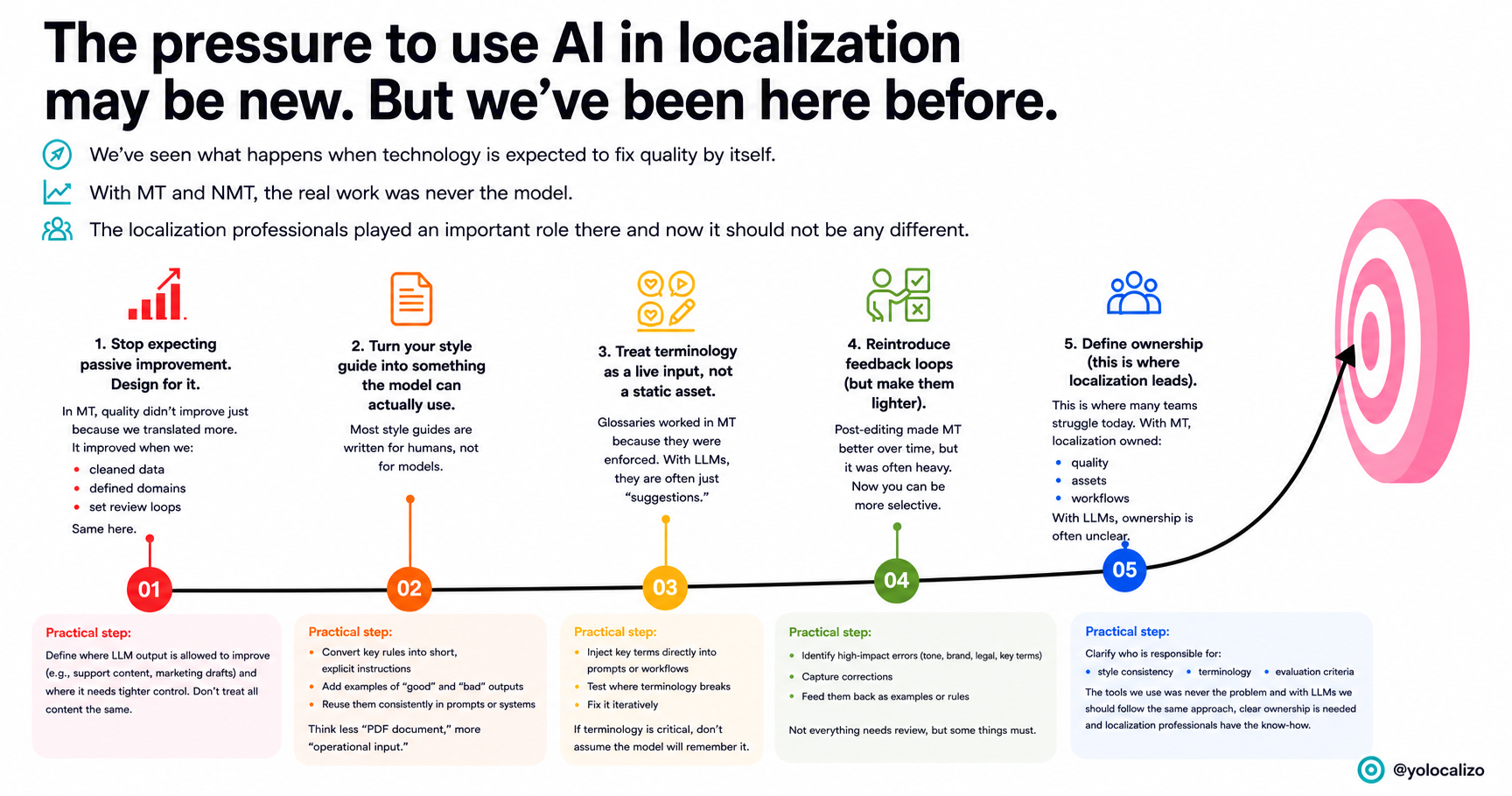


LLMs don’t learn your brand style just because you use them more. They improve when someone guides them, feeds them with examples, corrects them, and owns the outcome. In this blog post I reflect on how we can create a strategy to do that
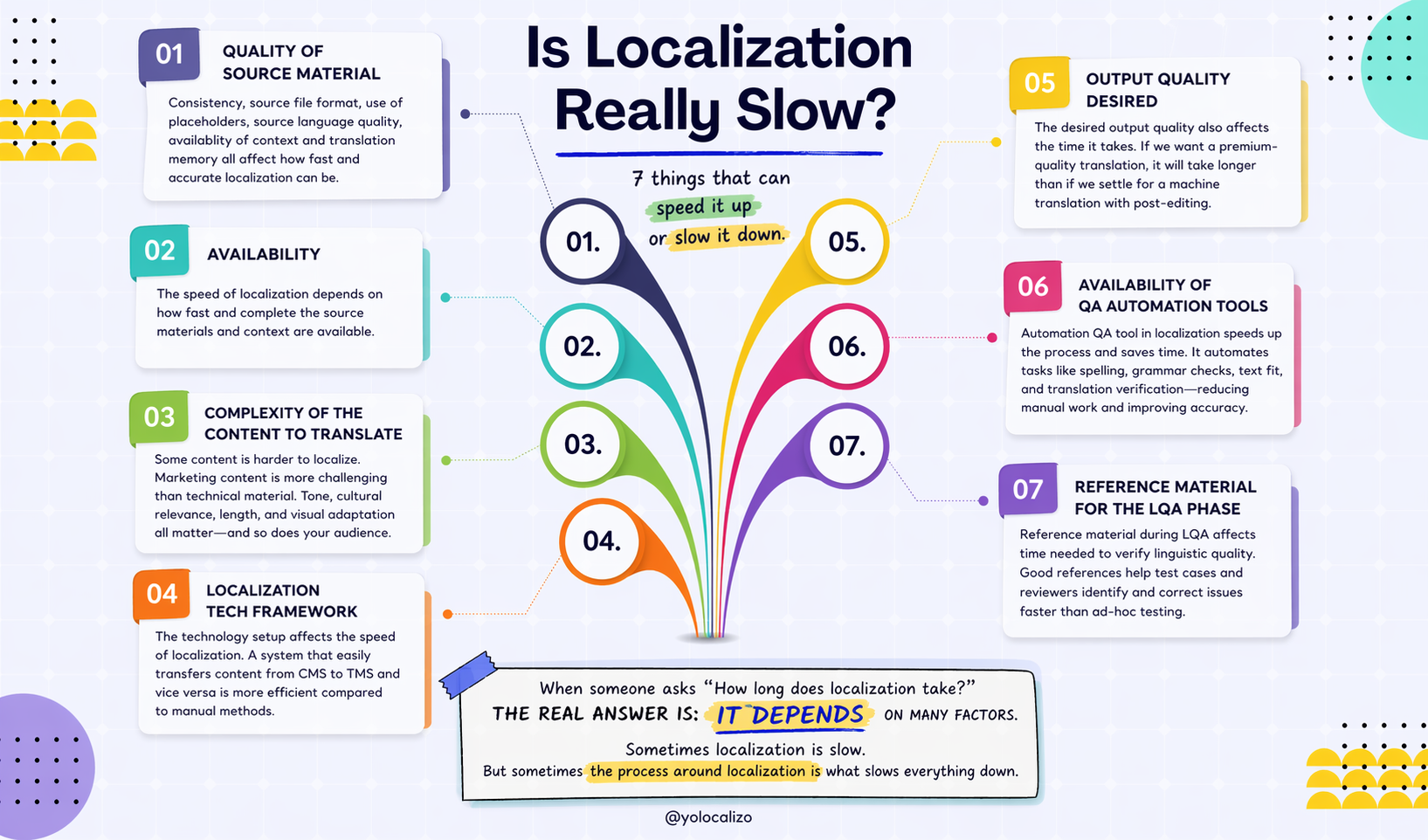
Several factors affect the duration of localization for a digital product, including translators' availability and the technology setup level. This blog post explores the various elements that impact the amount of time needed for product localization.
In some RFPs today, it is no longer so clear what buyers really value from LSPs. This post explores why. Based on my experience on the buyer side, I share why the real need may be shifting from pure execution toward something harder to explain, but often more useful in practice.
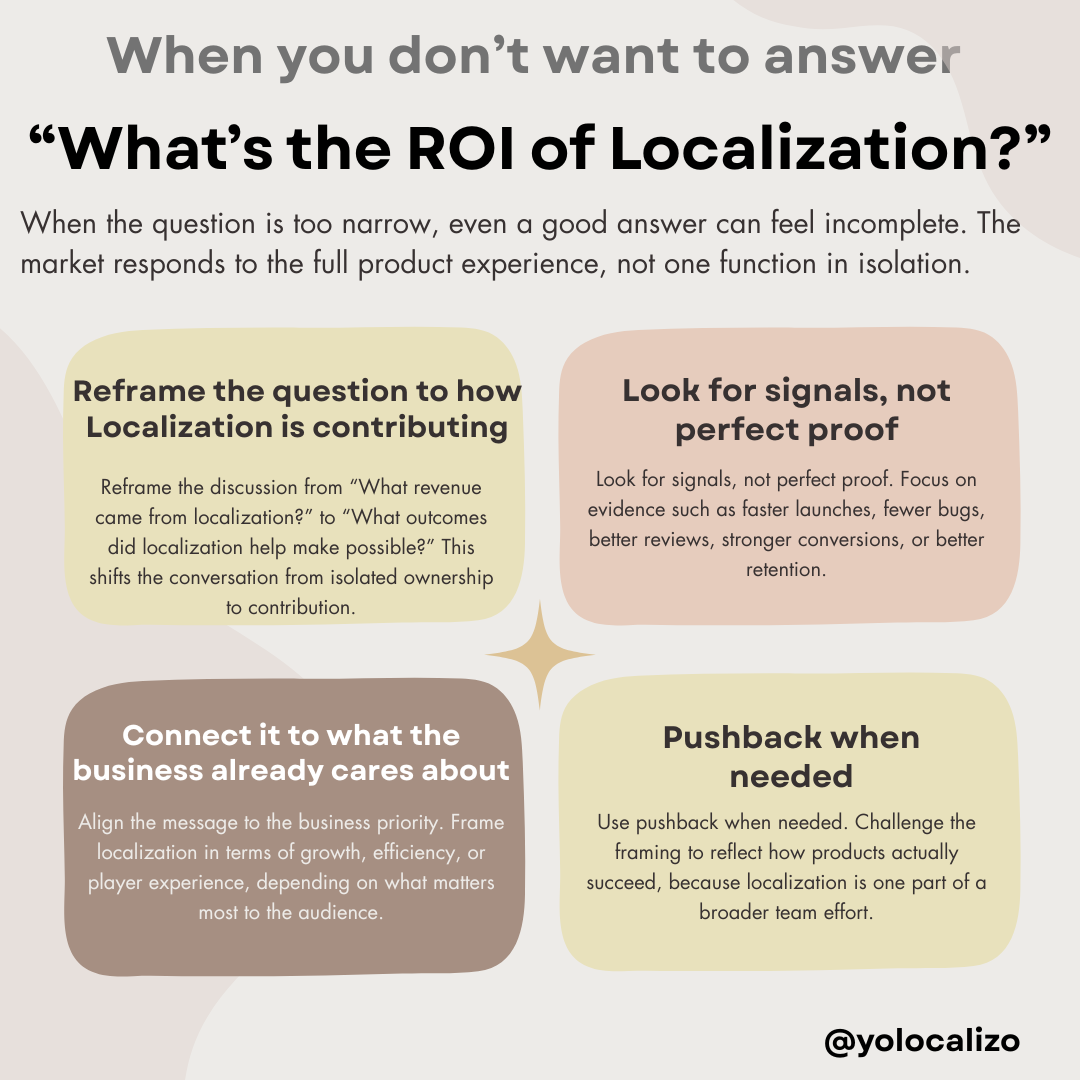
What do you do when someone asks for the ROI of localization and you know the question is too narrow from the start? In this post, I reflect on why I stopped trying to prove isolated ownership and started talking more honestly about contribution.
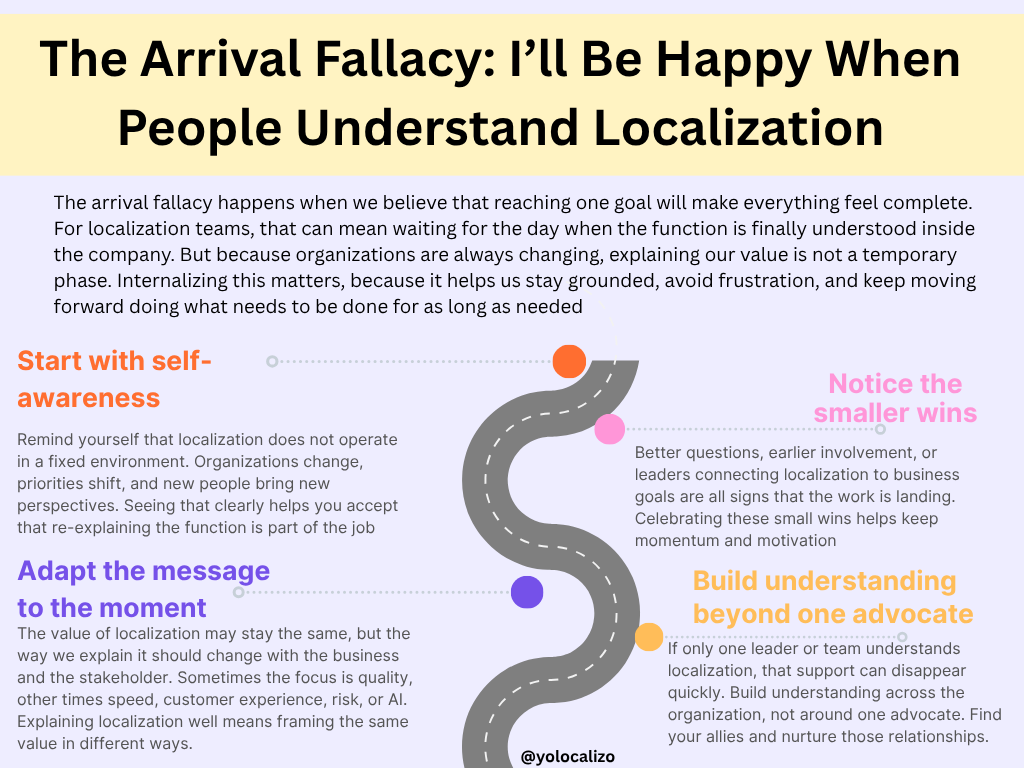
Reading The Myths of Happiness reminded me of the arrival fallacy: the belief that once we reach a certain goal, everything will finally feel solved. In localization, that can look like waiting for the day when people will finally understand what we do. But organizations keep changing, so that moment may never fully come. And maybe accepting that is exactly what helps us stay grounded, avoid frustration, and keep moving forward.
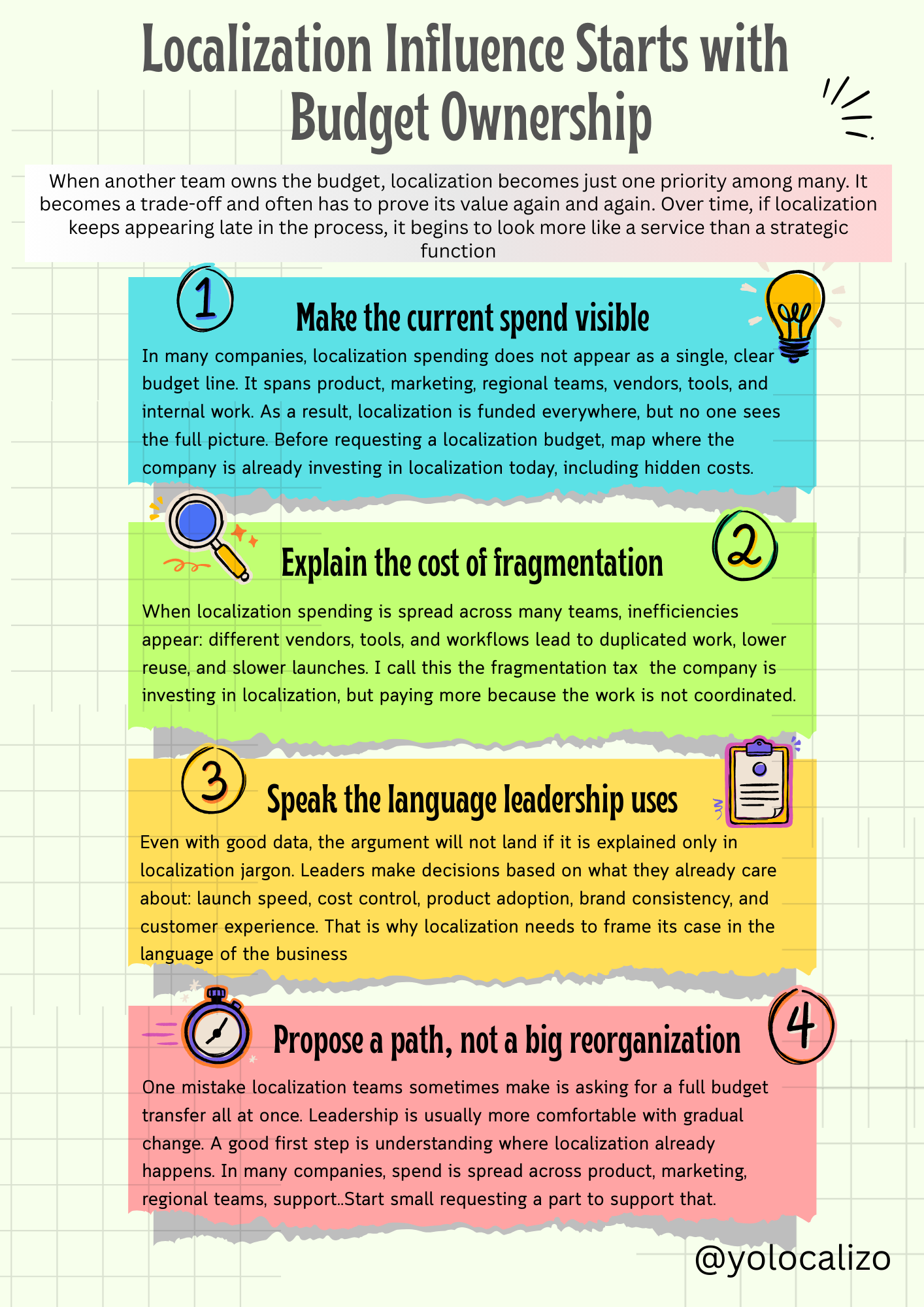
In many companies, the localization budget does not sit with the localization team. At first, that may seem like a small detail. But over time, it changes how localization influences strategy
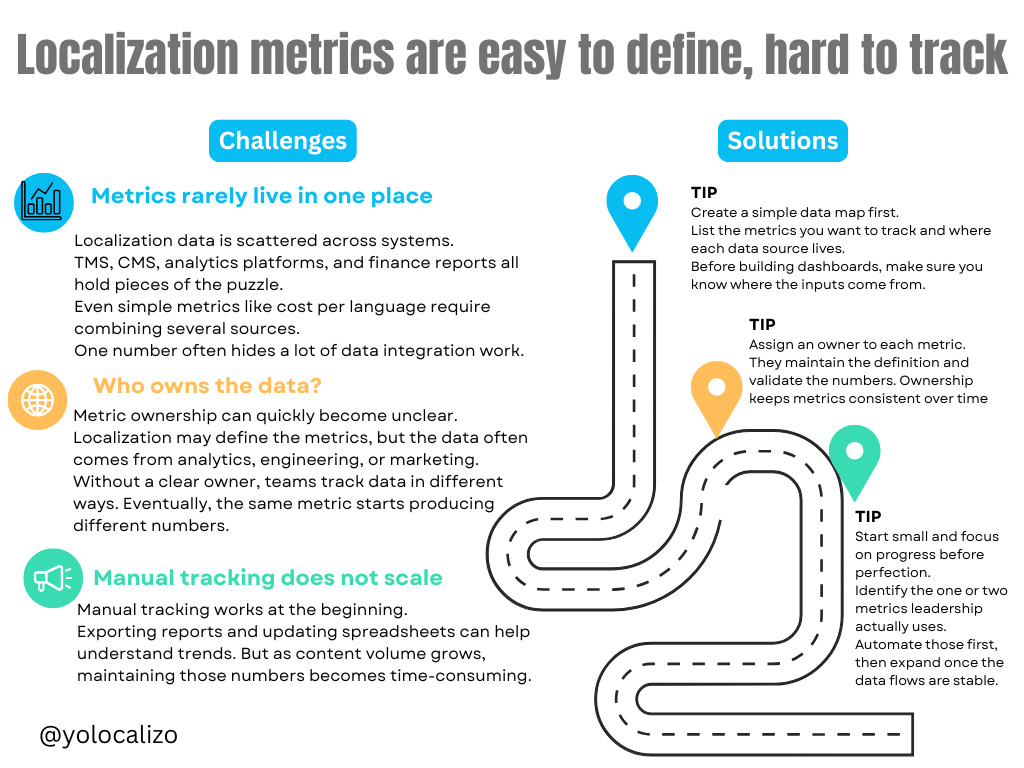
Defining localization metrics is relatively easy. In many cases, a team can write a reasonable list during a workshop, like the ones I mentioned above, or during a strategy session. The conceptual part of what to track and why rarely takes long. The real difficulty appears later: HOW you actually obtain those metrics.
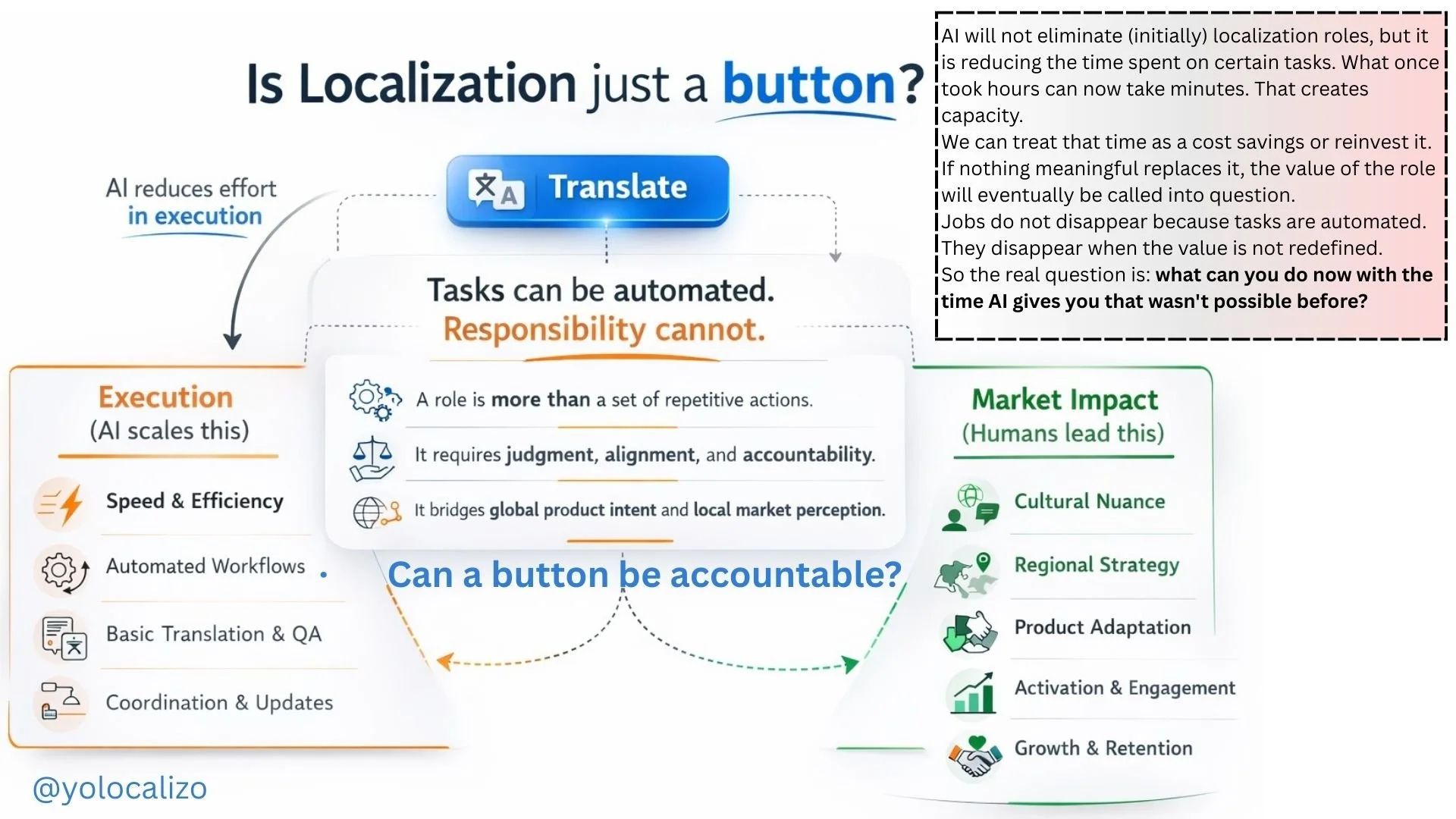
AI will not eliminate (initially) localization roles, but it is reducing the time spent on certain tasks. What once took hours can now take minutes. That creates capacity.We can treat that time as a cost savings or reinvest it. If nothing meaningful replaces it, the value of the role will eventually be called into question.Jobs do not disappear because tasks are automated. They disappear when the value is not redefined.
So the real question is: what can you do now with the time AI gives you that wasn't possible before?
The world of localization is full of small, hidden details.
Some things are deeper than they seem, and I often see between in-context review and LQA in the world of Localization. They might seem the same, but if we scratch beneath the surface, we'll see they're not what they seem.
In this post, I want to focus on explaining the differences between in-context review and LQA, which is something I see being confused quite frequently, and although the tasks are similar ... they are not the same.

“Welcome to my blog. The space where I document my passion about Localization, Project Management and Leadership”
As localization professionals, we spend our lives decoding text, code, and user interfaces. We meticulously adapt software layouts for text expansion, check variables for date formats, and ensure that a brand's written message lands perfectly in a new locale.
But what happens when the product being localized isn't an app or a website?
What happens when the product is a live human being speaking on a stage?
Welcome to Decoding Cultural Communication, the newest section of Yolocalizo. Here, we are stepping out of the translation management systems and onto the podium. We are merging the rigorous frameworks of the localization (L10n) industry with the actionable best practices of public speaking to pioneer a new discipline: Oral Localization.
The Massive Gap on the Global Stage
Most public speaking coaches give the same standard advice: "Make eye contact, project your voice, and start with a funny joke."
In a multicultural world, that advice can be a recipe for disaster. A joke that kills in New York might cause dead silence in Tokyo. Heavy hand gestures that signal confidence in London can look aggressive or vulgar in Dubai. Text-heavy slides that work for detail-oriented, low-context cultures will completely overwhelm high-context, visual-first cultures

This post explores the key differences between working on the buyer versus the provider side of the localization industry. While there are some tasks common to both, others vary significantly in areas such as people management, operations, strategy, and metrics. The article breaks these tasks into four categories, providing examples for each to highlight these distinctions