LOCALIZATION IS USER EXPERIENCE

Is there anything more human than language?

Is there anything more user-centric than giving the user the product in their native language?

There is a better way to approach it, and that way is to understand that Localization is User Experience.

And in this post, I explain why (and how to do it!)

It's time to make LQA design official

Building a digital product is an iterative process that includes several phases. Different localization activities to a greater or lesser extent are carried out throughout the different phases. One of these activities is Localization QA (LQA). LQA is traditionally done in the deployment phase; however, it is too late in most cases.

This is how Localization is NOT an afterthought

In this post, I analyze the different phases necessary to develop software. At the top, we can find a summary of the typical tasks/deliverables that the Product Development team performs. In the bottom part, we can find the different Globalization activities needed to create a digital product Global ready from the beginning. They are executed in parallel. Working side by side. Not as an afterthought


Internationalization engineer Empowering possibilities through innovation!

The role of the Internationalization engineer is one of the most unknown and complicated jobs in the #localization industry, and yet it is one of the most important because thanks to their work, they contribute to making the localization phase more accessible.

For those of you who like programming, technology and are interested in languages, specializing in this area can be an excellent option to build a promising future, as it is a role in high demand.

Less of Culture Fit and more of Culture Sum

Culture Fit can lead to misunderstandings if it is not explained well because it can be interpreted as only hiring similar people. That's why I believe that better than Culture Fit is to embrace a Culture Sum mindset. 

Culture Sum is all about understanding that people who are different can achieve great things together by relying on shared values.

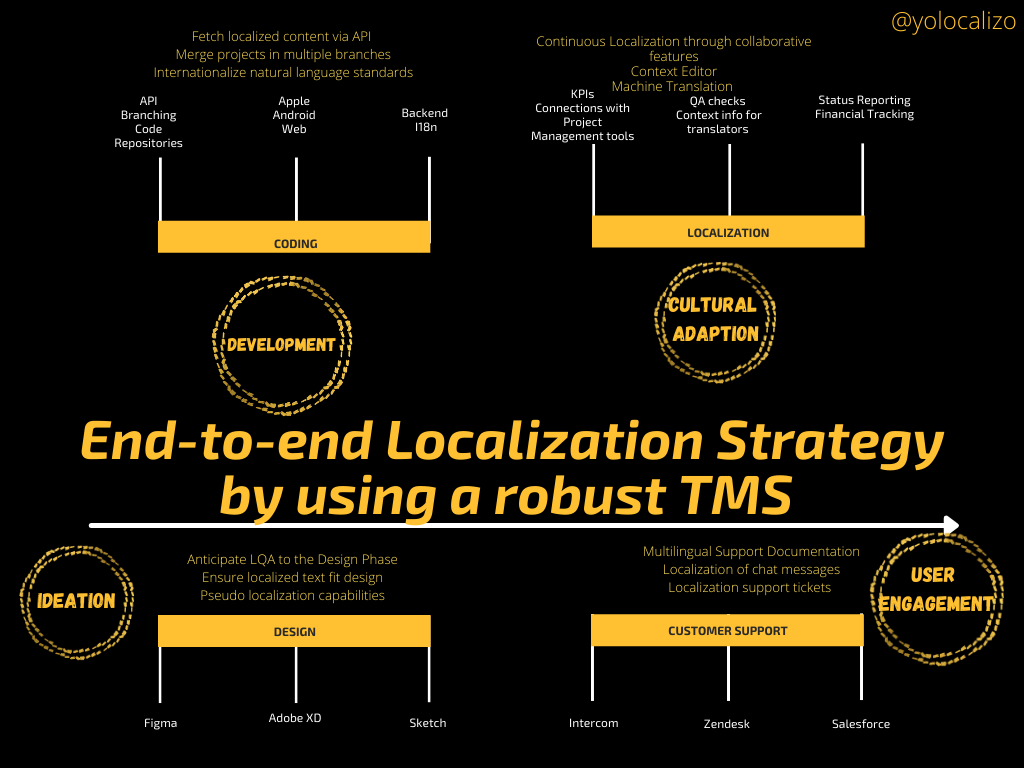
How a TMS can be your silver bullet to take your Localization strategy to the next level

Nowadays, the software has reached a very high level of complexity and it is necessary to have localization tools that allow us to keep up with it.

Without the right tool, without the right connectors, your localization strategy will remain stagnant, and the perception that has accompanied the localization industry since time immemorial as a "painful and slow" process will not be mitigated. A good TMS may be the component you need to give the visibility your localization team deserves.A good TMS may enable you to offer an end-to-end solution 

4 unexpected benefits you might get by including internal QBRs in your Localization strategy

One of the main obstacles that localization industry professionals often face is the lack of internal visibility of our work or the impact on its bottom line. and the truth is that QBRs is an excellent tool to add to your arsenal of Localization tools/processes that can help you to Strengthen the partnership, Foster relationships and Highlight localization team's impact across your organization