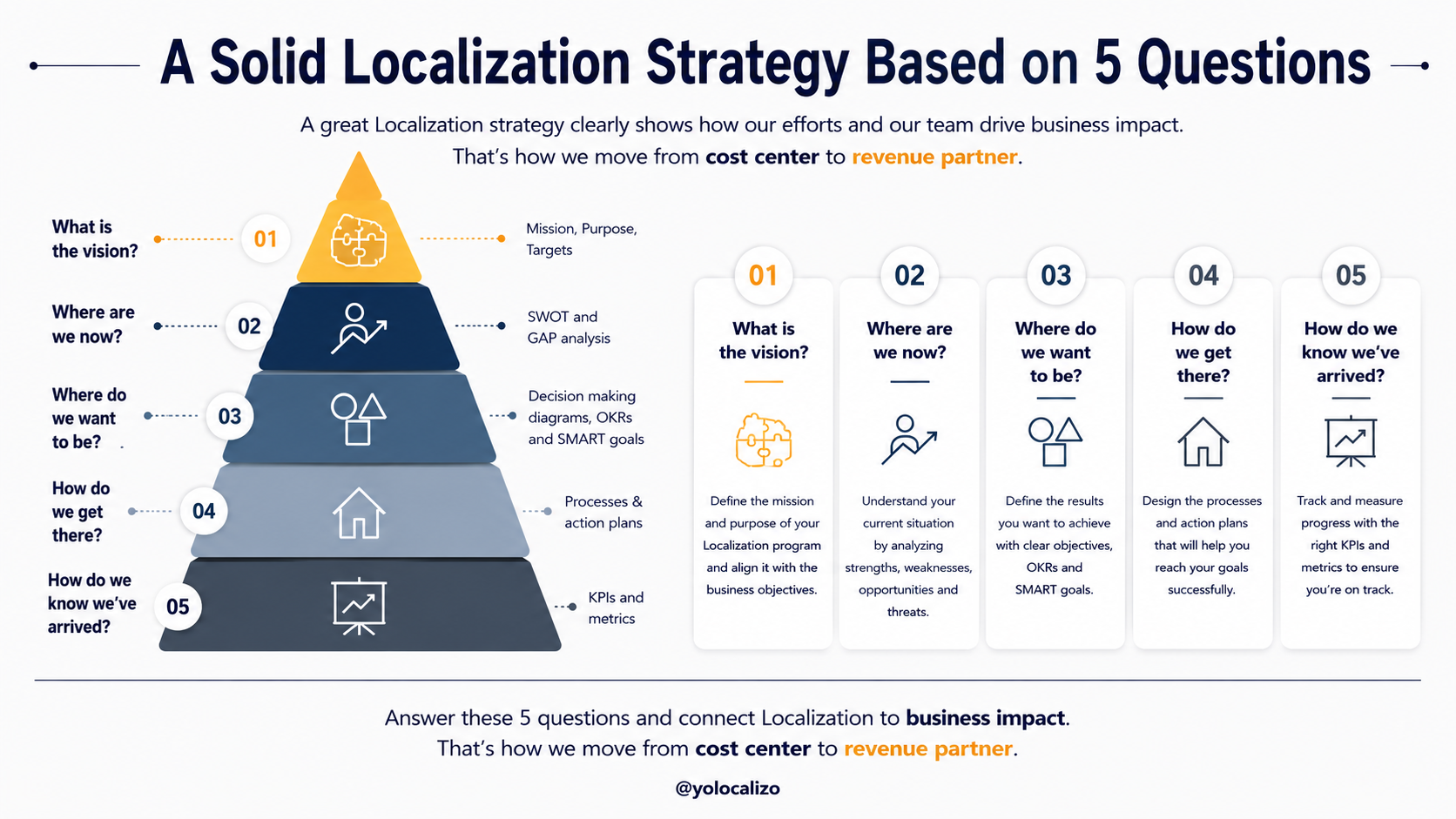
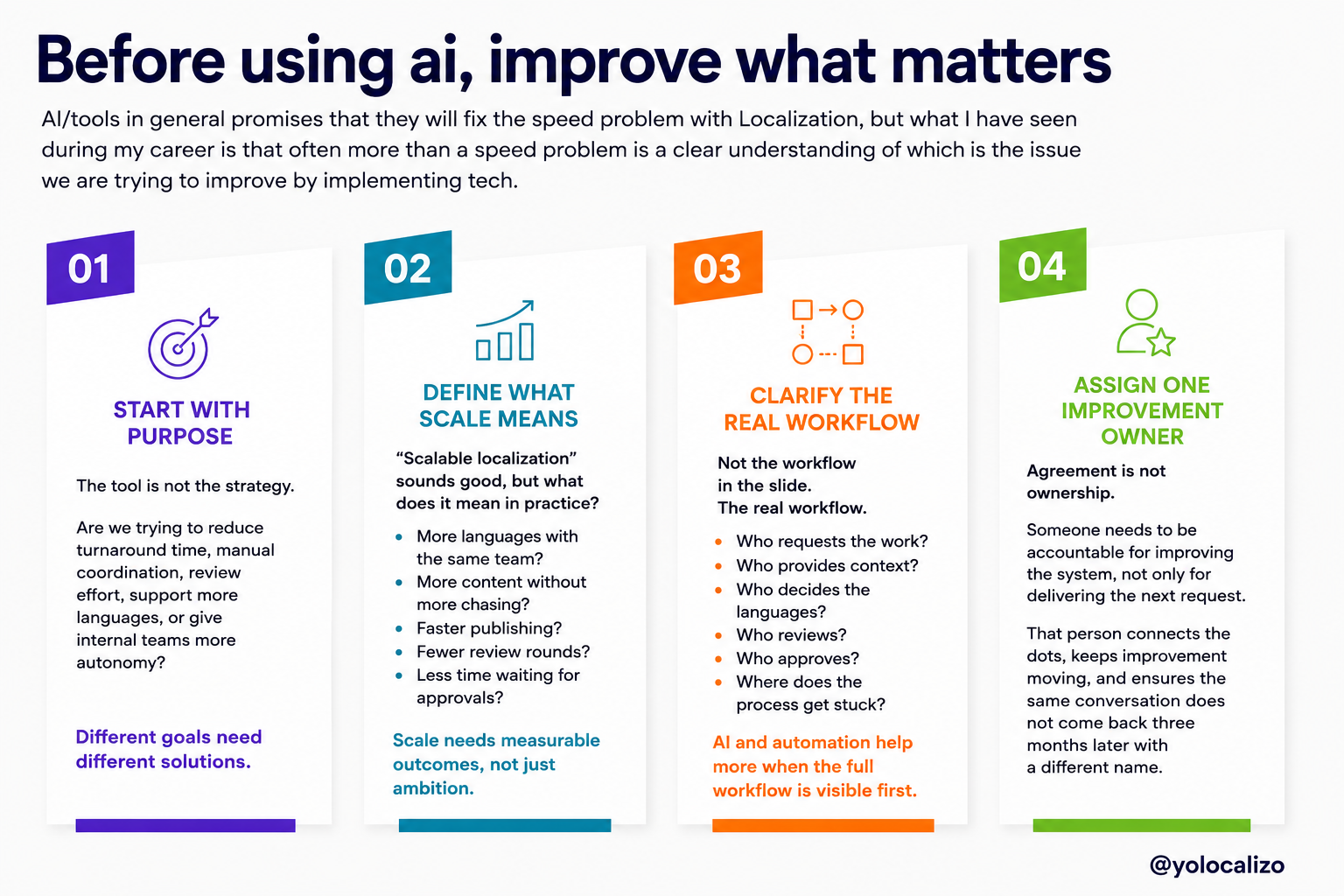
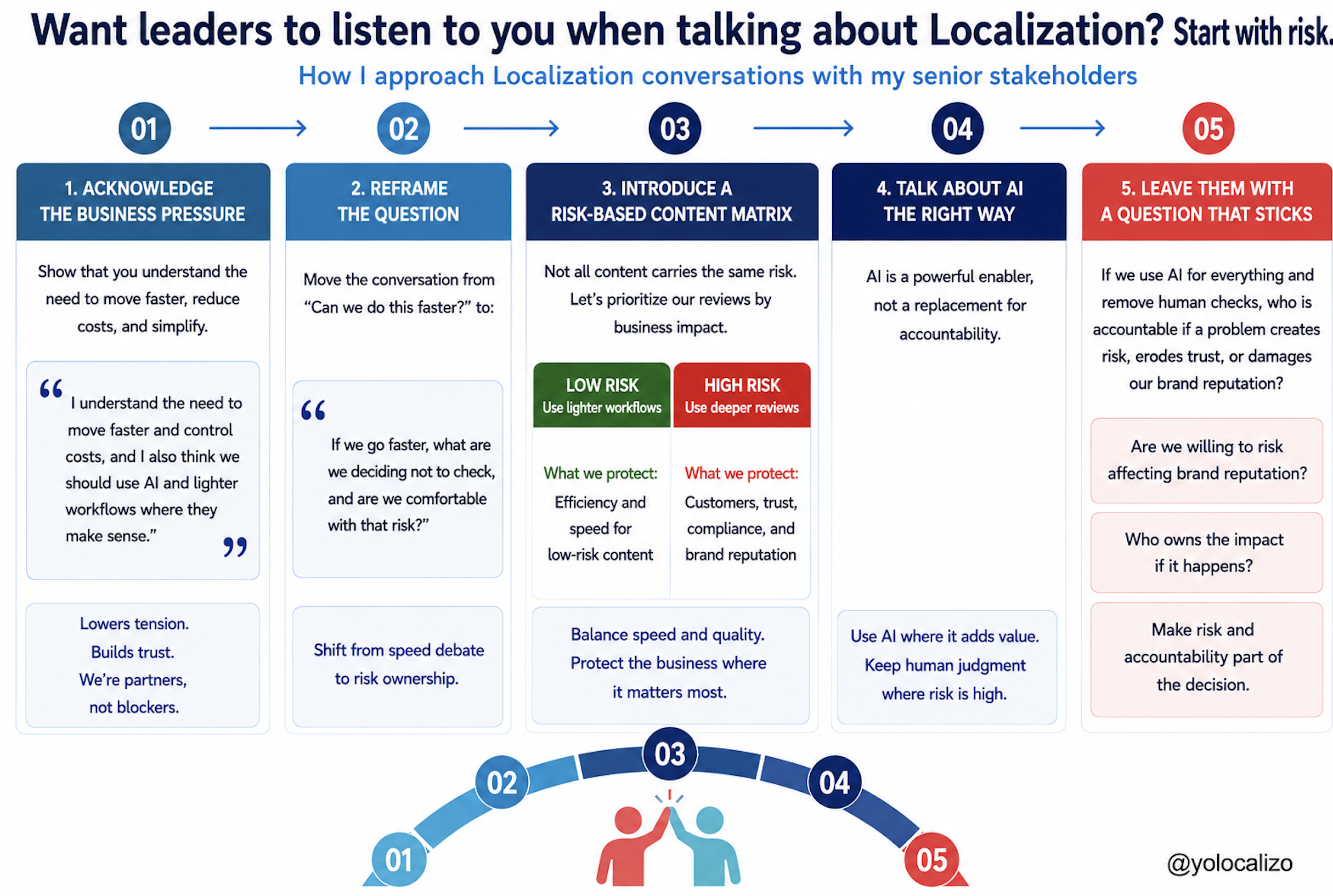
I was a team leader by chance, as I was a good Individual Contributor (IC) with knowledge of localization quality assurance and good communication skills. My transition was difficult and bumpy, as I was not ready and did not know the differences between being an IC and a Localization Team Manager. Despite the challenges, my capacity to adapt helped me succeed. To successfully transition from an IC role to a Localization Manager role, one must have the right mindset, be surrounded by skilled professionals, and have a supportive manager. I now understand the differences and want to share my learnings with others.
Several factors affect the duration of localization for a digital product, including translators' availability and the technology setup level. This blog post explores the various elements that impact the amount of time needed for product localization.
In some RFPs today, it is no longer so clear what buyers really value from LSPs. This post explores why. Based on my experience on the buyer side, I share why the real need may be shifting from pure execution toward something harder to explain, but often more useful in practice.
What do you do when someone asks for the ROI of localization and you know the question is too narrow from the start? In this post, I reflect on why I stopped trying to prove isolated ownership and started talking more honestly about contribution.
Reading The Myths of Happiness reminded me of the arrival fallacy: the belief that once we reach a certain goal, everything will finally feel solved. In localization, that can look like waiting for the day when people will finally understand what we do. But organizations keep changing, so that moment may never fully come. And maybe accepting that is exactly what helps us stay grounded, avoid frustration, and keep moving forward.
In many companies, the localization budget does not sit with the localization team. At first, that may seem like a small detail. But over time, it changes how localization influences strategy
Defining localization metrics is relatively easy. In many cases, a team can write a reasonable list during a workshop, like the ones I mentioned above, or during a strategy session. The conceptual part of what to track and why rarely takes long. The real difficulty appears later: HOW you actually obtain those metrics.
AI will not eliminate (initially) localization roles, but it is reducing the time spent on certain tasks. What once took hours can now take minutes. That creates capacity.We can treat that time as a cost savings or reinvest it. If nothing meaningful replaces it, the value of the role will eventually be called into question.Jobs do not disappear because tasks are automated. They disappear when the value is not redefined.
So the real question is: what can you do now with the time AI gives you that wasn't possible before?
The world of localization is full of small, hidden details.
Some things are deeper than they seem, and I often see between in-context review and LQA in the world of Localization. They might seem the same, but if we scratch beneath the surface, we'll see they're not what they seem.
In this post, I want to focus on explaining the differences between in-context review and LQA, which is something I see being confused quite frequently, and although the tasks are similar ... they are not the same.
AI is not eliminating localization. But it is removing the illusion that execution alone is enough.
Layer 1 accuracy, delivery, quality was our playfield. Now AI scales it faster and cheaper. And when value is framed only around execution, the conversation shifts to cost and headcount.
Meanwhile, executives focus on retention and growth.
That’s Layer 2 cultural impact.
In the age of AI, localization must operate in both.
LLMs don’t learn your brand style just because you use them more. They improve when someone guides them, feeds them with examples, corrects them, and owns the outcome. In this blog post I reflect on how we can create a strategy to do that