


What areas should a localization team consider to collaborate efficiently with a game publisher operating on a GaaS model?
This blog post covers the main elements you cannot ignore when considering Localization as part of GaaS
AI is making it easier for teams to create multilingual content without going through Localization. That sounds very similar to a problem IT has been dealing with for years: shadow IT. In this post, I look at what Localization can learn from that experience and how we can keep visibility, quality and control without slowing the business down
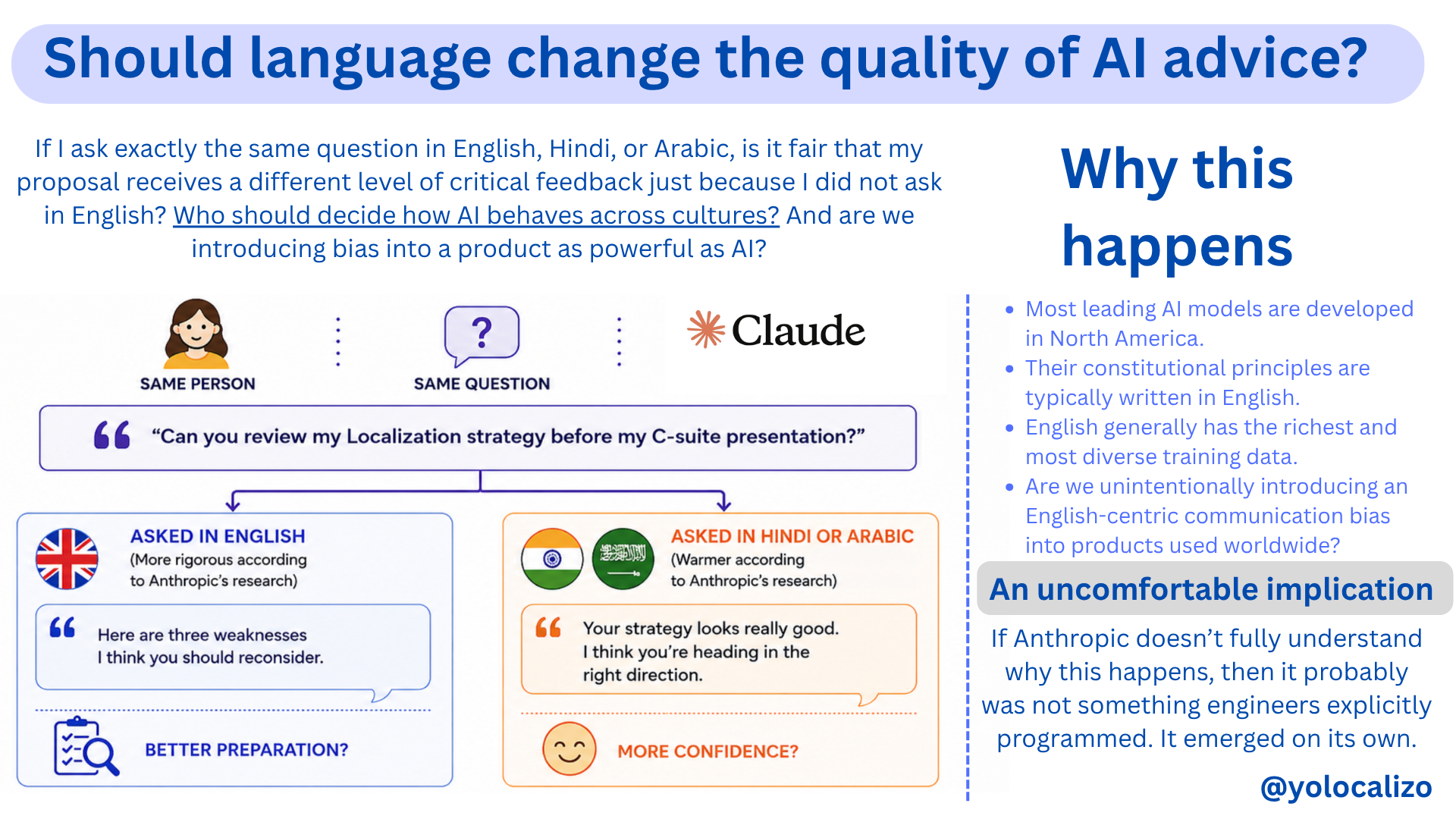
What if asking AI the same question in English, Hindi, or Arabic leads to different levels of critical feedback? Anthropic’s latest research raises fascinating questions about culture, AI behavior, and why Localization expertise may become increasingly relevant beyond translation.
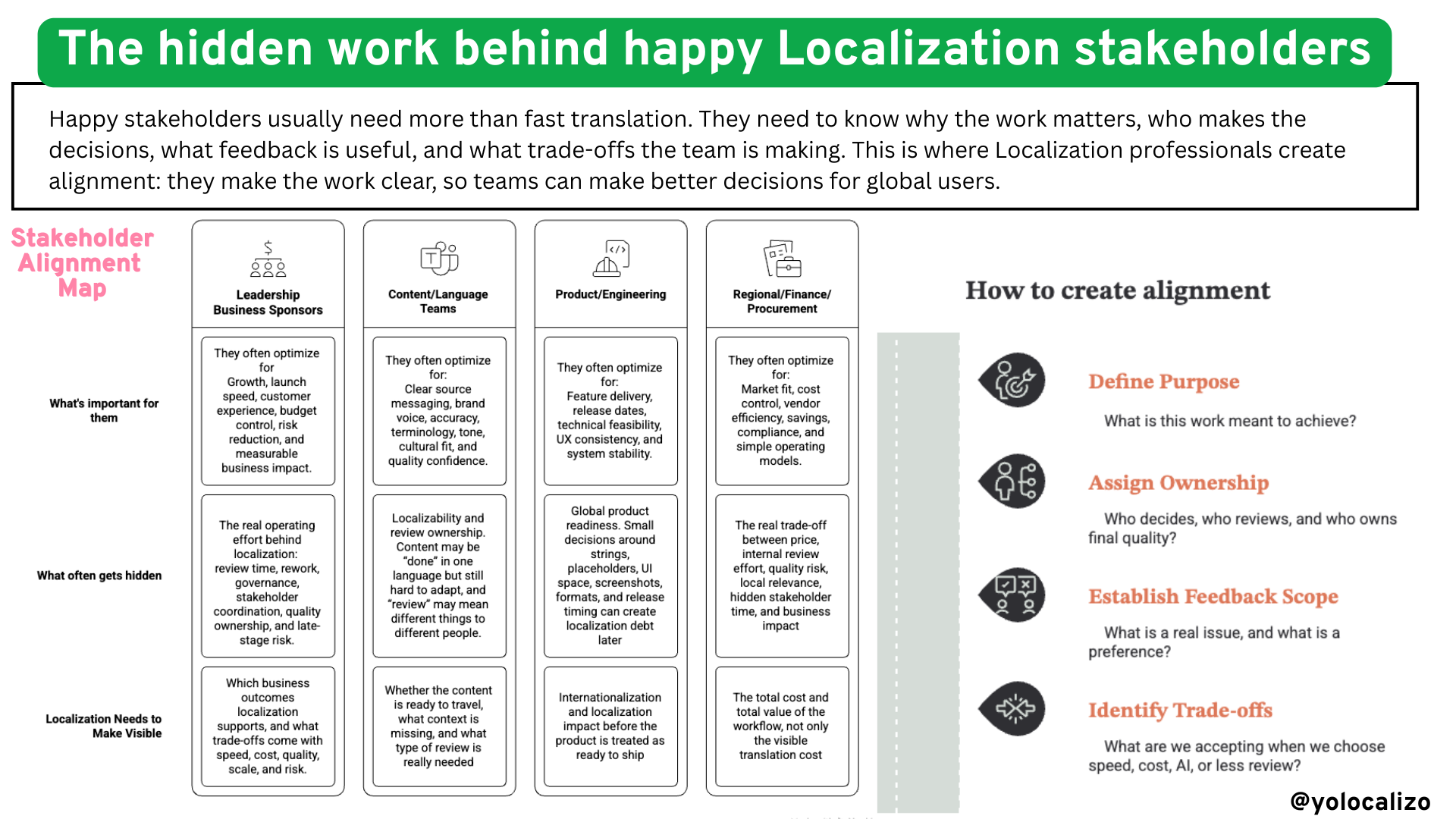
Localization Managers are often expected to keep many stakeholders happy: leadership, content teams, linguists, product teams, regional teams, finance, and procurement. But maybe happiness is not the real goal. In this post, I reflect on why stakeholder alignment matters more, and how Localization can make expectations, hidden work, ownership, and trade-offs more visible
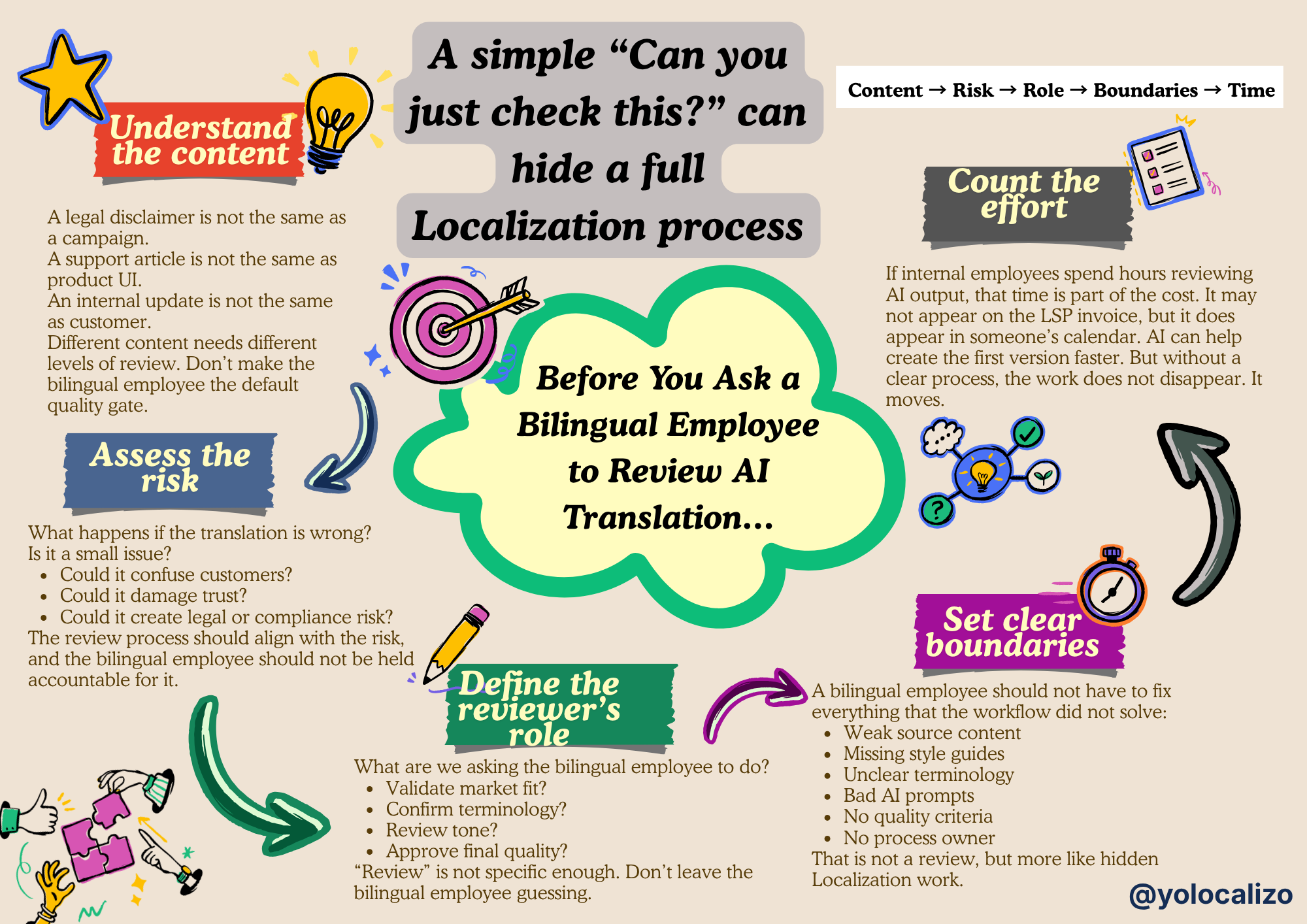
AI can help create the first translation faster, but the work does not always disappear. Sometimes it simply moves to someone else’s calendar. In this post, I reflect on the hidden cost of asking bilingual employees to review AI output without a clear process, role, or quality ownership
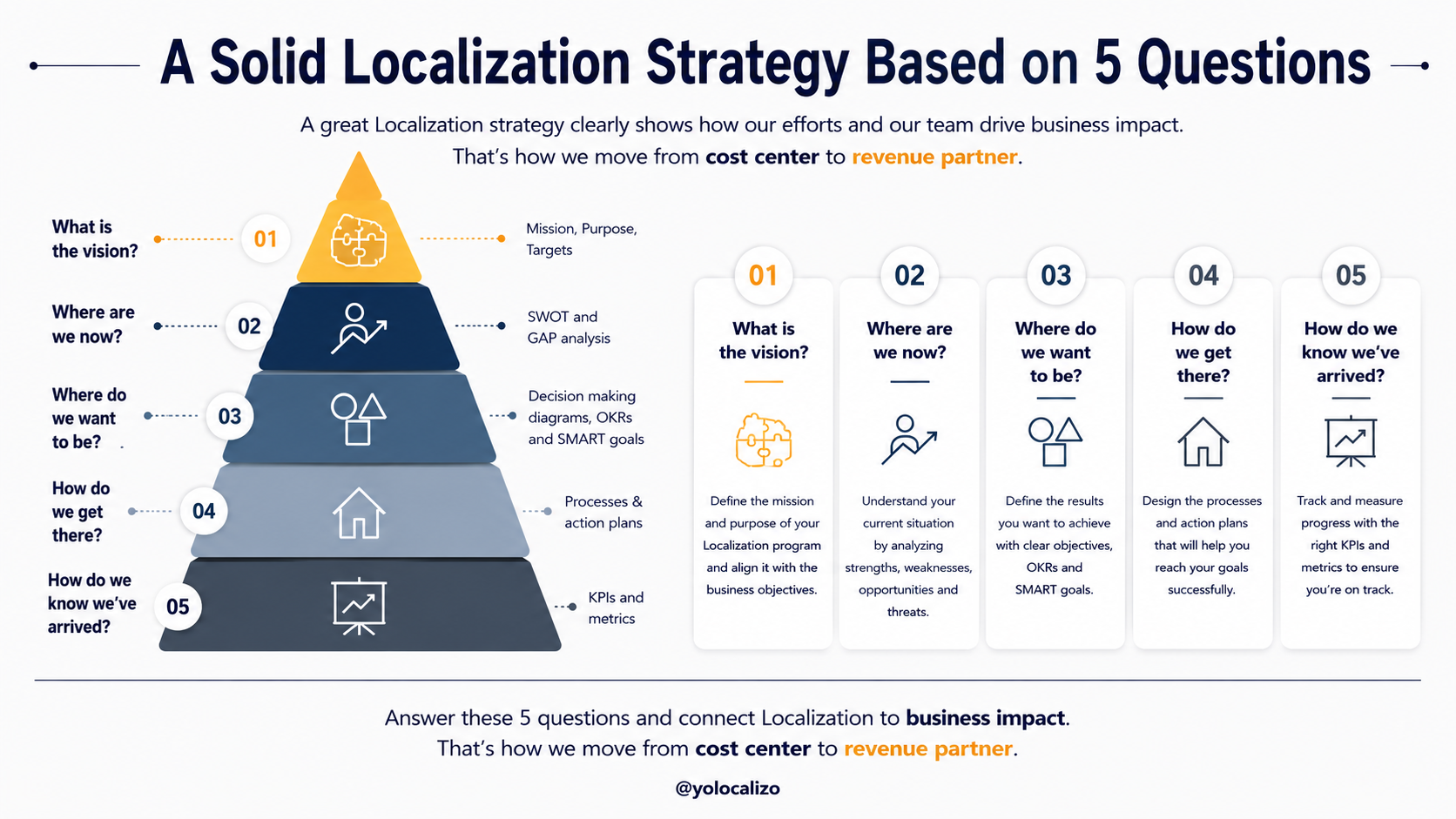
June is strategy season for many corporate teams. And for Localization, this usually means uncomfortable questions about budget, AI, workflows, markets, metrics, and business value. Before jumping into new tools or complex plans, maybe it is worth going back to the basics
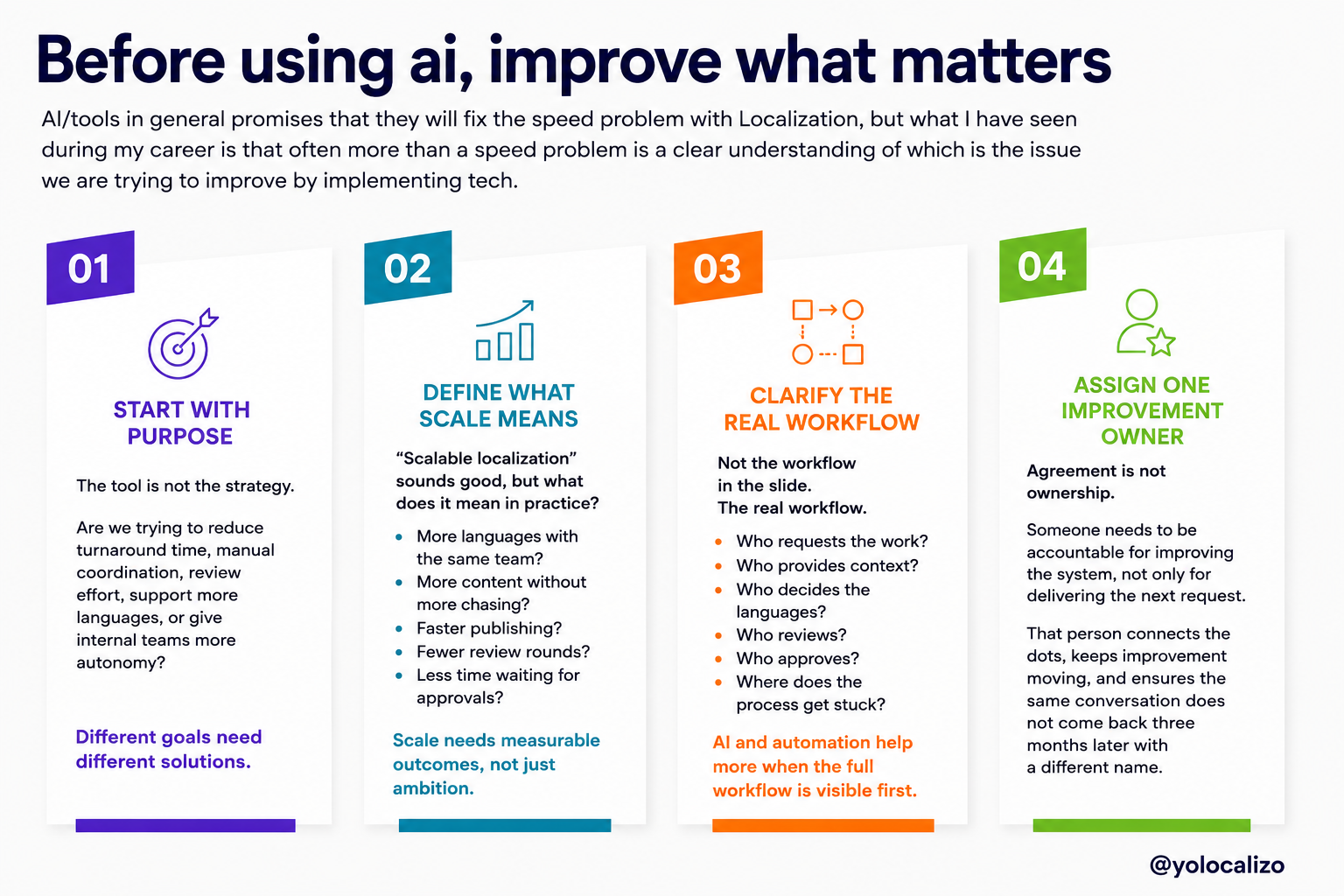
AI promises faster localization, and that message is attractive. But in many teams, the real issue is not speed. The work gets delivered. The harder question is how much hidden coordination, unclear ownership, and workflow complexity it takes to get there.
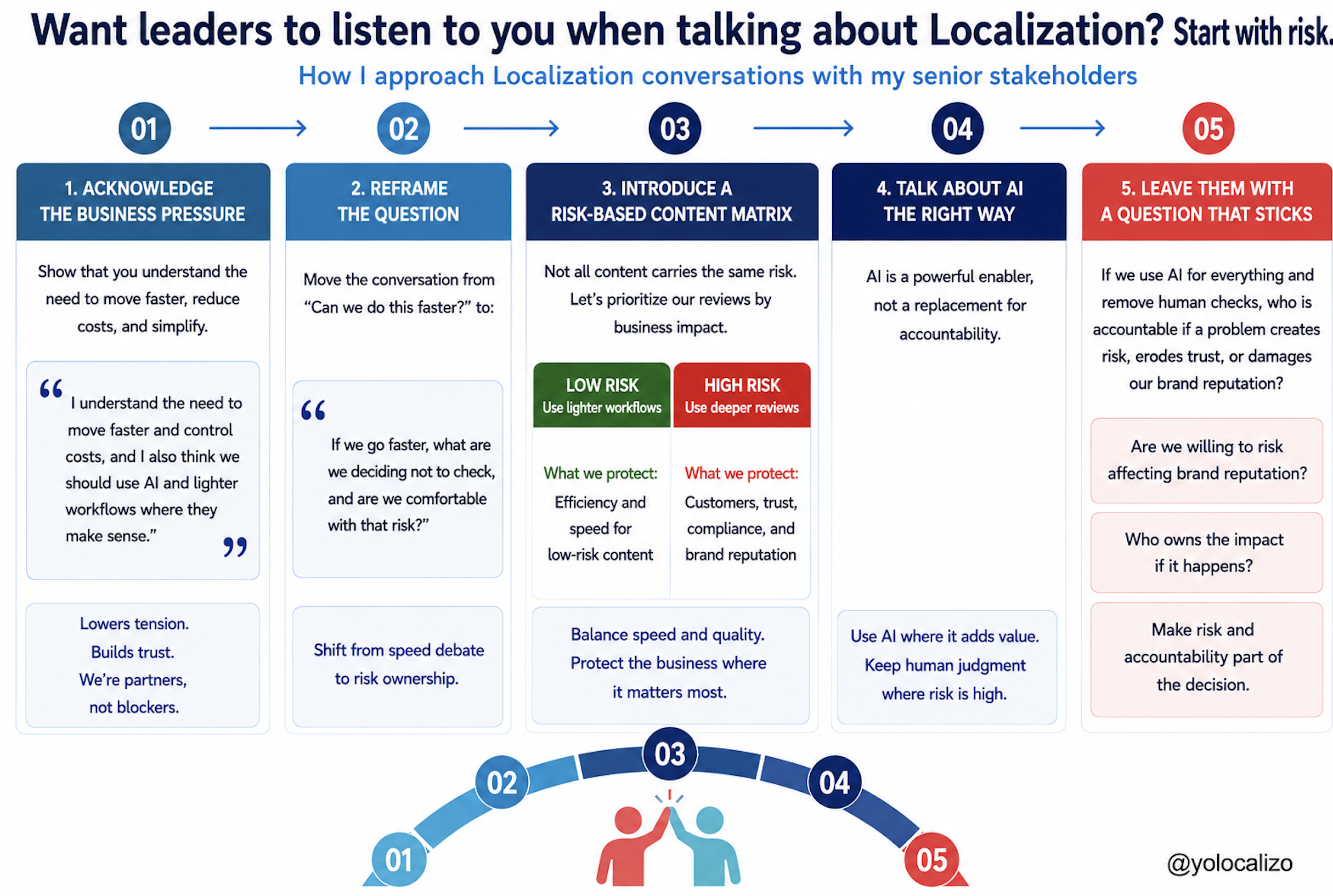
When leaders push back on localization time, resources, or AI, the strongest answer is not to defend every step of the process. It is to reframe the conversation around risk.
In this post, I explore why explaining Localization from a quality perspective, with too many process details, may not always be the best strategy when speaking with senior stakeholders.
This post explores the key differences between working on the buyer versus the provider side of the localization industry. While there are some tasks common to both, others vary significantly in areas such as people management, operations, strategy, and metrics. The article breaks these tasks into four categories, providing examples for each to highlight these distinctions
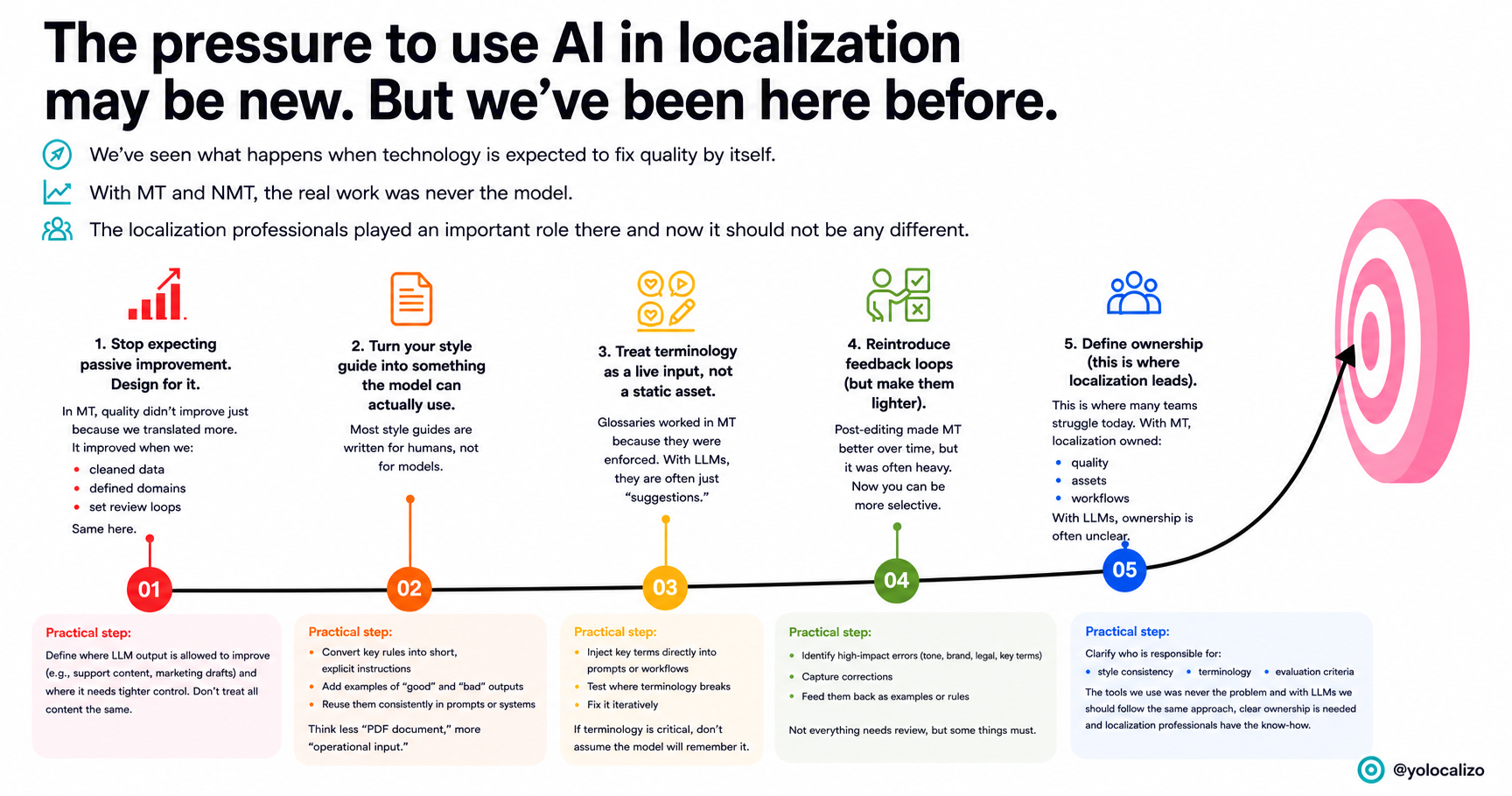
LLMs don’t learn your brand style just because you use them more. They improve when someone guides them, feeds them with examples, corrects them, and owns the outcome. In this blog post I reflect on how we can create a strategy to do that

“Welcome to my blog. The space where I document my passion about Localization, Project Management and Leadership”
What areas should a localization team consider to collaborate efficiently with a game publisher operating on a GaaS model?
This blog post covers the main elements you cannot ignore when considering Localization as part of GaaS
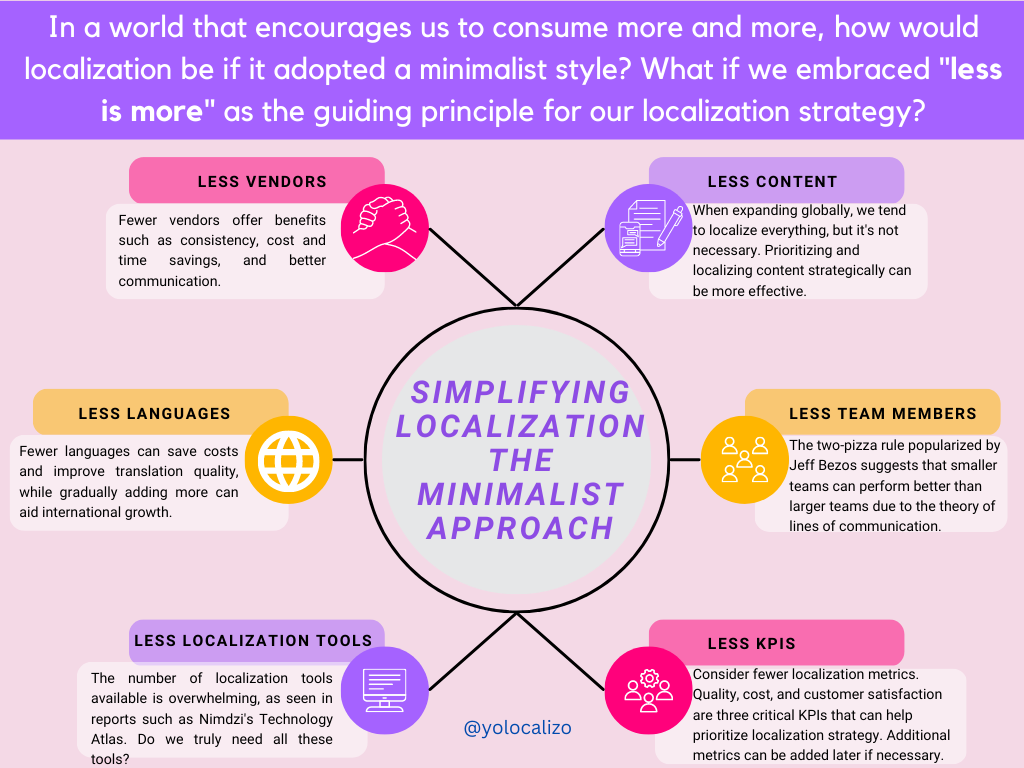
This blog post covers the essential elements that should not be missing in a localization strategy. As in minimalism in some cases, less is more regarding localization and content strategies
Have you ever thought about how much work goes into developing a video game? It's not just about creating a fun and visually appealing experience - there's a whole world of complexity beneath the surface. And if you want to reach a global audience, the challenge only multiplies.
Perhaps one day, ChatGPT will learn to localize and make us irrelevant 😛, but until then, I've compiled a list of 12 essential steps to help expand the reach of your video game. Localization is no easy feat, but with these steps, you'll be well on your way to breaking into new international markets and reaching millions of players worldwide.
Consistently posting about our accomplishments on platforms like LinkedIn can quickly become tiresome for others. At the same time, not giving visibility to what we do or achieve can cause our work to go unnoticed, causing us to miss out on certain professional opportunities to advance our careers further.
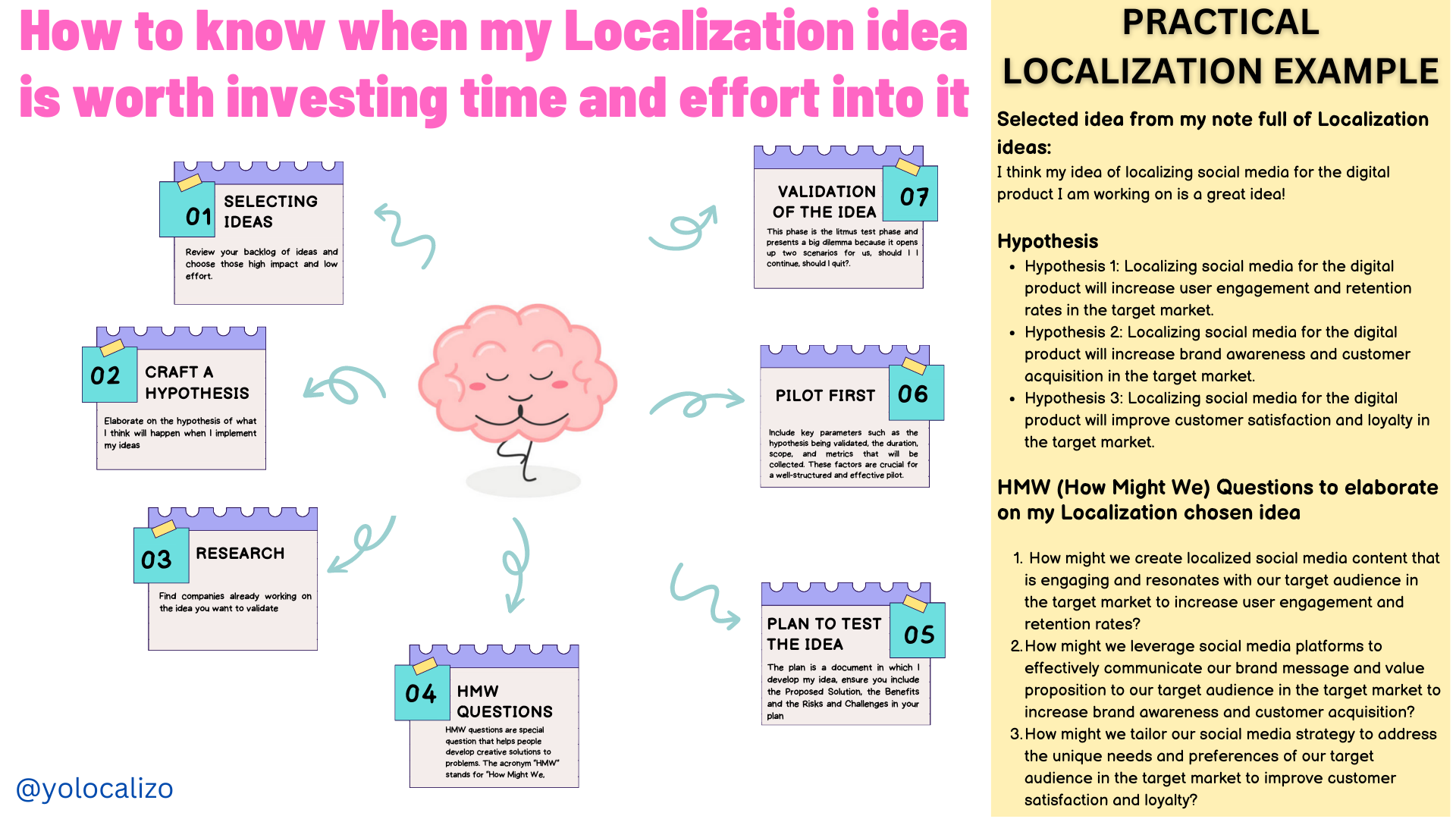
Localization teams within a company have contact with many stakeholders and initiatives related to localized content, customer support, entering new markets, and more. Such exposure means that if you are curious, you likely have more ideas related to Localization than you have time to pursue. And that's where the dilemma arises - how do you know if your Localization idea is worth investing time and effort into? Of all the ideas that come to mind, how do you select the best ones to pursue?
When it comes to offering a customer-centric experience, language, culture, localized pricing, and payment options play a crucial role. Companies aiming to reach a diverse audience can leverage hyper localization as a powerful tool.
Creating quality online content adapted to different markets is more important than ever. Our world revolves around content. These days, buying decisions are often based not only on experiences with products, but with information about products. Naturally, with the growing importance of content, a lot of attention is being paid to content strategy. This is a good thing. Companies need to stop throwing content out to the world without a good reason. They need to manage content strategically.
But what about global content? What about all the content that your company produces for people in other parts of the world?
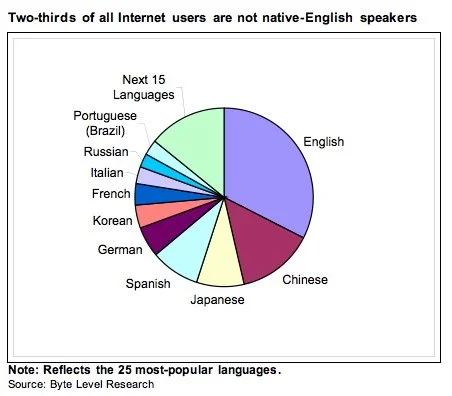
When over 80% of people say they are more likely to purchase a service they understand in their native language there should not be doubts about the importance of Localization .... however, there are still doubts about the role of Localization and the benefits it might bring to the companies. Please check out my latest post to know which is my Top 5 of Localizations stats that I use to influence decision makers!
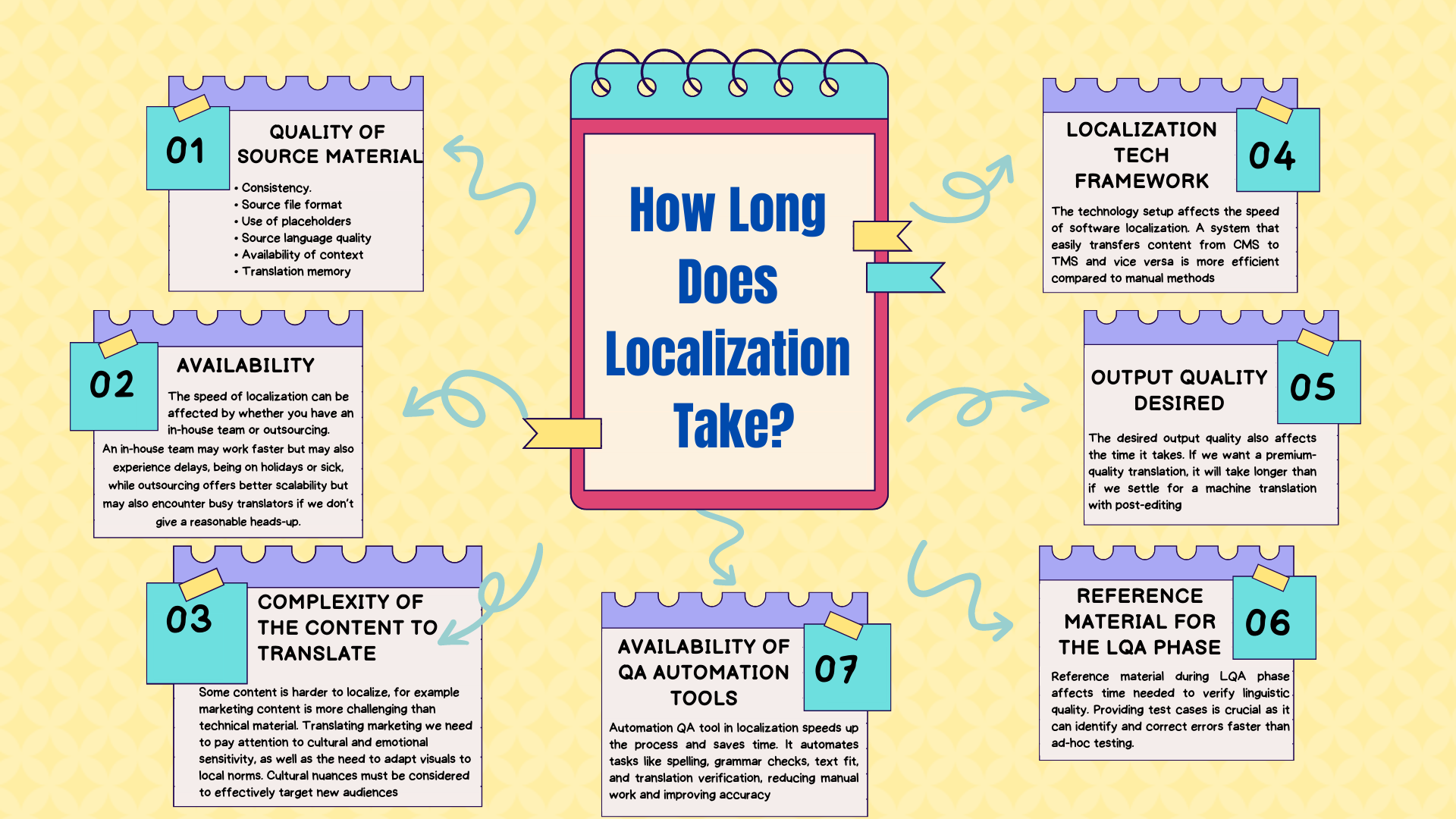
Several factors affect the duration of localization for a digital product, including translators' availability and the technology setup level. This blog post explores the various elements that impact the amount of time needed for product localization.
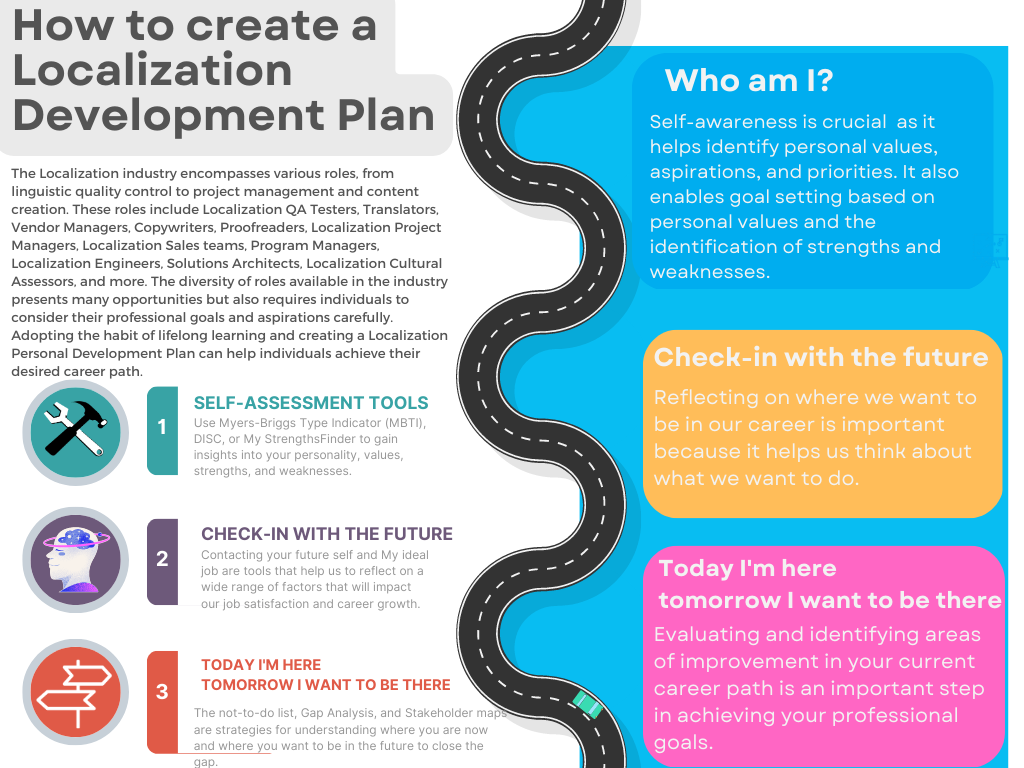
We live in a time when a lot is happening! From pandemics to wars and layoffs almost every day in the technology sector to AI tools that improve week by week, it can be difficult to navigate the ever-evolving landscape. That's why this post is about how to create a Localization Personal Development Plan.
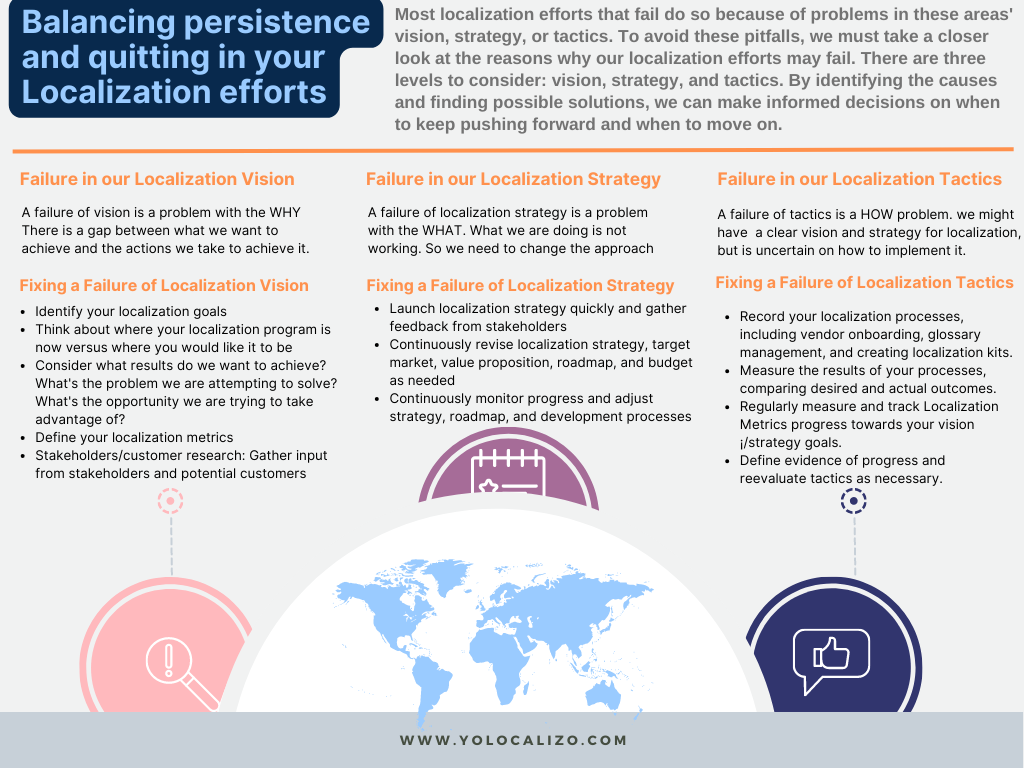
It is difficult to know when to give up versus when to keep trying, but thinking about whether we have a failure in our Localization vision, our Localization strategy, or our Localization tactics can be very helpful in determining what we should do. Hopefully, the framework explained in this post will help you navigate the difficult decision of deciding when to quit and when to stick with it.
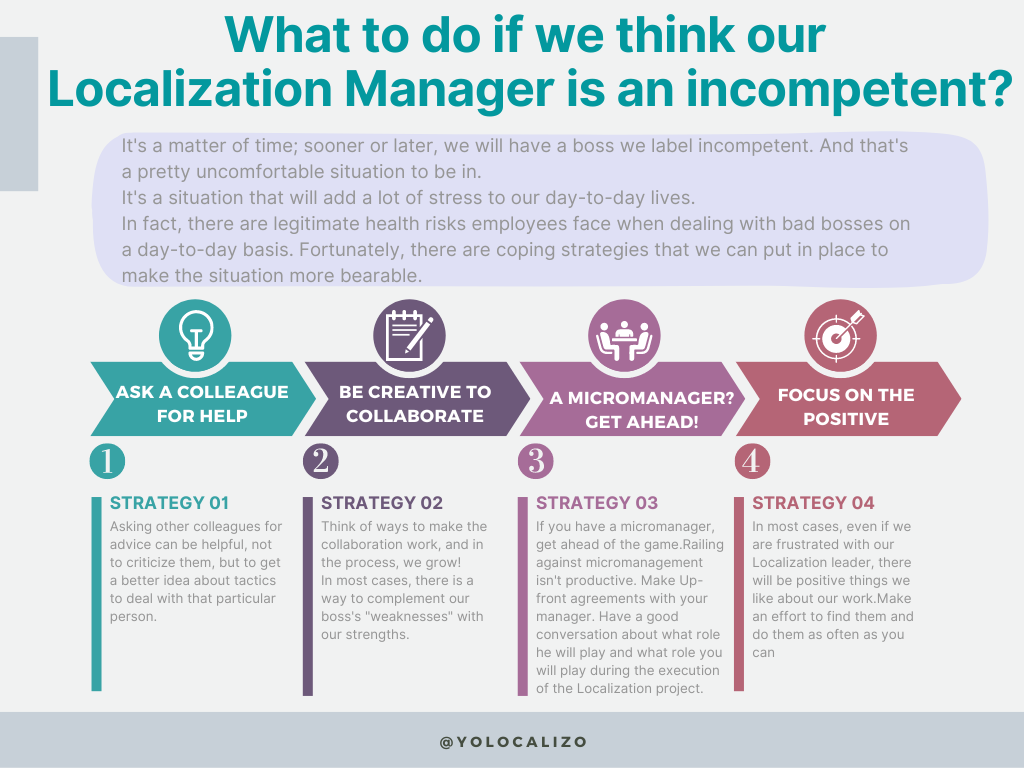
It's a matter of time; sooner or later, we will have a boss we label incompetent. And that's a pretty uncomfortable situation to be in. It's a situation that will add a lot of stress to our day-to-day lives.
In fact, there are legitimate health risks employees face when dealing with bad bosses on a day-to-day basis. Fortunately, there are coping strategies that we can put in place to make the situation more bearable.
How does a transcreation professional work?
My favorite discipline within the Globalization industry is transcreation. And in this post, apart from explaining what it is, I focus more on explaining the process and how a transcreation professional works.
I also touch in this article on an often confusing aspect: the difference between marketing translation and transcreation.
Transitioning from one job to another can be an enriching experience, or it can be a nightmare.
I have detected in my different movements, and after seeing many colleagues making transitions, that there are a series of usually effective tips.
T-shaped mindsets help us hone our adaptability and adjust to new trends and technologies. And that flexibility is what can future-proof our Localization career and remain relevant, living in cohesion with machine learning, machine translation, or the rise of artificial intelligence.
Sometimes we think we have a localization strategy, but in reality, we have goals.
This post will help you understand the difference between localization strategy and goals and give you some hints to help you create your strategy or goals.
There are many articles about best practices on how to prepare an RFP, but information about how to evaluate them is scarce. This blog post gives a client-side perspective on what areas are important.
While adequate Localization is still critical and is the minimum requested of a product with ambitions to be marketed globally, in reality, that is not enough- We have to go one step further; global consumers want a customer experience that connects with them at a local level. For that to happen, it is essential that Globalization that Localization activities are just another business process integrated into product development; that will not happen if when we talk to the development team and they comment that "it's way too early to talk about that" we let the conversation die there.
How many good ideas have you had about Localization and then a while later forgot about them?
How many valuable tips have you read in books or articles and forgotten over the years?
What's the point of spending time reading a book, if, when it's time to implement things I want to do, I can't remember practically anything?
We live under pressure to learn and improve.
We invest many hours in our lives reading books, watching videos, and listening to podcasts.
And yet, where has all that valuable knowledge gone?
Where is it when we need it?
If we don't speak up about our work, no one will know. Giving visibility about the work we do is important. In this post, I give three ideas to make visible the invisible.






Words have the power to shape perceptions and influence actions, which is why reframing is such a powerful tool. In localization, we can reframe our role from simply translating to driving alignment across the company. By ensuring content is consistent, culturally relevant, and strategically aligned with business goals, localization professionals play a key role in helping businesses grow globally. This post explores how we create that alignment and why our work is much more than just translation.