


Are you translating content or are you managing the content ?
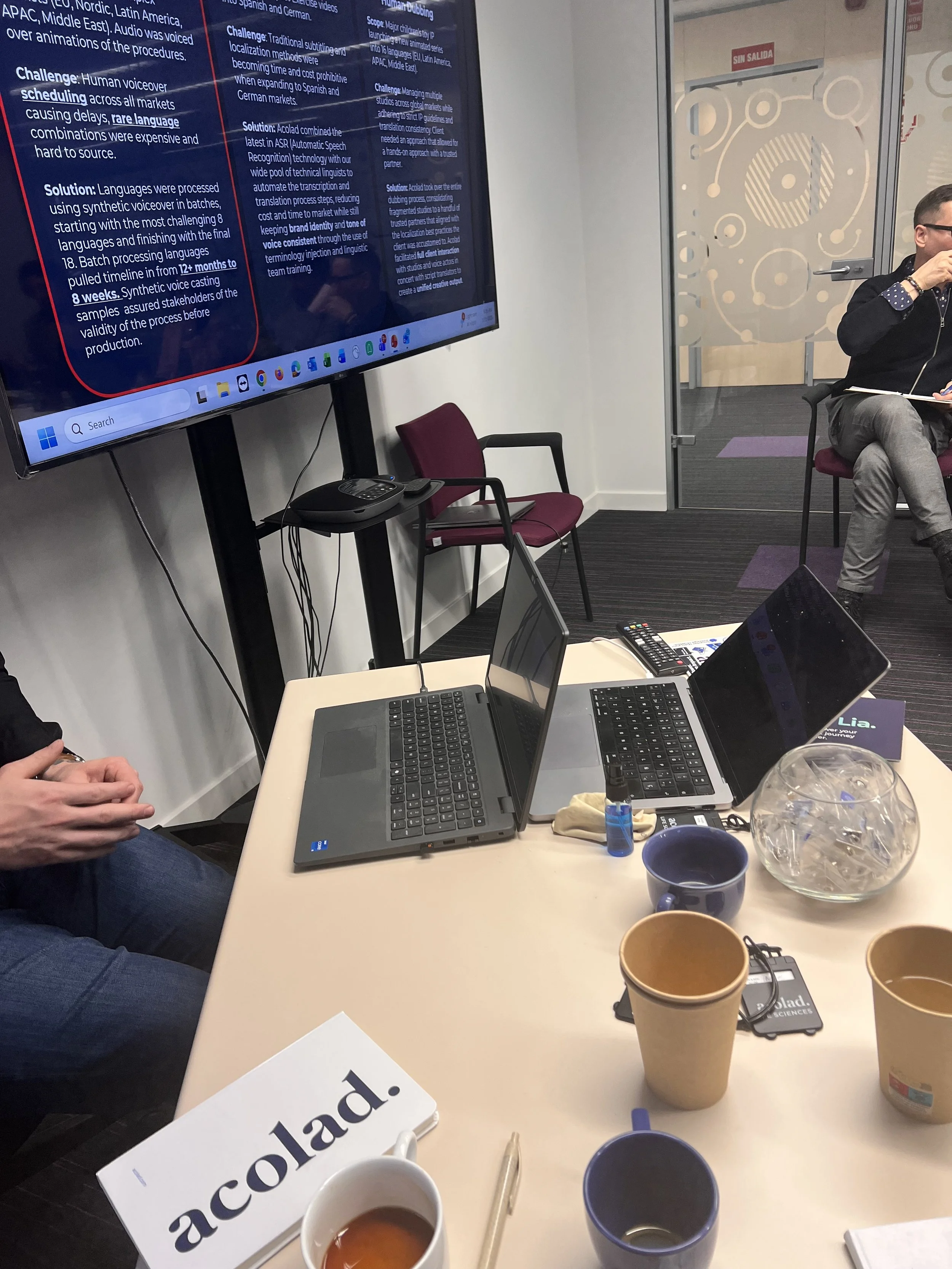
I recently attended a workshop with Acolad. We spent the day talking about strategy, presentations, AI, localization, and how all of this actually works inside real organizations. One of the speakers asked a simple question:
Are you translating content, or are you managing it?
At the time, it sounded like one of those questions you nod at and move on from. But it stayed with me.
A few days later, back home in my living room, while sipping a coffee, that question came back. Outside the window, snow was falling, and yes, snowing in my hometown! We’re in the middle of storm Ingrid, which is causing real disruption in some areas, especially in the north. Today, everything felt quieter and slower, and that calm made space for reflection. That’s when the question came back to my head and started to feel like very good material for this week’s post.
For years, content localization was treated mainly as an execution task. Content was created for one market and then sent to localization with a simple expectation: translate it and ship it. Do it fast. Don’t cause delays. Don’t disturb too much. If everything arrived on time and quality was acceptable, the job was considered done.
Localization teams embraced this role for a long time: highly commoditized and mostly invisible.
That model worked when content volumes were lower, and speed was the main challenge. Today, things look very different. AI plays a big role in that shift. Across organizations, there is strong pressure to “use AI,” partly driven by large tech investments, and partly because AI can genuinely be useful when implemented responsibly.
As AI becomes part of everyday workflows, the old model starts to show its limits. Translation itself is no longer the hardest part. The real challenge is deciding what content deserves attention in the first place, and how AI should be integrated without breaking the wider content ecosystem.
This is less about translating faster and more about answering harder questions: where does AI fit, who owns it, how does it connect with existing tools and processes, and how does it support better decisions instead of creating more noise?
This is where the difference between translating content and managing content becomes clear.
At its core, that difference has very little to do with tools. It has a lot to do with mindset.
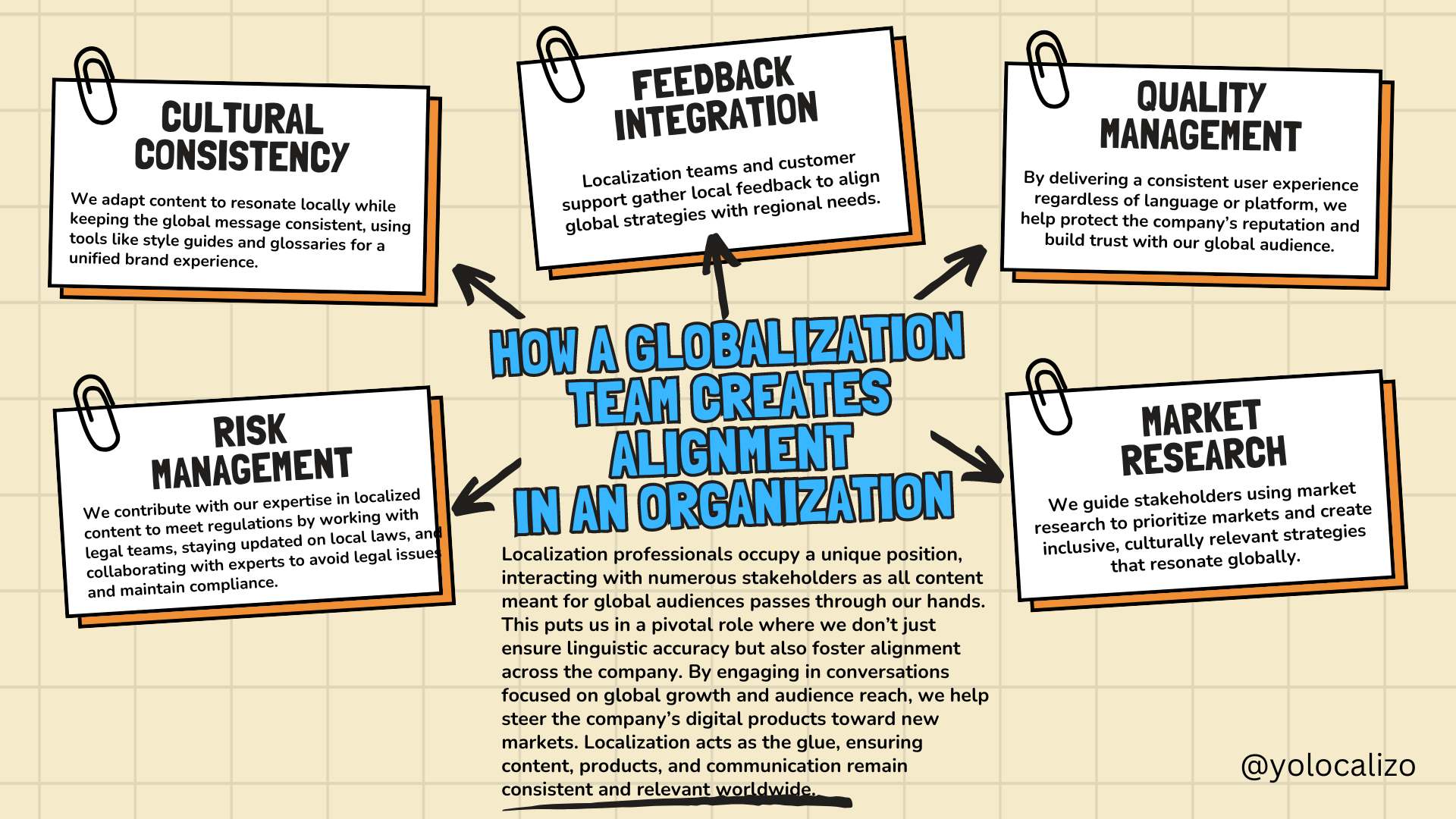
Translating content is usually reactive. Content is created, requests arrive, and teams respond. Managing content is decision-driven. It means making explicit choices about intent, relevance, priority, and ownership. When that shift happens, localization stops being just an execution layer and becomes part of how content strategy is shaped.
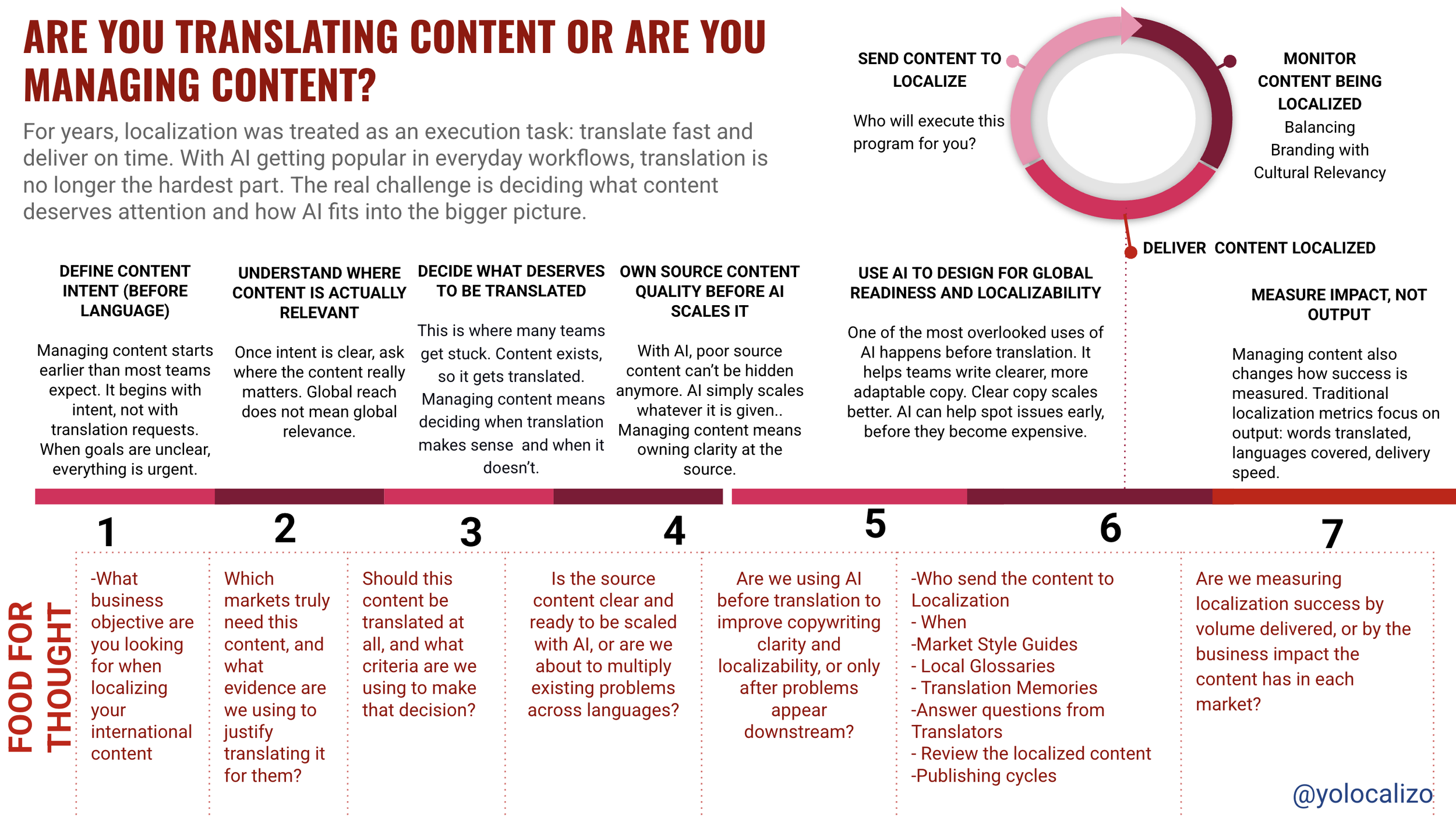
Click HERE to download the infographic
1. Define content intent (before language)
Managing content starts earlier than most teams expect. Not with translation requests or tools, but with intent. Every piece of content exists for a reason, even if that reason is not always clear.
Is the goal growth? User support? Regulatory compliance? Brand positioning? When these questions are not answered, localization teams are forced to treat everything as equally important. That usually leads to urgency without clarity, and volume without focus.
Taking time to define what success looks like for a piece of content improves every decision that follows.
2. Understand where content is actually relevant
Once the intent is clear, the next step is to understand where that content truly matters. Many global organizations assume that global reach means global distribution. In practice, relevance is much more selective.
Some content is critical in one market and barely useful in another. Managing content means accepting that localization is not about translating everything everywhere. It is about aligning content with real market needs and business priorities.
That requires data, market signals, and local context. It also requires being comfortable with a hard truth: sometimes, the most strategic decision is not to translate.
3. Decide what deserves to be translated
This is where many teams get stuck. Translation often happens by default, simply because content exists. Managing content means stopping for a moment and deciding whether translation actually makes sense
In practice, this means saying no sometimes. Some content gets localized, some stays global, and some is left behind. That’s not about doing less, but about doing the right work.
When translation is automatic, volume grows quickly and impact gets diluted. When translation is intentional, localization becomes a strategic lever rather than a production service.
4. Own source content quality before ai scales it
For a long time, poor source content could be hidden. Localization teams were expected to adapt, rewrite, and compensate downstream. With AI in the picture, that approach no longer works.
AI scales whatever it is given. With good source content, that is a strength. With poor content, it becomes a risk. Localizing confusing or outdated material into twenty languages means creating the same problem twenty times.
Managing content means owning clarity, consistency, simplicity, and reuse at the source. When source content improves, localization becomes faster and more predictable. When it doesn’t, no technology can fully compensate.
5. Use AI to design for global readiness and localizability
One of the most overlooked uses of AI in localization is not translation, but what happens before anything is translated. AI can support earlier decisions by helping teams write more clearly and design content that is easier to adapt across markets.
Used well, AI can simplify language, reduce ambiguity, and flag cultural assumptions that may cause friction in other languages. This makes reuse easier and scaling less painful.
lear and consistent copywriting is much easier to reuse across markets. When copy relies on idioms, vague wording, or very creative structures, scaling quickly becomes expensive. AI can help spot these copywriting issues early, before they turn into bigger problems.
6. Design the content lifecycle
Content is often treated as static. It is created, translated, published, and forgotten. In reality, content has a lifecycle, whether teams manage it or not.
Managing content means thinking about creation, reuse, updates, and retirement. Many organizations struggle not because they lack content, but because no one owns the decision about what is still useful and what should be retired.
Localization teams feel this directly when they are asked to translate content that no longer serves a clear purpose. Lifecycle thinking reduces unnecessary volume and brings discipline to global content operations.
7. Use AI to support decisions, not avoid them
AI is often introduced to move faster, and it does that very well. But speed without direction rarely leads to better outcomes.
Used well, AI helps analyze content, identify duplication, support prioritization, and improve consistency. Used poorly, it becomes a way to avoid difficult conversations about ownership, relevance, and responsibility.
Managing content in the age of AI means slowing down just enough to ask better questions, so that acceleration leads to better decisions, not just more output.
8. Measure impact, not output
Managing content also changes how success is measured. Traditional localization metrics focus on output: words translated, languages covered, delivery speed.
Those numbers say very little about impact.
A content management mindset looks at outcomes instead: engagement by market, conversion, app downloads, time spent on a page. When content decisions improve, translation volume often goes down while business impact goes up.
This is sometimes seen as a localization problem. In reality, it is a sign that content decisions are becoming more mature.
Final thoughts
Translating is part of the work. Managing is the responsibility.
Translation will always matter in global organizations. But in a world where AI can translate almost anything, it cannot remain the center of the strategy. What matters most now is the quality of the decisions behind the content.
When content is not actively managed, localization teams miss the chance to show their strategic value. When used thoughtfully, AI can be an ally that helps localization teams stay relevant in the AI era.
@yolocalizo
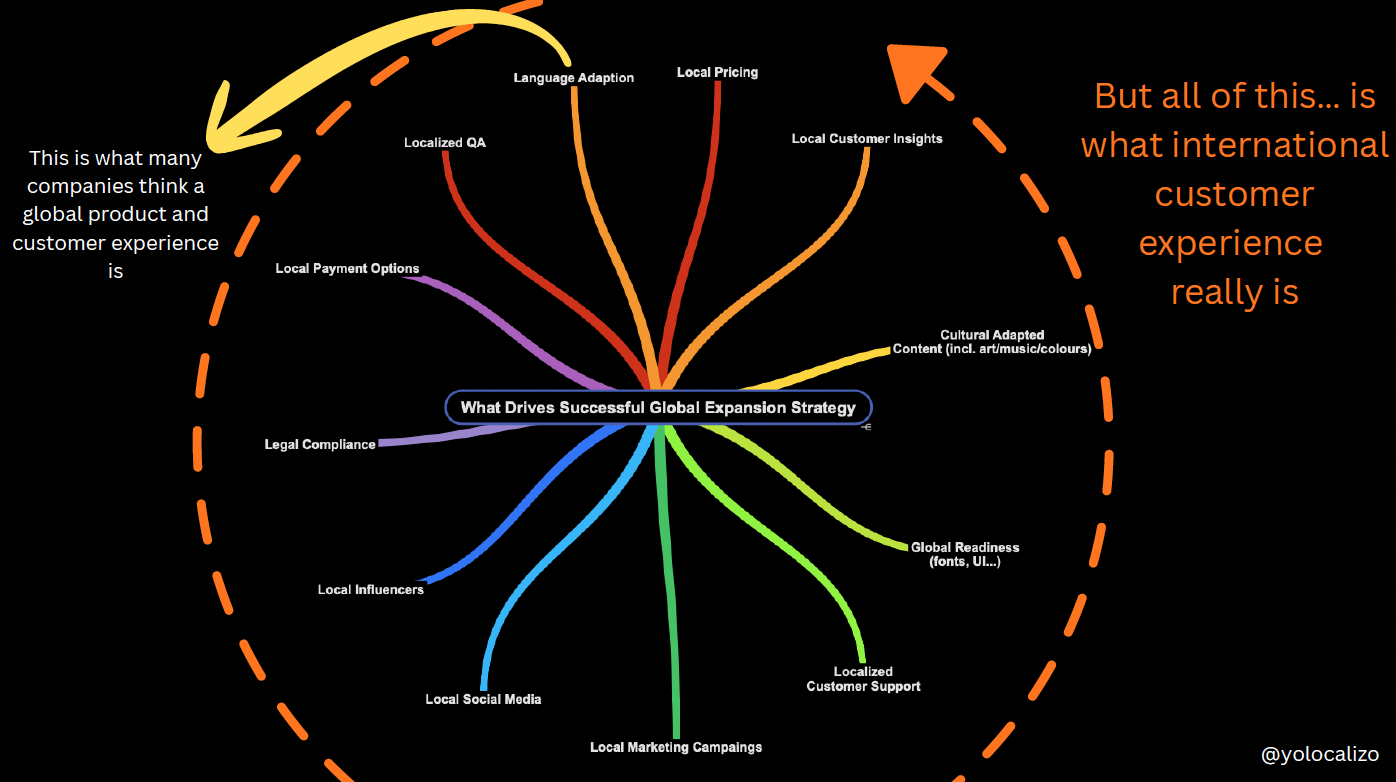

Choosing a TMS is not an IT vs Localization decision. Localization understands the business problem and the workflow; IT understands the technical ecosystem. The best result comes when both work together, with clear roles, shared criteria and a selection process that looks beyond the vendor demo.