




Globalization is a mindset, not really just a process
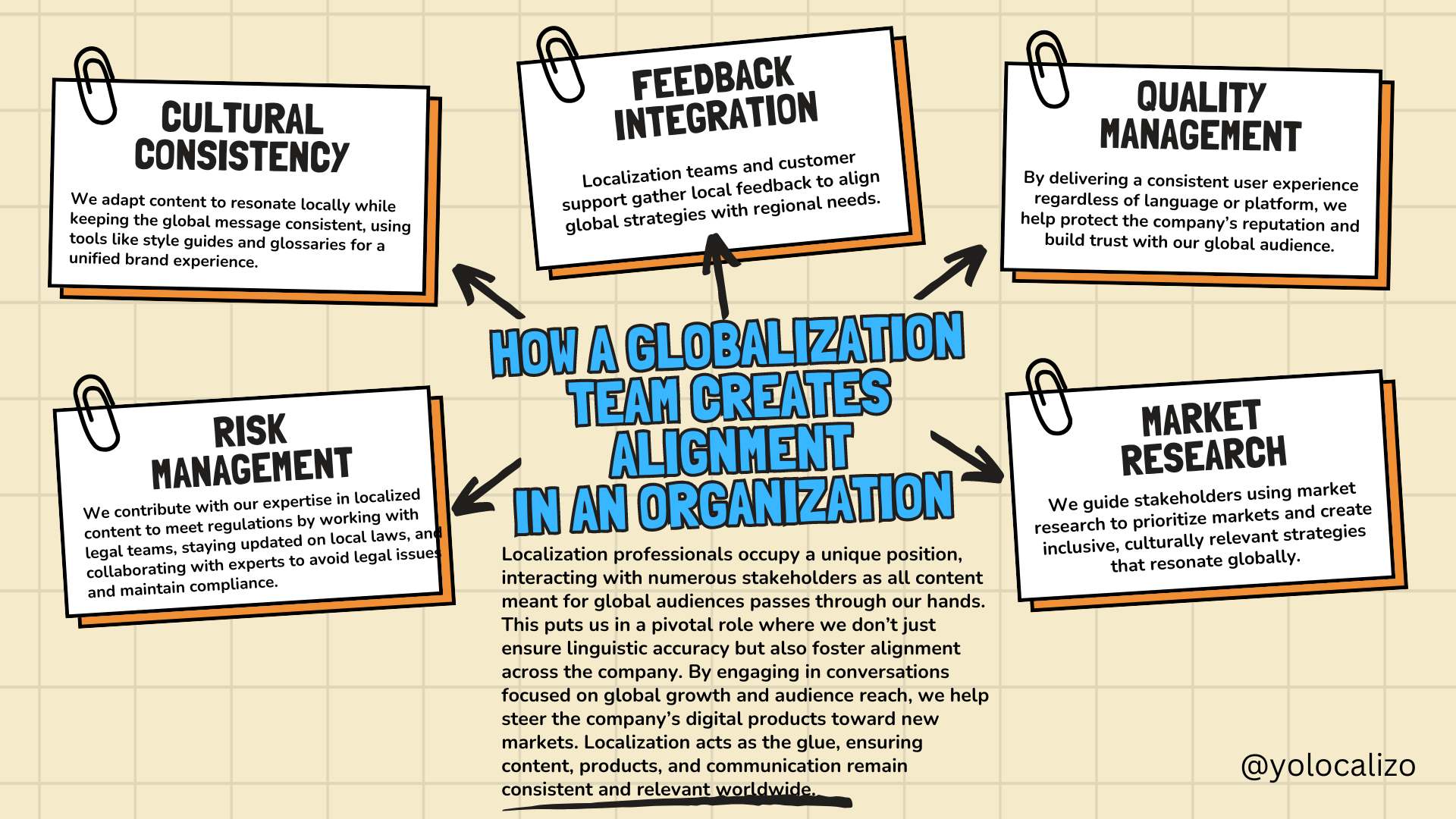
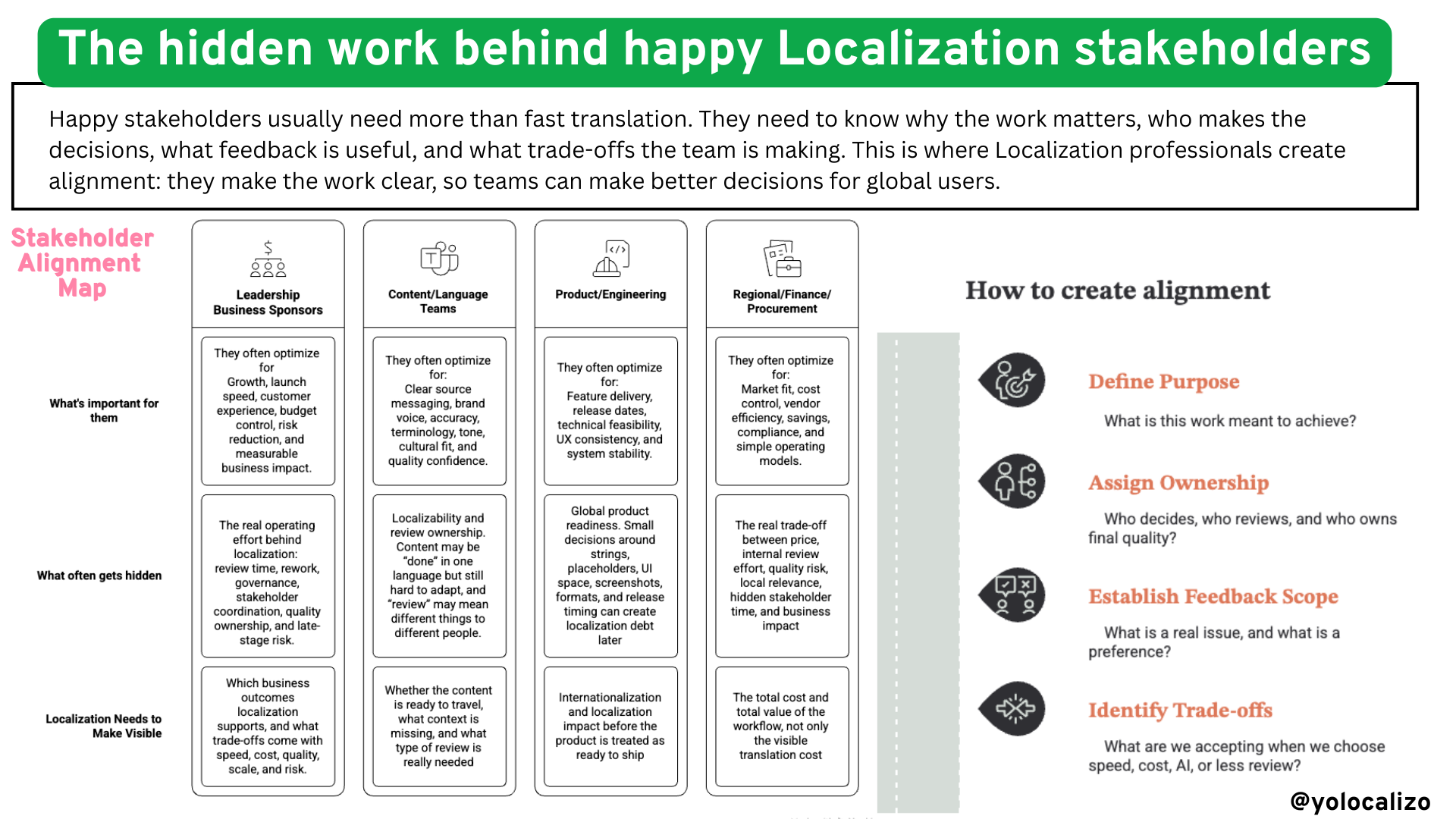
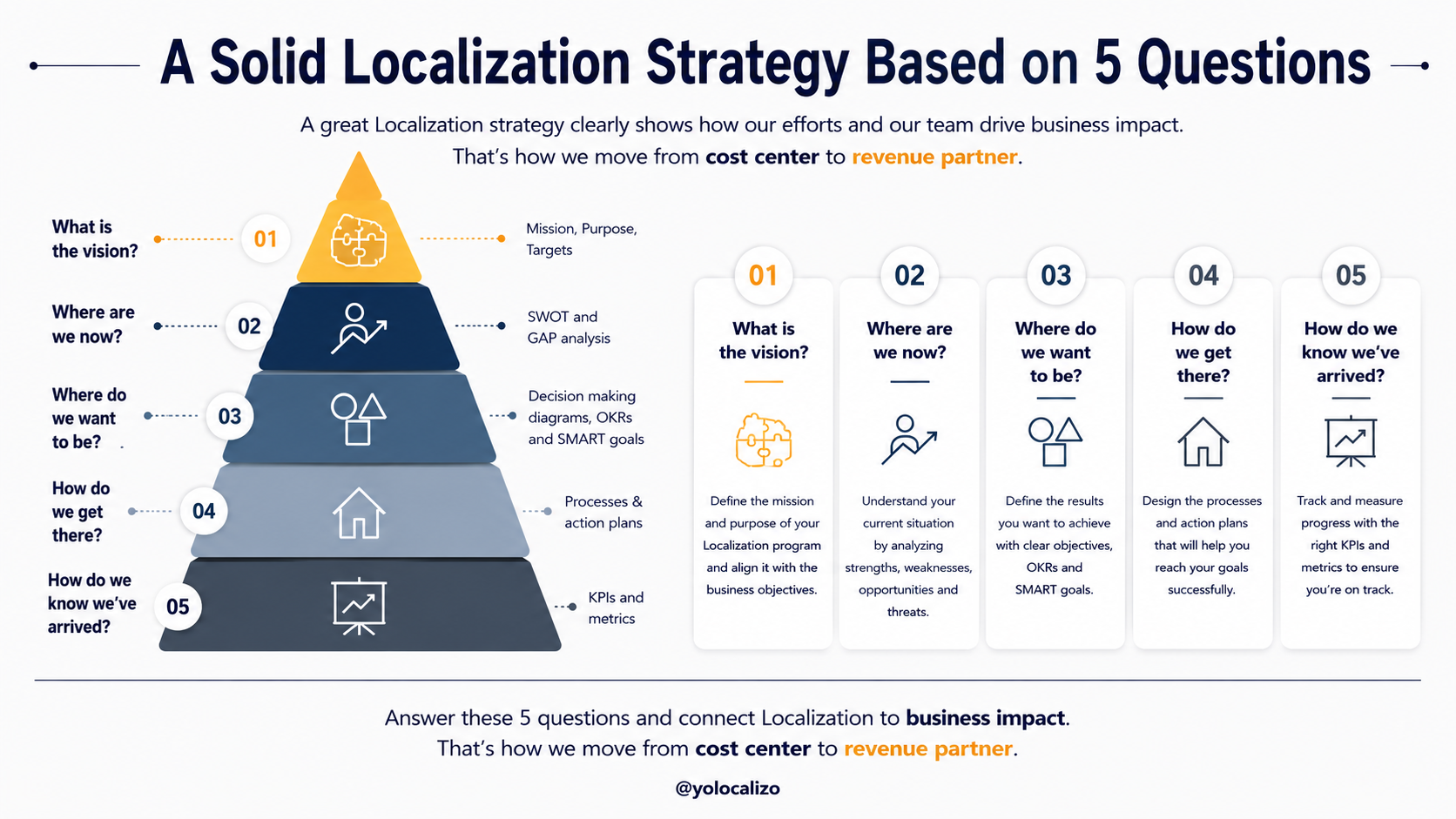
Perhaps one of the most important tasks of a Globalization team (apart from executing the Localization strategy) is to give visibility to the work we do and explain how it contributes to the company's bottom line.
And the truth is that I find myself having more opportunities than ever to explain what Globalization is all about.
Working internally on the client side, it is not always easy to keep track of all the planning discussions, roadmap reviews, and strategic decisions happening across different parts of the company. However, with remote and hybrid ways of working now part of our daily routines, joining these conversations has become much easier. I have more opportunities to attend meetings, understand what other teams are working on, and identify where Globalization might contribute.
Of course, having access to more meetings doesn't mean I should attend all of them. My calendar would probably disagree! But it does give me more opportunities to bring Globalization into conversations where, perhaps, it wouldn't have been considered before
In one of the meetings, I attended last week, one of the topics on the agenda was Globalization processes.
I prepared a bit of a script of what I wanted to say. And I started by saying something that usually surprises people when they hear it, which I think is one of our industry's problems.
Globalization is not a process.
It is true that when addressing the Globalization of a digital product, certain steps need to be done, and although in a way they are processes, checklists, test cases, etc. . software Globalization is much more than a process. It is a way of thinking and a way of doing business. It is a way to establish a lasting relationship with customers across different regions of the world.
A company that genuinely has a Globalization mindset has local strategies that support the company's overall objectives. It may seem contradictory, but in reality, one of the best yardsticks for measuring a company's degree of Globalization is the number of strategies it uses across the different markets in which it operates. No, Globalization is not a process; it is rather a framework, an umbrella to use a metaphor, an umbrella under which technology, business, and culture meet.
Globalization is not a process because a process generally implies something that is executed once and that's it, done and over with.
I see it more as a cycle of different activities that succeed each other in which the ultimate goal is to grow in more than one market at a time. I have seen many cases of companies claiming to be global. I have seen important budgets that invest in market research, development, and design to ensure the software is top-notch for the home market in which the company operates. And then that same company that prepares its product with so much care turns out to treat international markets differently.
They are looking to save costs on translation work.
They are looking to shorten the schedule to make a release as soon as possible, even if there is not enough time to carry out LQA work as thoroughly as necessary.
Suppose the following scenario: in the home market product, no effort is spared; Development and QA are invested in an exhaustive way, running multiple test cases and conducting stress and compatibility testing to deliver a quality product.
We devote a lot of time and resources to the home market version. Months of development, sometimes even years, but then when it's time to release the software in multiple markets, we get in a hurry and want to have it localized and LQA everything in a couple of weeks. This is not the best way to embrace a global expansion strategy.
Why in the localized versions, are the standards lowered, and less attention is paid to the quality of translations and the quality of LQA?
In my opinion, this happens because many companies consider these markets as secondary.
This is something they will not clearly recognize, but in the end, it happens because they see the work of Globalization as a process, not as a cycle that begins in the ideation phase.
They instead treat it as an afterthought once the home product is defined. When a company considers the work of Globalization a cycle rather than a technical process, it changes its mindset. And when that happens, they see Localization, Translation, and LQA as part of something bigger.
Below is an infographic that I think perhaps best represents the words written above.

What is your opinion of all this? Globalization, Localization, etc. is something we do once, and that's it? Is it a process? Or have you managed to get developers and development teams, in general, to see it more as a cycle that should be executed in parallel to the software development process?
Leave your comments below, I would love to hear your point of view.
@yolocalizo
A multi-market expansion strategy for any product is most effective if the various Globalization (i.e.Localization, Internationalization) activities are understood as a cycle that runs parallel to the multiple phases of software development; This cycle repeats during the various product upgrades. It is not an activity that is executed as if it were a process once the home market version (usually in English) is finalized. It is not a transaction that simply sends files to a professional localizer shortly before the global release. No; Globalization is not a process. Globalization is a cycle that runs multiple times. It is a cycle that runs in parallel with the product research, design, and development phases.