


There are many articles about best practices on how to prepare an RFP, but information about how to evaluate them is scarce. This blog post gives a client-side perspective on what areas are important.

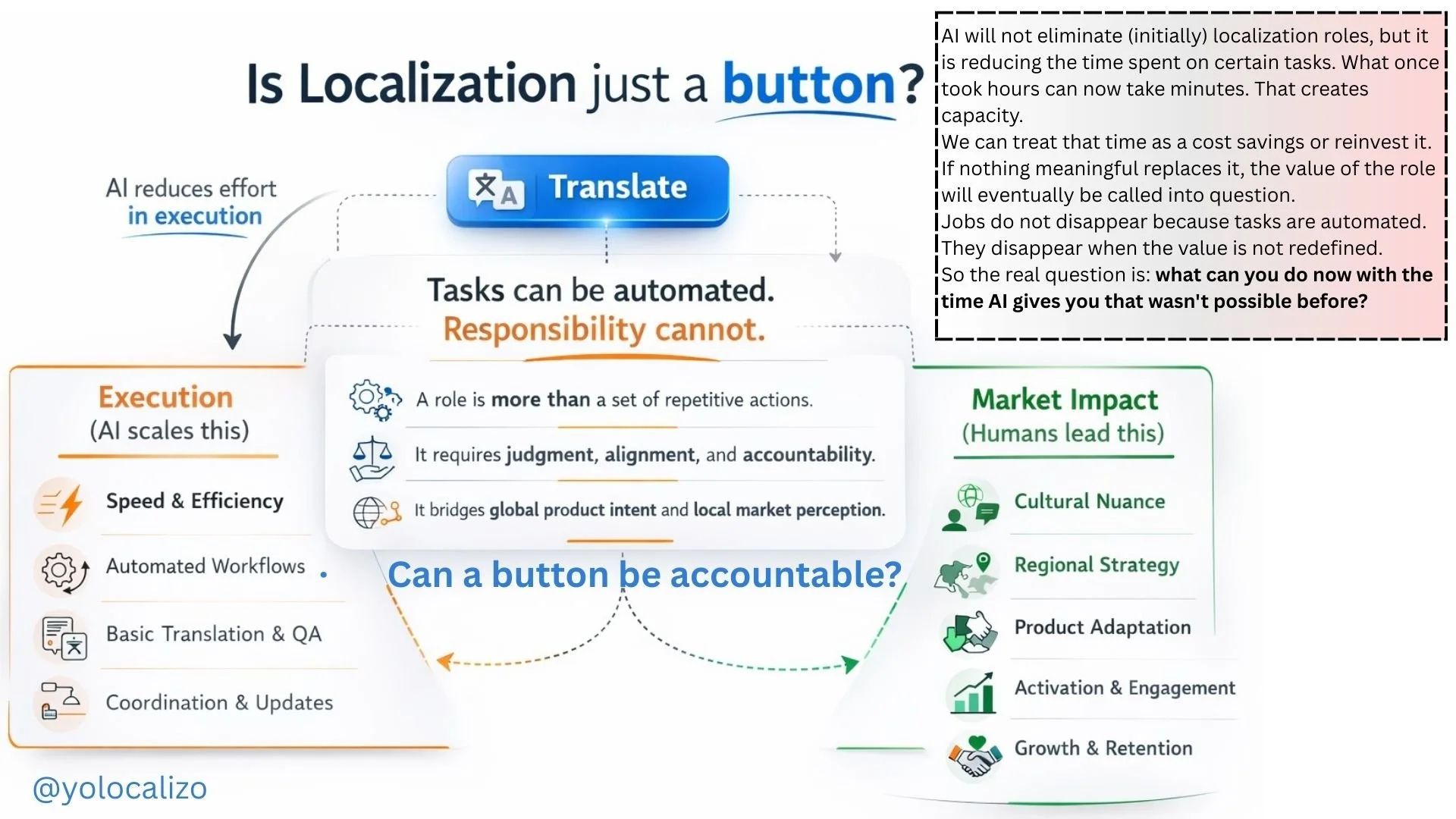
AI will not eliminate (initially) localization roles, but it is reducing the time spent on certain tasks. What once took hours can now take minutes. That creates capacity.We can treat that time as a cost savings or reinvest it. If nothing meaningful replaces it, the value of the role will eventually be called into question.Jobs do not disappear because tasks are automated. They disappear when the value is not redefined.
So the real question is: what can you do now with the time AI gives you that wasn't possible before?
The world of localization is full of small, hidden details.
Some things are deeper than they seem, and I often see between in-context review and LQA in the world of Localization. They might seem the same, but if we scratch beneath the surface, we'll see they're not what they seem.
In this post, I want to focus on explaining the differences between in-context review and LQA, which is something I see being confused quite frequently, and although the tasks are similar ... they are not the same.
AI is not eliminating localization. But it is removing the illusion that execution alone is enough.
Layer 1 accuracy, delivery, quality was our playfield. Now AI scales it faster and cheaper. And when value is framed only around execution, the conversation shifts to cost and headcount.
Meanwhile, executives focus on retention and growth.
That’s Layer 2 cultural impact.
In the age of AI, localization must operate in both.
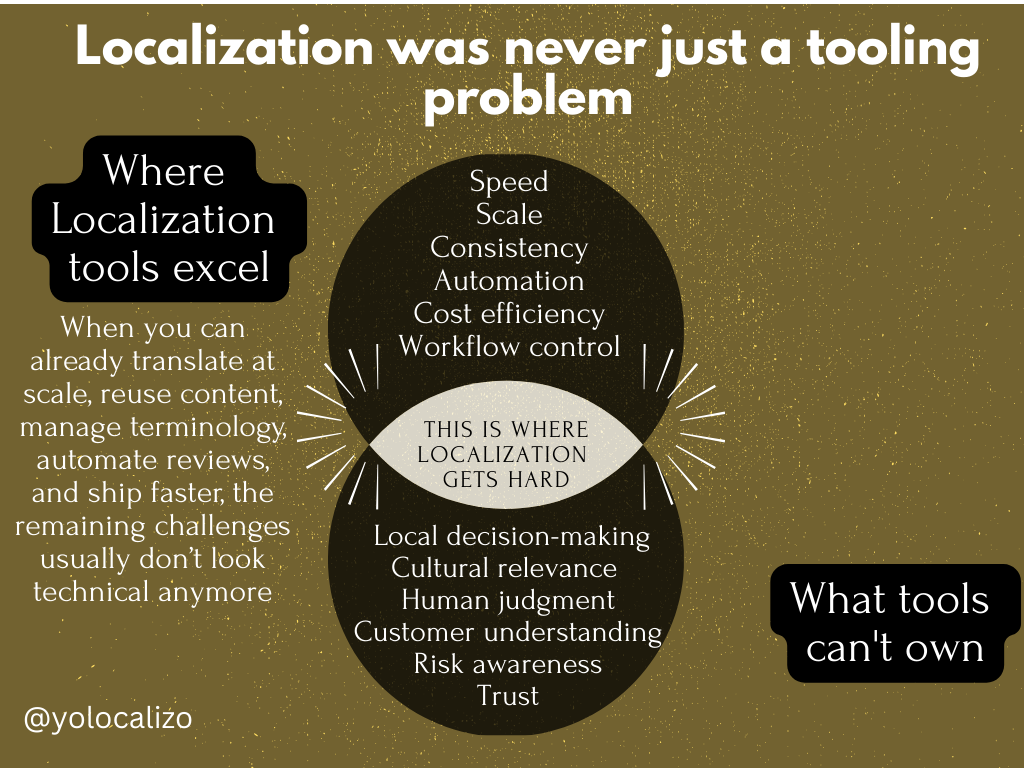
You need a solid localization tech stack before you can build a global digital product. Tools that help manage content, automate workflows, ensure consistency, handle volume, control quality, and scale across languages are essential. Without them, everything becomes slower, more expensive, and harder to manage. Today, we have great tools to support all of this. And yet, despite all these changes, something fundamental hasn’t changed in the ingredients that define good localization.
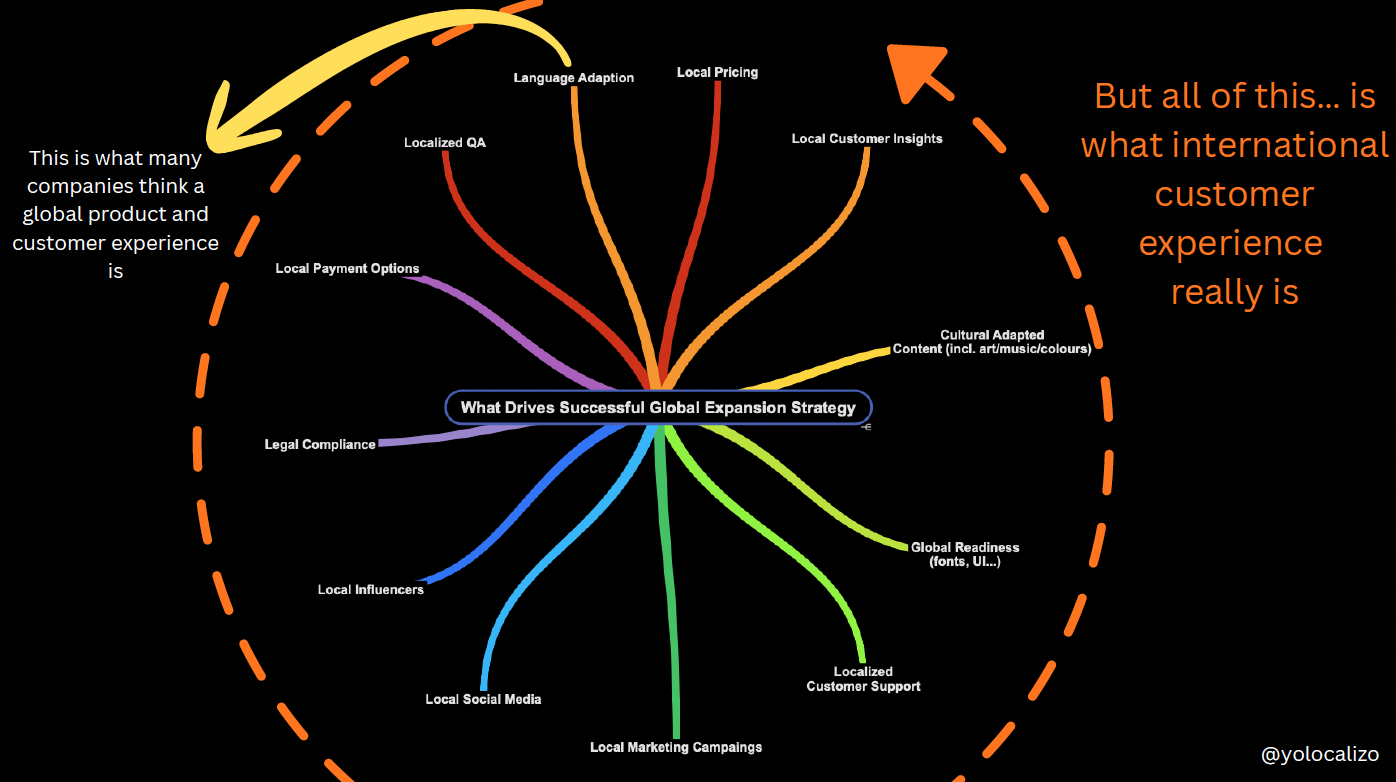
Outside the circles of localization and globalization, translation is still seen as the step to go global. As if adapting the language automatically creates a global product. As if users in new markets will suddenly feel at home just because the words are no longer in English. In reality, that’s rarely how it works. Users don’t experience products in pieces. They experience prices, payments, support, content, and expectations all at once. Adapting the language is an important start. Still, users experience the product as a whole. If only the words change, they will naturally notice the parts that didn’t.
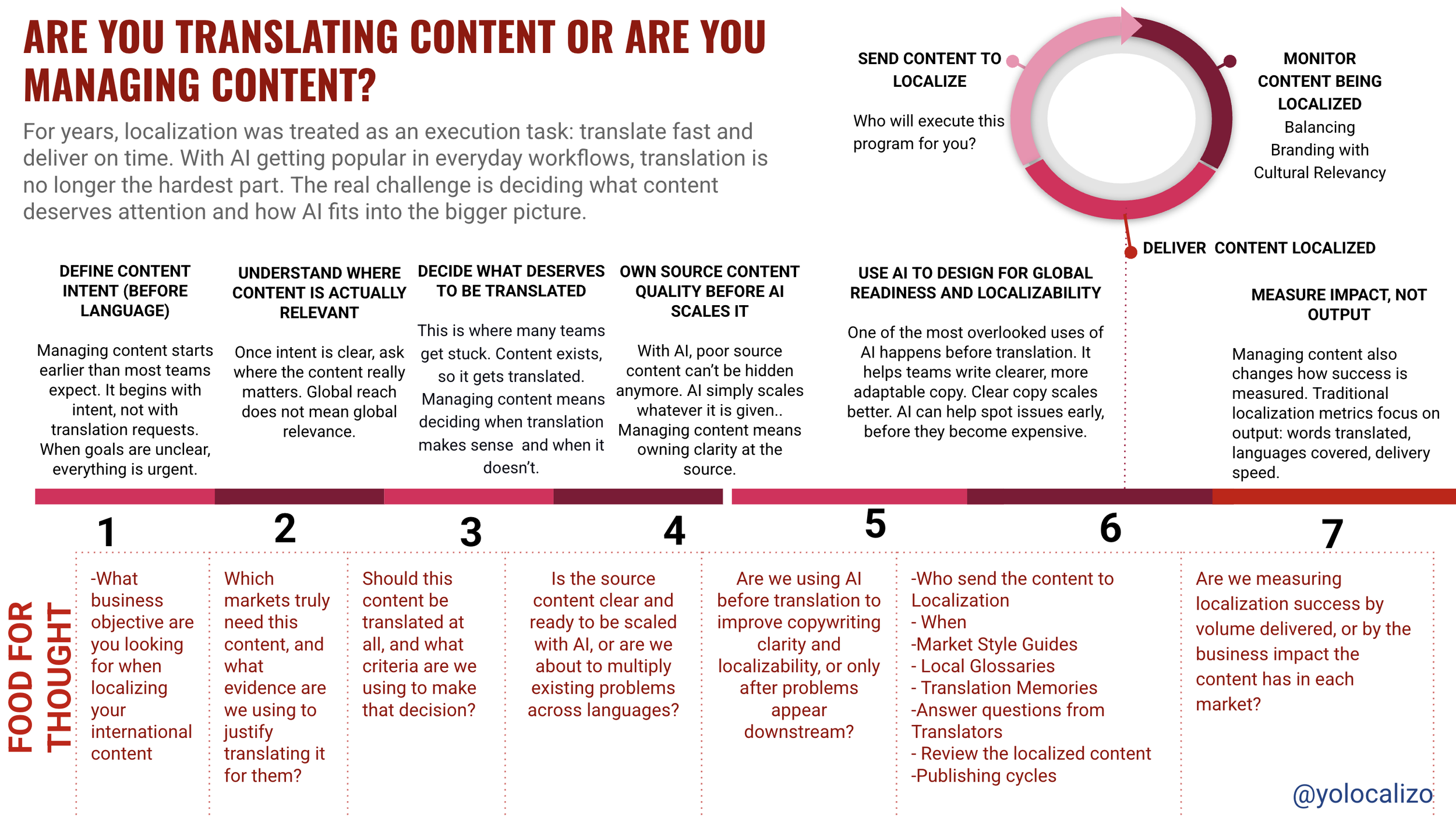
For a long time, localization was treated as a pure execution task: translate fast, deliver on time, and stay invisible. That model worked when content volumes were lower and speed was the main challenge. As AI becomes part of everyday workflows, this approach is no longer enough. Translation itself is not the hardest part anymore. The real challenge is deciding what content deserves attention and how AI fits into the broader content ecosystem. This shift highlights a deeper change: moving from simply translating content to actively managing it.
Localization professionals often focus on translation quality and best practices, but decision-makers care about customer impact and revenue. If we frame localization as a cost, it risks being deprioritized. Instead, we must highlight its value driving engagement, trust, and business growth.
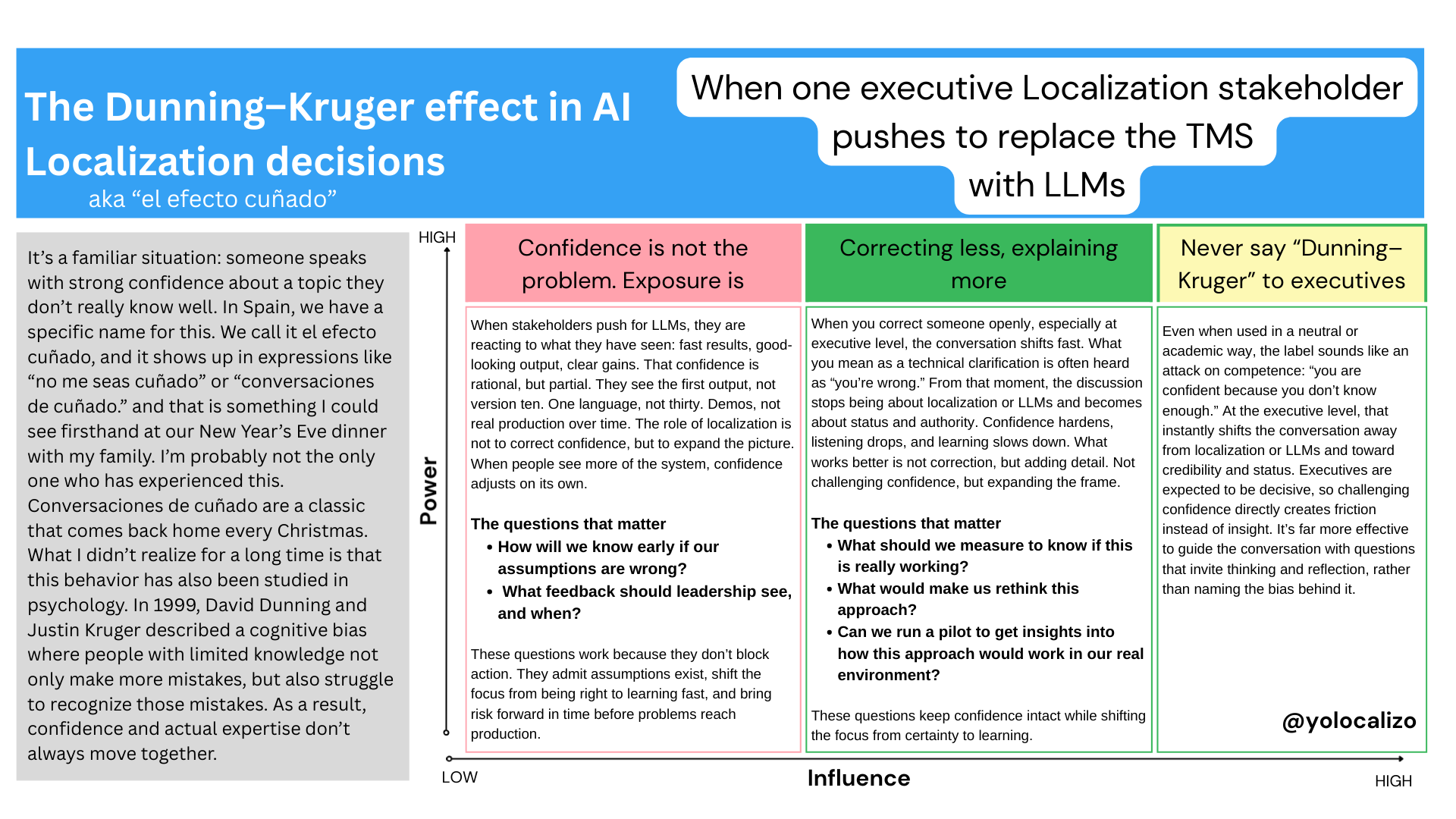
At a New Year’s Eve dinner with my family, I saw a familiar situation play out: someone speaking with strong confidence about something they only partly understood. In Spain, we call this el efecto cuñado. What I didn’t realize for a long time is that this behavior has a name in psychology too. It’s the Dunning–Kruger effect, and it shows up just as often in localization and AI conversations as it does at Christmas dinner tables.
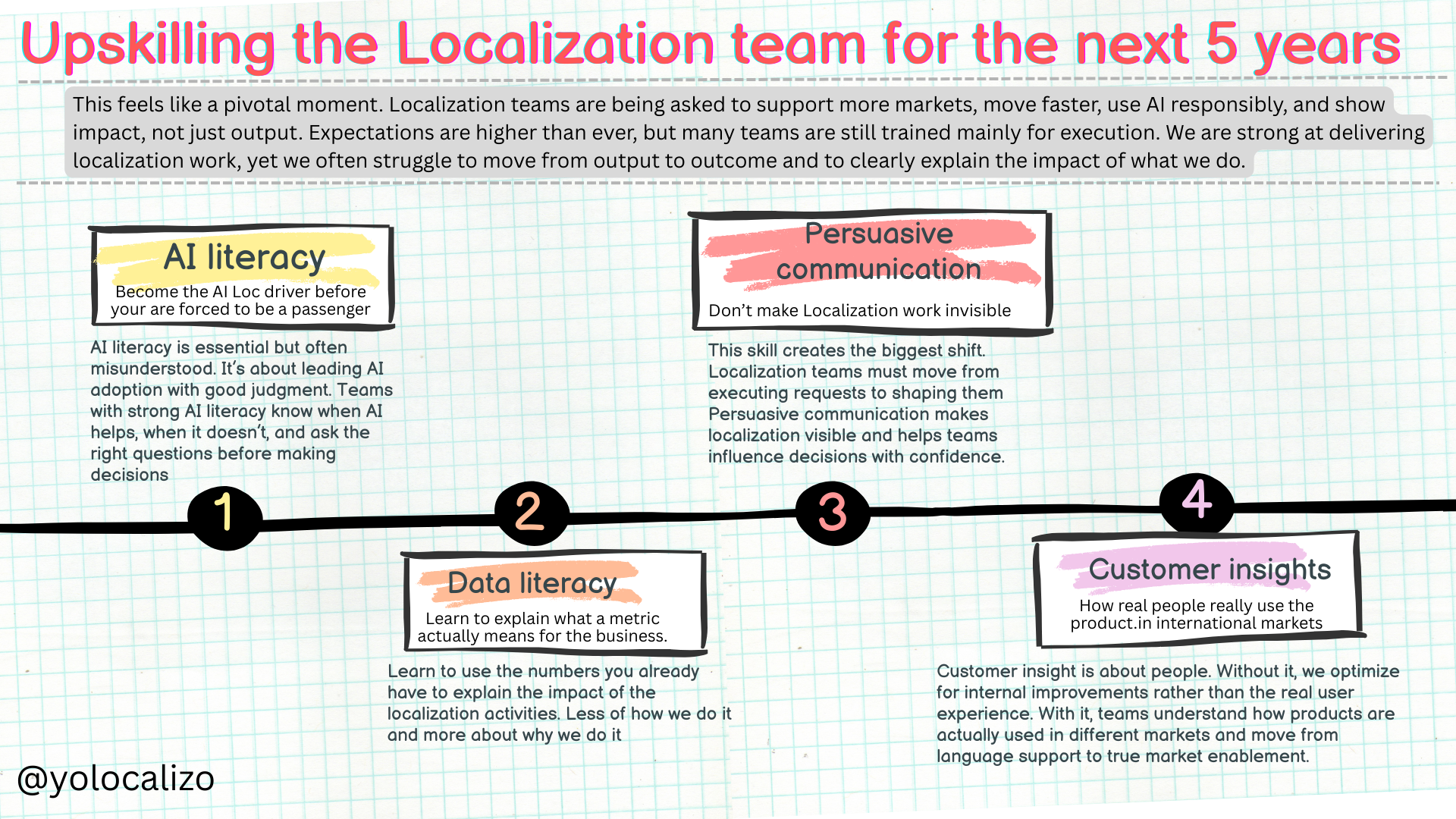
This feels like a pivotal moment. Localization teams are being asked to support more markets, move faster, use AI responsibly, and show impact, not just output. Expectations are higher than ever, but many teams are still trained mainly for execution. We are strong at delivering localization work, yet we often struggle to move from output to outcome and to clearly explain the impact of what we do.

“Welcome to my blog. The space where I document my passion about Localization, Project Management and Leadership”
There are many articles about best practices on how to prepare an RFP, but information about how to evaluate them is scarce. This blog post gives a client-side perspective on what areas are important.
While adequate Localization is still critical and is the minimum requested of a product with ambitions to be marketed globally, in reality, that is not enough- We have to go one step further; global consumers want a customer experience that connects with them at a local level. For that to happen, it is essential that Globalization that Localization activities are just another business process integrated into product development; that will not happen if when we talk to the development team and they comment that "it's way too early to talk about that" we let the conversation die there.
How many good ideas have you had about Localization and then a while later forgot about them?
How many valuable tips have you read in books or articles and forgotten over the years?
What's the point of spending time reading a book, if, when it's time to implement things I want to do, I can't remember practically anything?
We live under pressure to learn and improve.
We invest many hours in our lives reading books, watching videos, and listening to podcasts.
And yet, where has all that valuable knowledge gone?
Where is it when we need it?
If we don't speak up about our work, no one will know. Giving visibility about the work we do is important. In this post, I give three ideas to make visible the invisible.
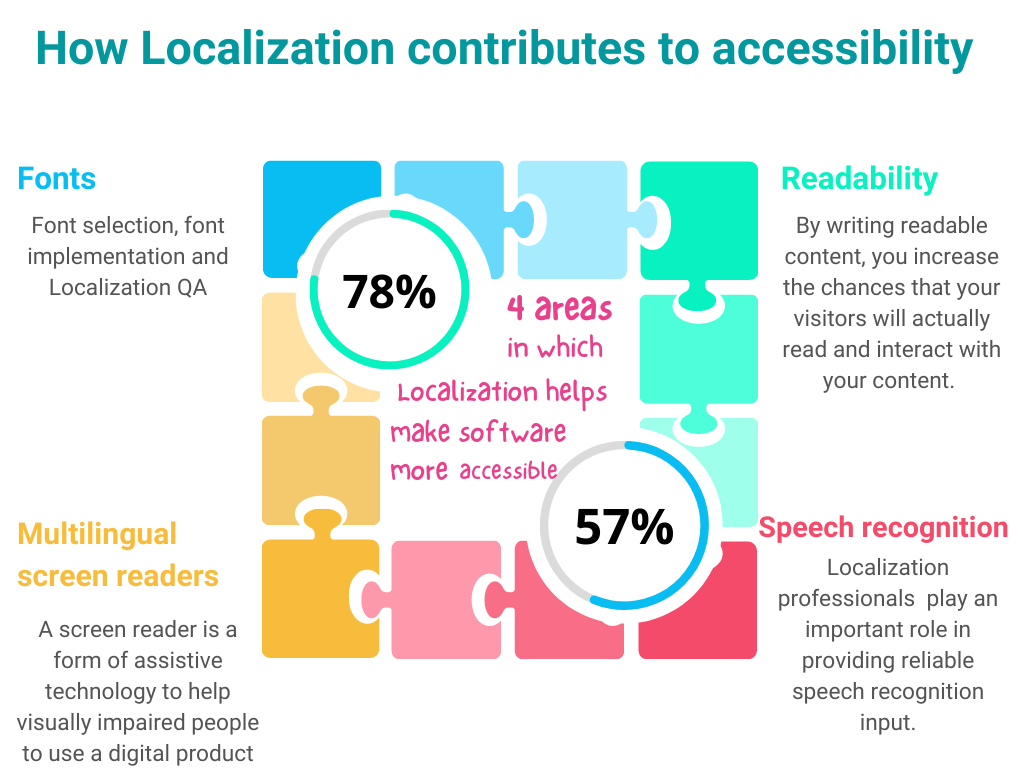
Localization is a means to an end. This article is about how Localization contributes to making digital products more accessible.
How to develop a strategy for a life of meaningful work in the Localization industry
Understanding where we are in our professional lives and understanding the type of roles available in the Localization industry might help us to take a proactive approach to building our career
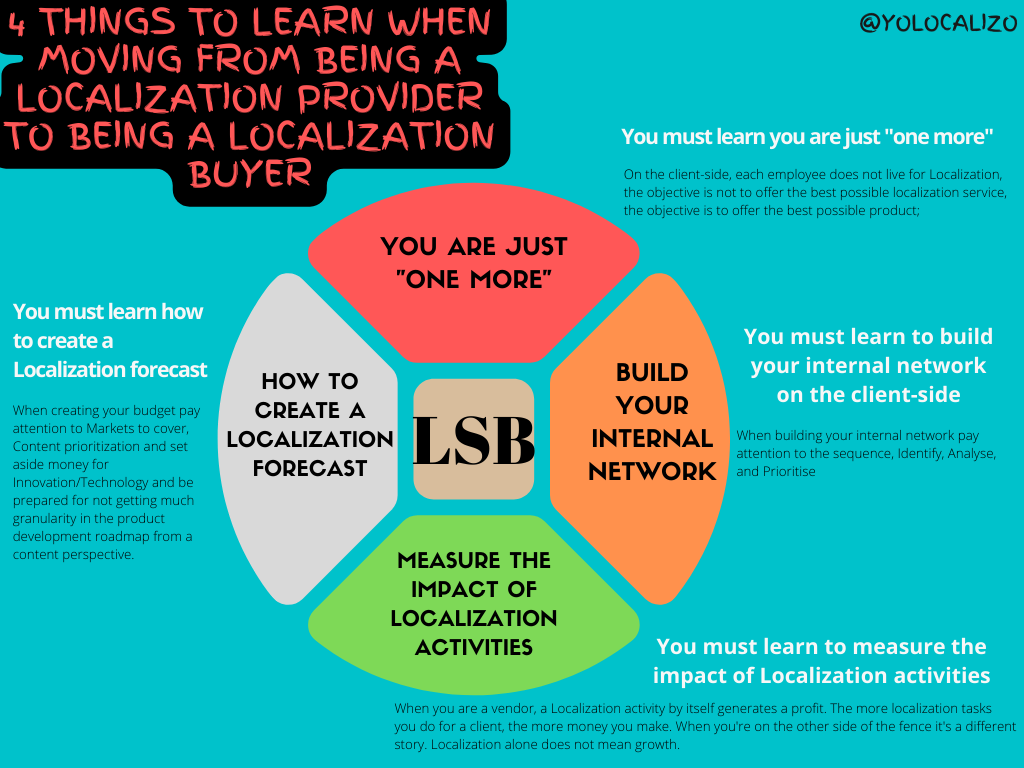
Although it is true that, in general terms, the tasks related to Localization, whether as a language service provider or as a localization buyer, have more similarities than differences, there are certain aspects, mainly from a mindset perspective, that must be considered so that the transition from provider to the buyer is carried out as effectively as possible.
Executives have a default style of decision-making developed early in their careers. Executives can fall into different categories when making decisions. By knowing the preference for hearing or seeing certain types of information at specific stages in their decision-making progress we can substantially improve our ability to pitch our Localization strategy
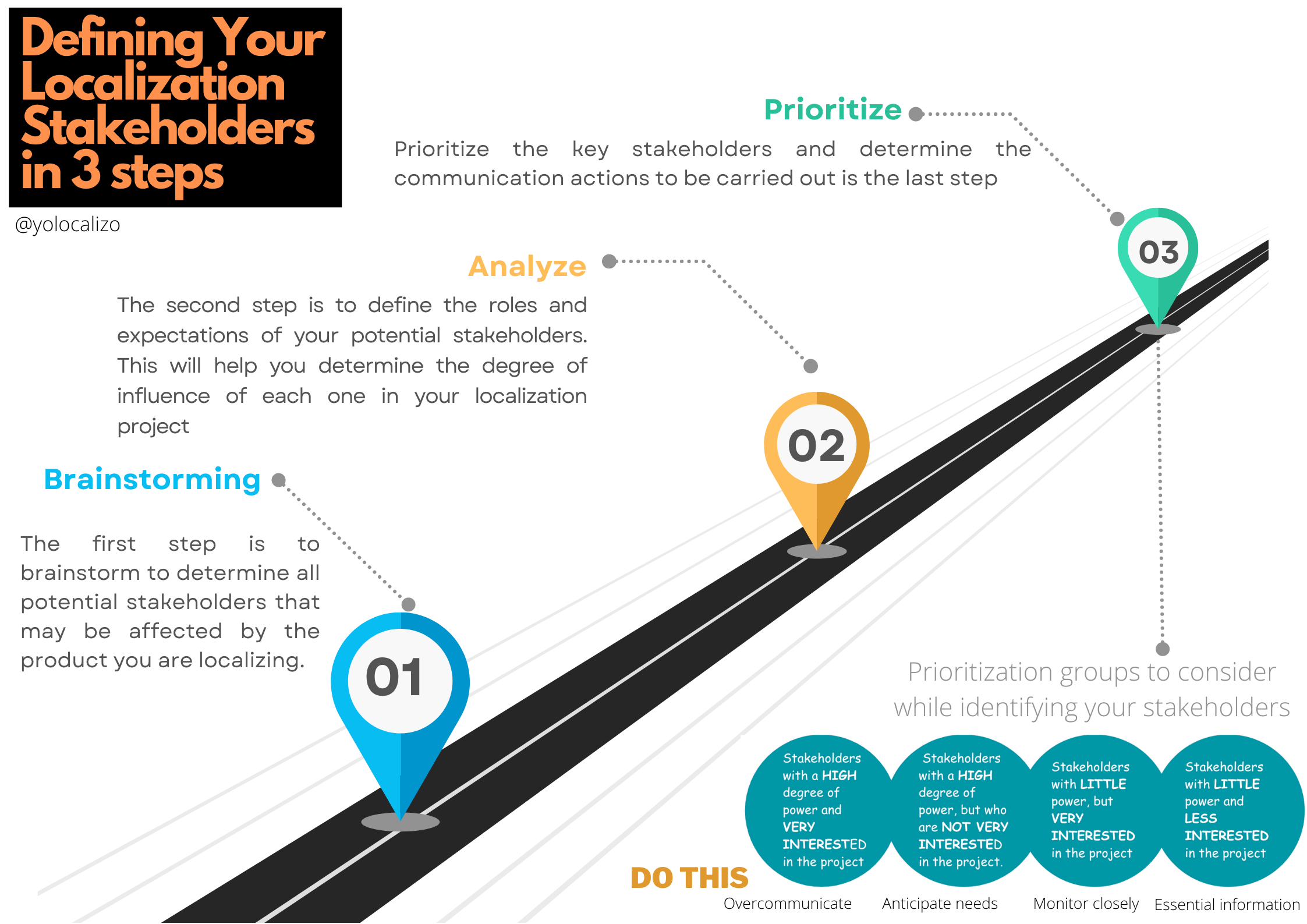
A Localization team interacts with many people in a day. A Localization team has many lines of communication and stakeholders to engage. This is great because it allows localization industry professionals to have a lot of visibility and opportunities to explain how the content we create and localize helps the overall growth of the company. But at the same time, this presents a challenge, since interacting with so many people requires a plan to know who are the people we need to interact with.
When it comes to public speaking, the focus should not be on what we want to say but on what our audience needs to hear. The focus should not be on us but on them. The same applies in the Localization industry. We must forget what we want to tell and focus on what our stakeholders need to hear.
In an economy where the average company finds it challenging not only to grow but sustain, it is worth considering which are the different ingredients needed to design a cross-cultural experience
We often have a disconnection between results and the speed with which we achieve them. We all want fast results; whether we are improving the level of a language we are learning or wishing to lose those extra pounds now that the summer is approaching. ... or .... in the Localization program, we are implementing in a company.
Unfortunately, many things in life do not follow linear progress. We face two types of curves when we want to achieve something.
And knowing which one we are in can significantly help us understand the skills we have to polish and the plan we have to follow.
The other day, I watched a movie in which the movie's central character infiltrates a drug gang. He gained their trust, which led him to get pretty much anything he wanted ... and my mind started to wonder what if I infiltrated inside the developers to motivate them to design the software with localization in mind from day one?
Sometimes, we can achieve good results by focusing on the essential parts and going back to the basics. In this post, I write about the crucial aspects to consider when defining a Localization strategy.
This year I don't have the typical list of goals to accomplish this year, no New Year resolutions. This year, I don't have goals, but I know the kind of person I want to become.
Identity-based concept, lessons learned from the book Atomic Habits adapted to my life as Globalization proffesional
Habits are formed following a sequence of 4 steps. Read this article to learn more about this fascinating topic of habit formation
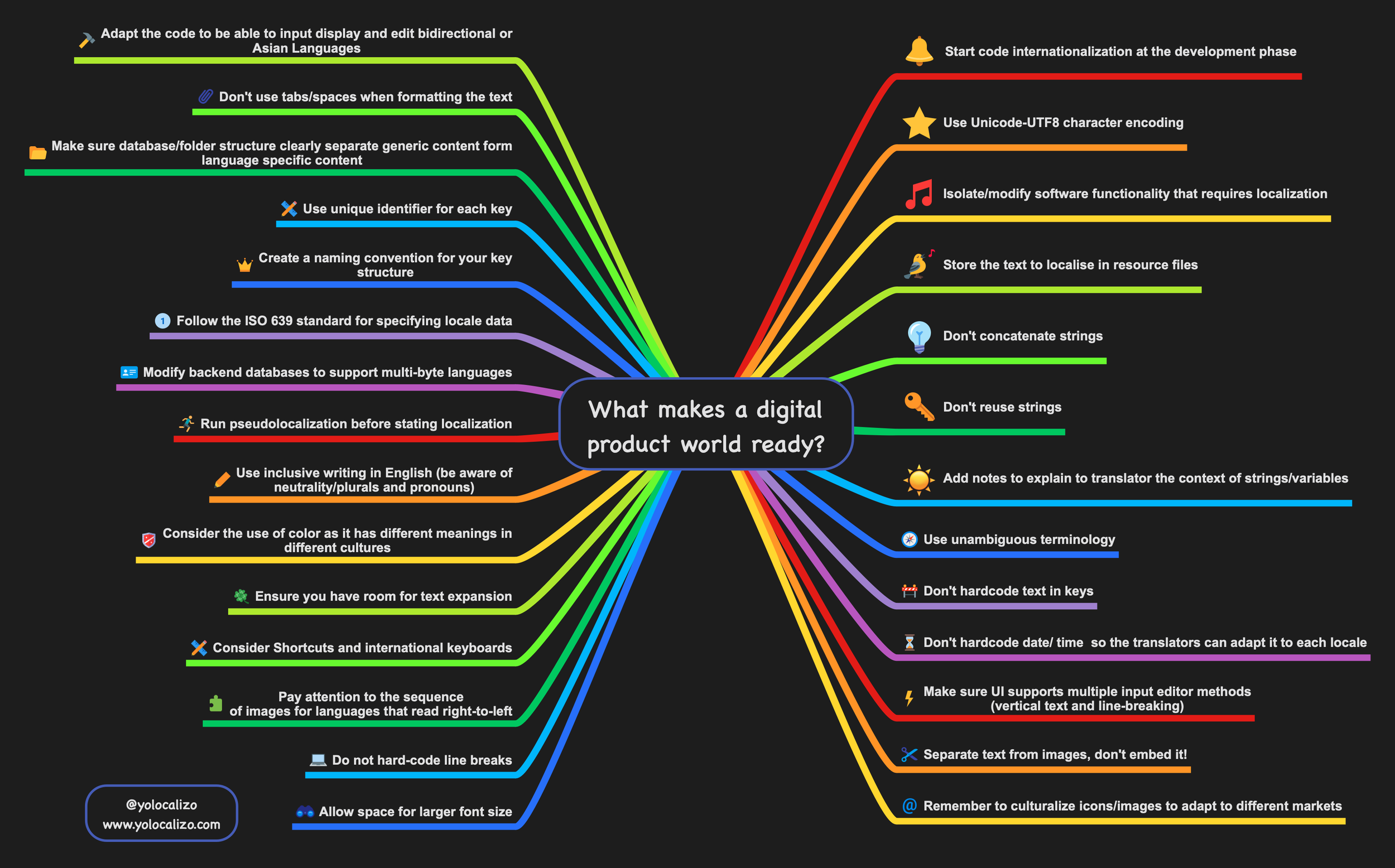
Localizability readiness is a series of processes and activities that optimize a product for a worldwide launch. In this post I explain how we can achieve localizability readiness by investing our efforts in improving the quality of the English content of the source text we create.
In this post I analyze the 7 areas that a Localization Service Buyer considers important when working with a Language Provider.
Software development using sprints are great for Localization teams! Please have a look at my post and let me know if you agree :)
Creating a localization budget is not an easy task as there are multiple variables to consider. In this article I explain the 3 that are the most important from my point of view








Defining localization metrics is relatively easy. In many cases, a team can write a reasonable list during a workshop, like the ones I mentioned above, or during a strategy session. The conceptual part of what to track and why rarely takes long. The real difficulty appears later: HOW you actually obtain those metrics.