


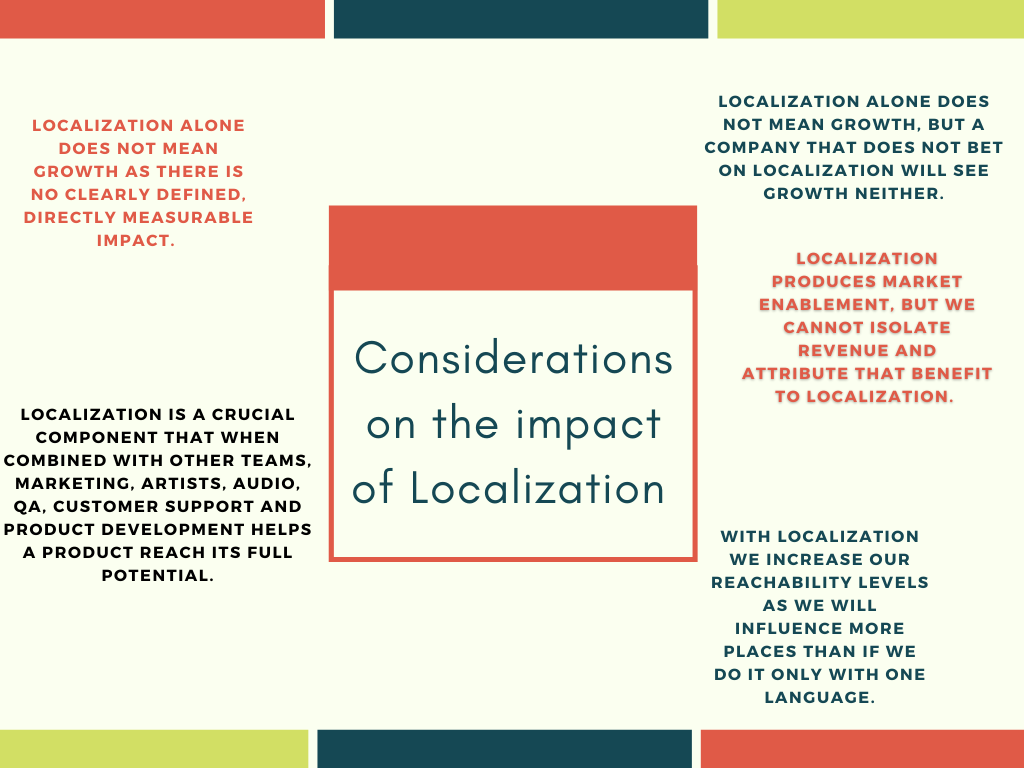
Much has been written and talked about the ROI of Localization and the reality is that localization activities by themselves do not generate a profit.
In some RFPs today, it is no longer so clear what buyers really value from LSPs. This post explores why. Based on my experience on the buyer side, I share why the real need may be shifting from pure execution toward something harder to explain, but often more useful in practice.
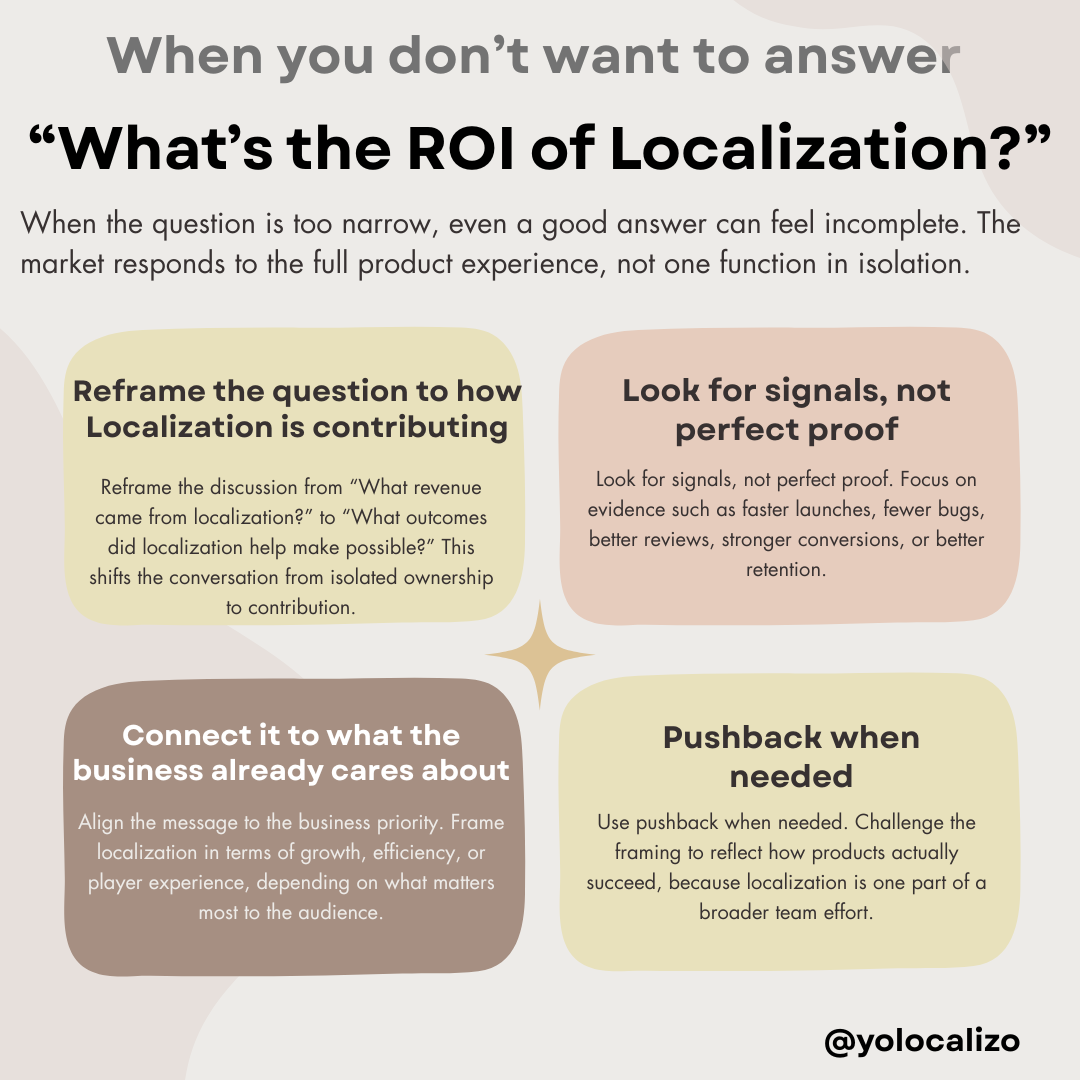
What do you do when someone asks for the ROI of localization and you know the question is too narrow from the start? In this post, I reflect on why I stopped trying to prove isolated ownership and started talking more honestly about contribution.
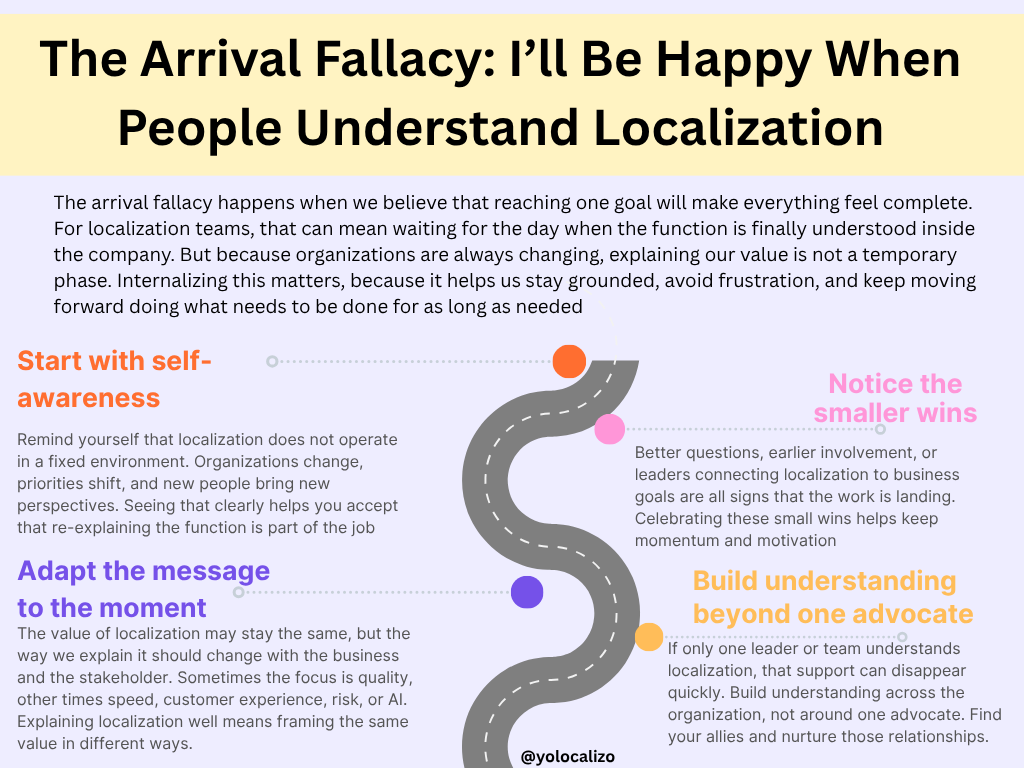
Reading The Myths of Happiness reminded me of the arrival fallacy: the belief that once we reach a certain goal, everything will finally feel solved. In localization, that can look like waiting for the day when people will finally understand what we do. But organizations keep changing, so that moment may never fully come. And maybe accepting that is exactly what helps us stay grounded, avoid frustration, and keep moving forward.
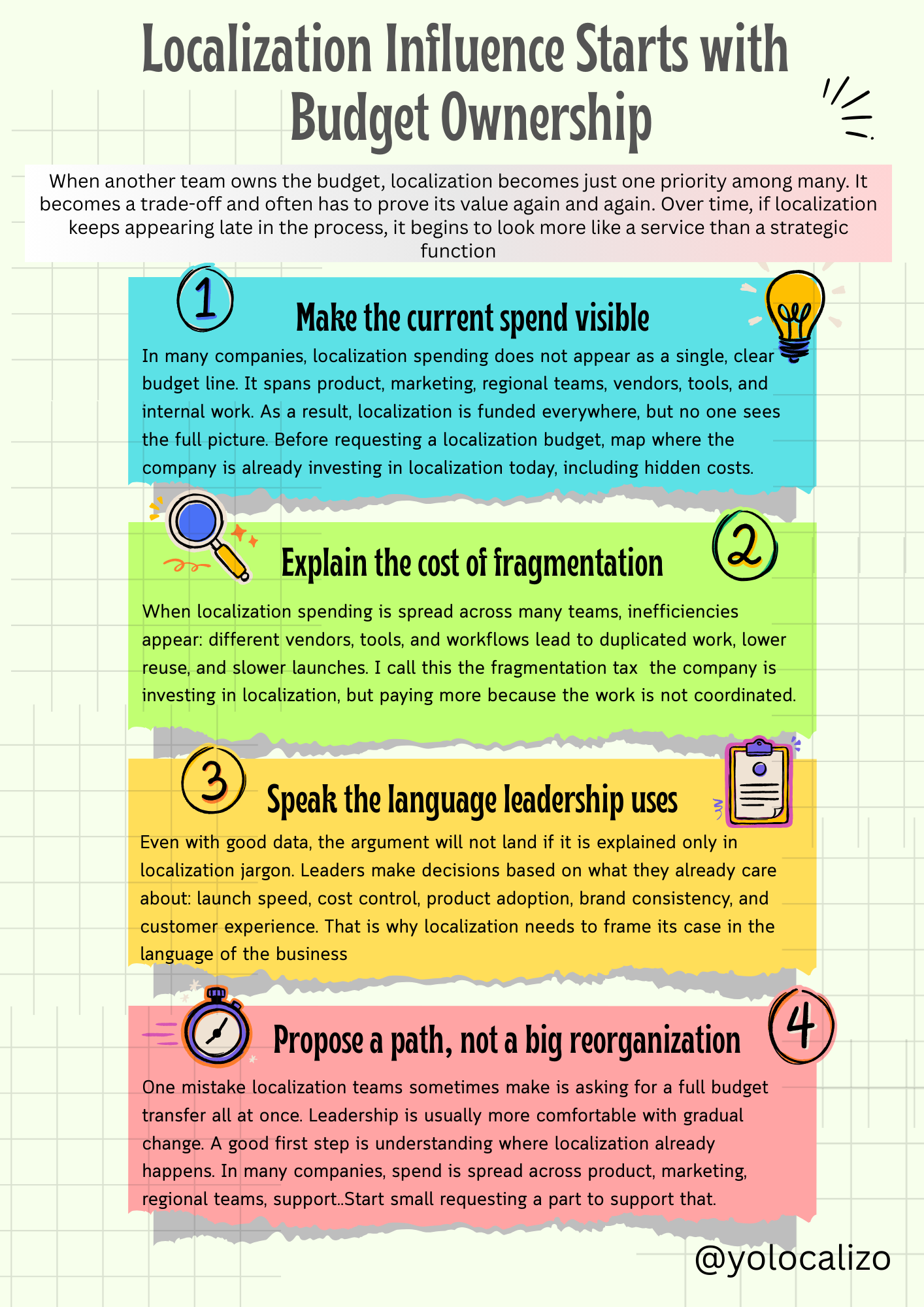
In many companies, the localization budget does not sit with the localization team. At first, that may seem like a small detail. But over time, it changes how localization influences strategy
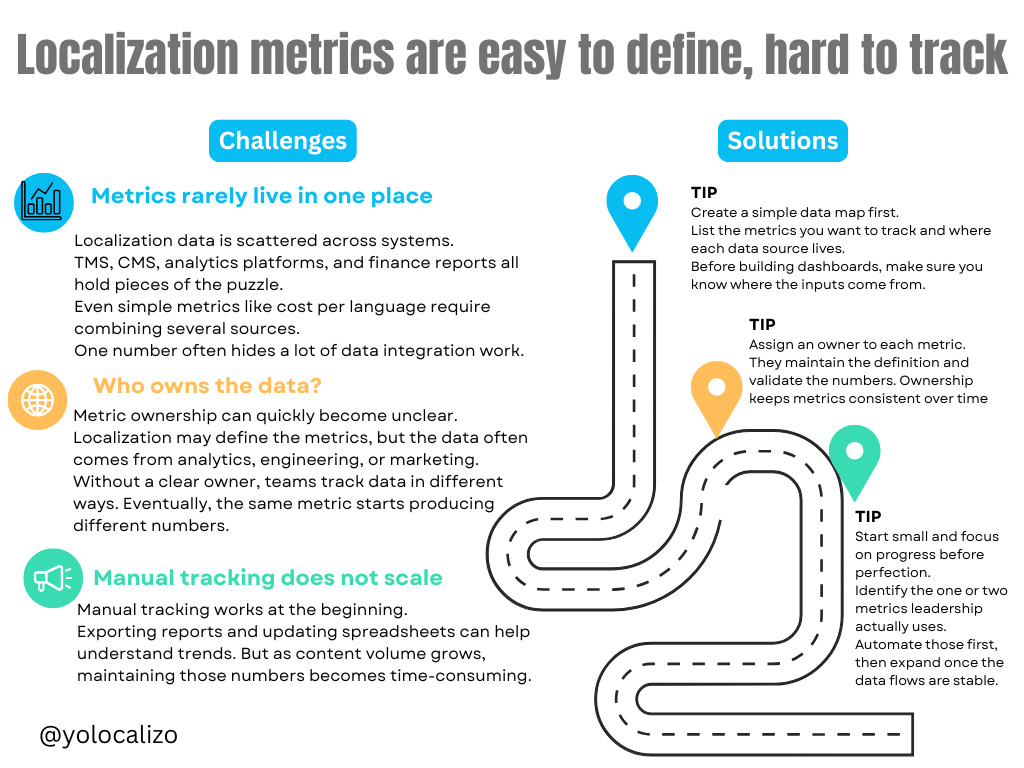
Defining localization metrics is relatively easy. In many cases, a team can write a reasonable list during a workshop, like the ones I mentioned above, or during a strategy session. The conceptual part of what to track and why rarely takes long. The real difficulty appears later: HOW you actually obtain those metrics.
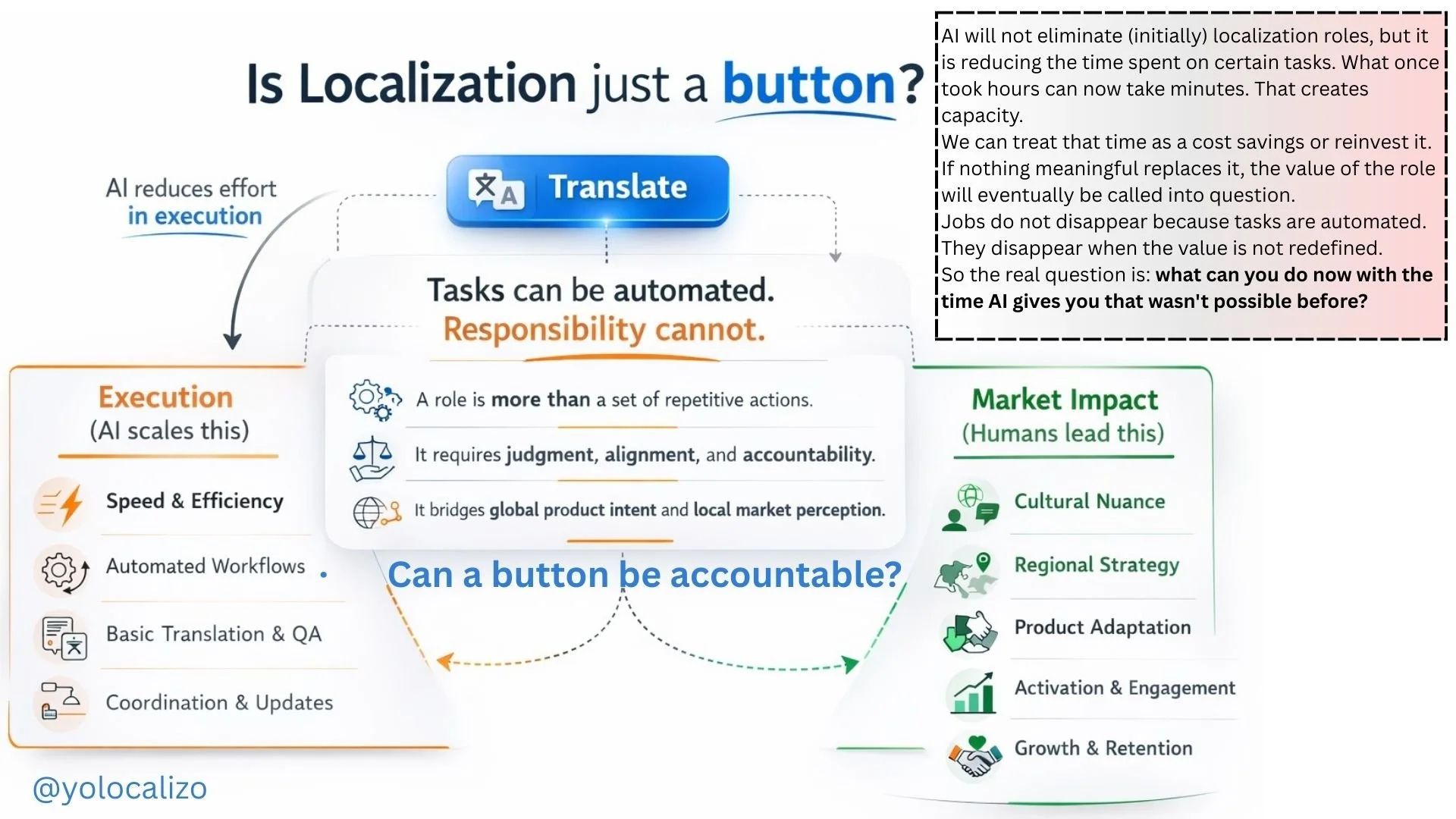
AI will not eliminate (initially) localization roles, but it is reducing the time spent on certain tasks. What once took hours can now take minutes. That creates capacity.We can treat that time as a cost savings or reinvest it. If nothing meaningful replaces it, the value of the role will eventually be called into question.Jobs do not disappear because tasks are automated. They disappear when the value is not redefined.
So the real question is: what can you do now with the time AI gives you that wasn't possible before?
The world of localization is full of small, hidden details.
Some things are deeper than they seem, and I often see between in-context review and LQA in the world of Localization. They might seem the same, but if we scratch beneath the surface, we'll see they're not what they seem.
In this post, I want to focus on explaining the differences between in-context review and LQA, which is something I see being confused quite frequently, and although the tasks are similar ... they are not the same.
AI is not eliminating localization. But it is removing the illusion that execution alone is enough.
Layer 1 accuracy, delivery, quality was our playfield. Now AI scales it faster and cheaper. And when value is framed only around execution, the conversation shifts to cost and headcount.
Meanwhile, executives focus on retention and growth.
That’s Layer 2 cultural impact.
In the age of AI, localization must operate in both.
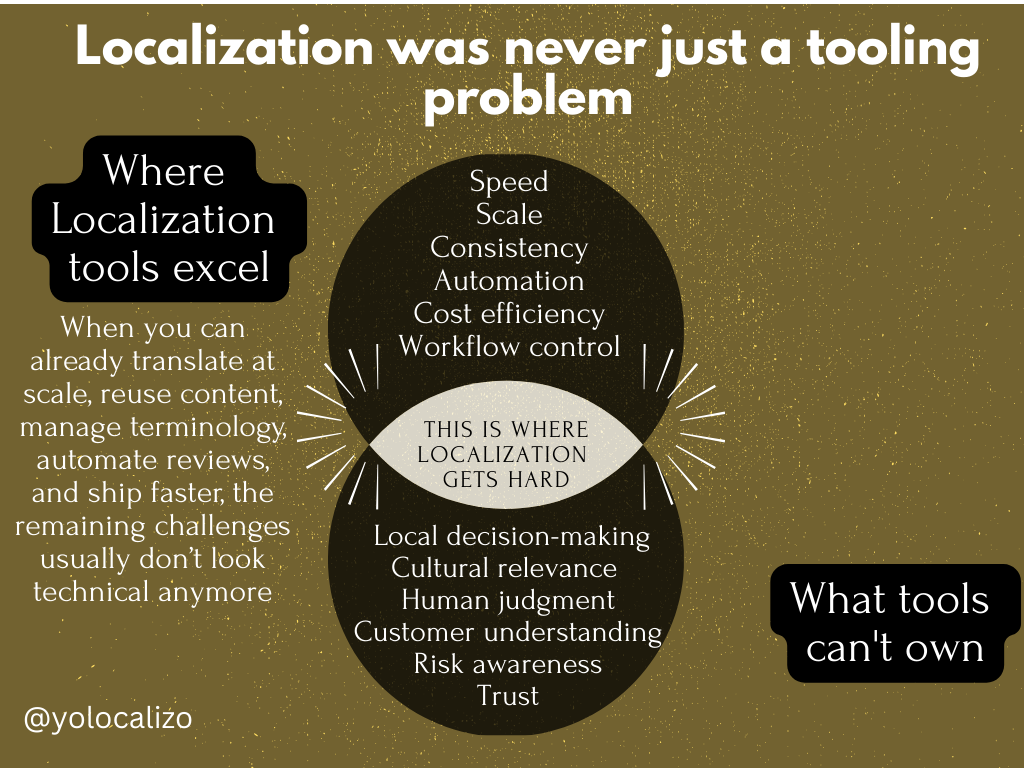
You need a solid localization tech stack before you can build a global digital product. Tools that help manage content, automate workflows, ensure consistency, handle volume, control quality, and scale across languages are essential. Without them, everything becomes slower, more expensive, and harder to manage. Today, we have great tools to support all of this. And yet, despite all these changes, something fundamental hasn’t changed in the ingredients that define good localization.

“Welcome to my blog. The space where I document my passion about Localization, Project Management and Leadership”
Much has been written and talked about the ROI of Localization and the reality is that localization activities by themselves do not generate a profit.
In this post, I analyze the different phases necessary to develop software. At the top, we can find a summary of the typical tasks/deliverables that the Product Development team performs. In the bottom part, we can find the different Globalization activities needed to create a digital product Global ready from the beginning. They are executed in parallel. Working side by side. Not as an afterthought
The role of the Internationalization engineer is one of the most unknown and complicated jobs in the #localization industry, and yet it is one of the most important because thanks to their work, they contribute to making the localization phase more accessible.
For those of you who like programming, technology and are interested in languages, specializing in this area can be an excellent option to build a promising future, as it is a role in high demand.
Culture Fit can lead to misunderstandings if it is not explained well because it can be interpreted as only hiring similar people. That's why I believe that better than Culture Fit is to embrace a Culture Sum mindset.
Culture Sum is all about understanding that people who are different can achieve great things together by relying on shared values.
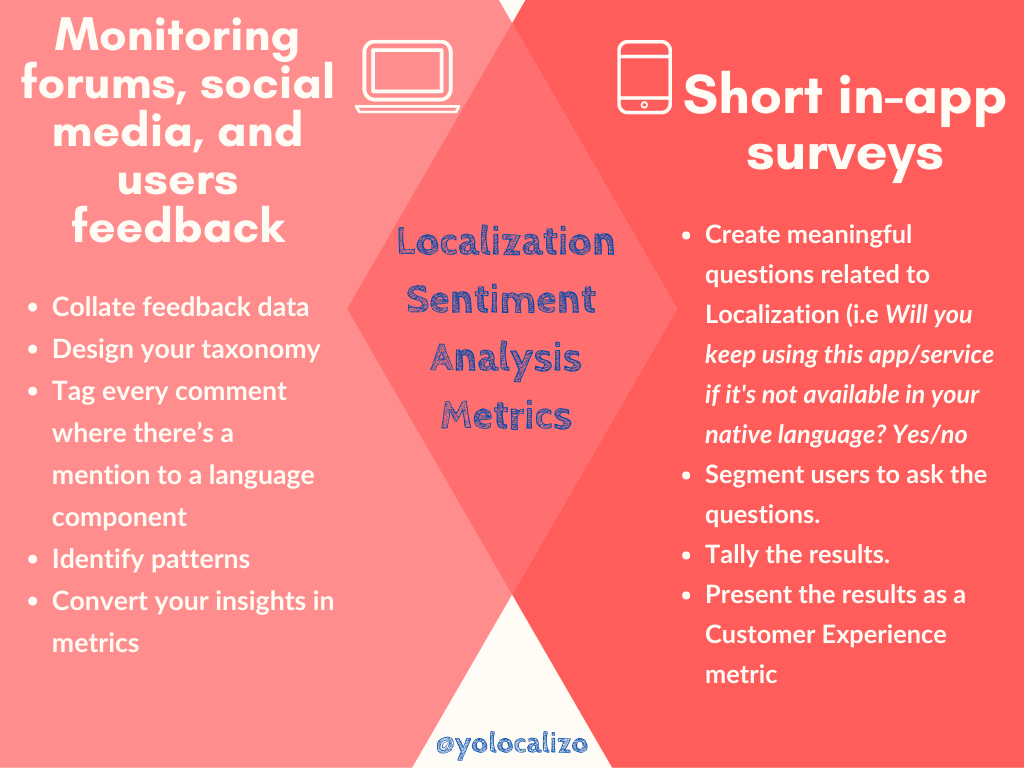
Localization ROI has never seemed to me a good metric to measure the impact of a Localization team. However, Sentiment Analysis feedback can give more clues about how the work of a Globalization professional contributes to the success of your product.
A big part of the customer-centric experience is related to the language, culture, the localized price per market, and payment methods
A company that really wants to reach a diverse audience has a potent weapon through hyper localization.
Some tips to create Global content ready when creating content
What skills should we develop as a localization/globalization professional if we want to go further?
Have you ever wondered how someone fills their time when they work in a Localization team but don't translate anything?
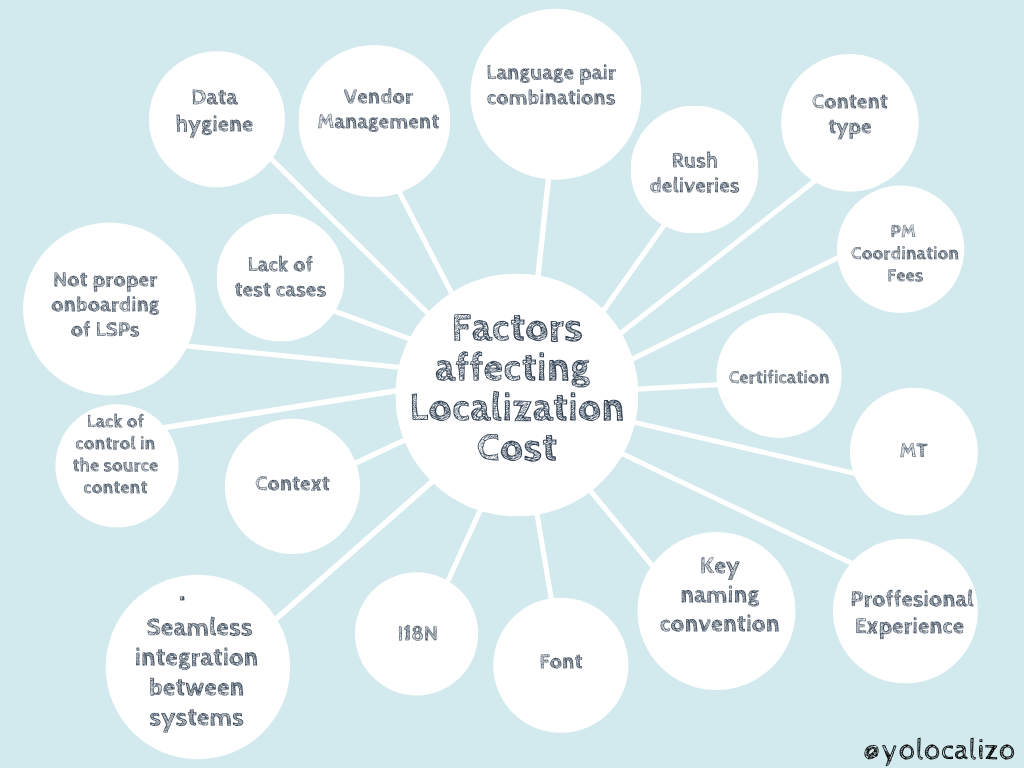
Here is a braindump of factors that I can think of that affect the perception that a localization project is cheap or expensive!
Why do we translate into some languages and not others, and who decides this? This is a question for which we must have a ready answer. This post explores possible answers to this question.
Nowadays, the software has reached a very high level of complexity and it is necessary to have localization tools that allow us to keep up with it.
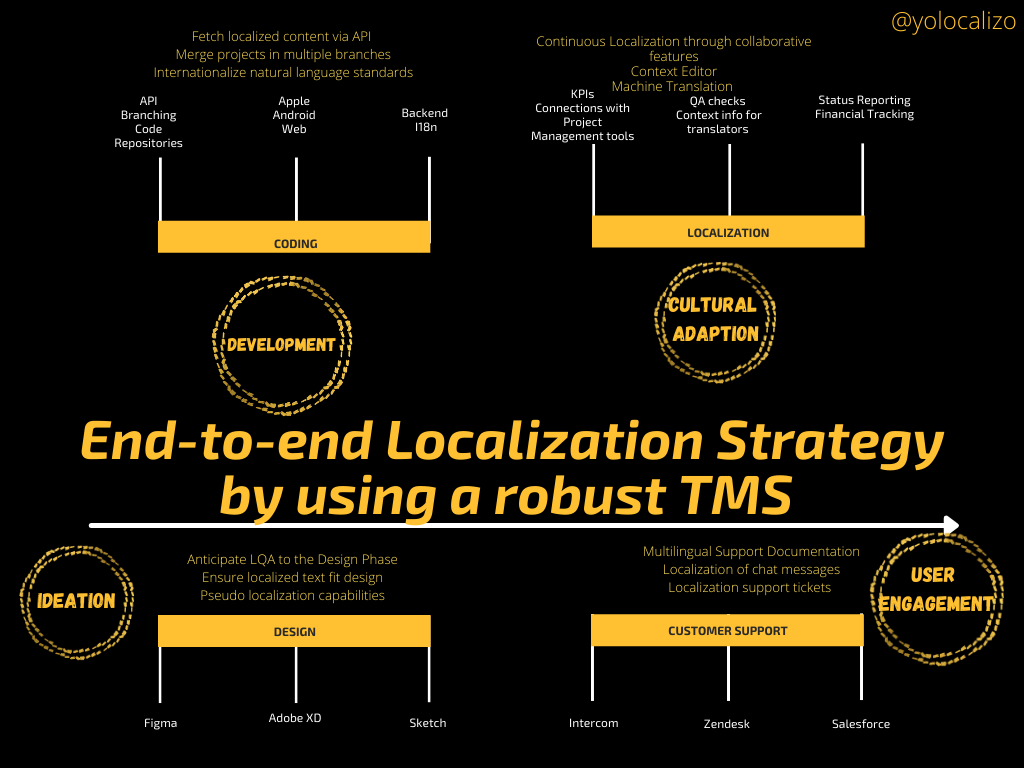
Without the right tool, without the right connectors, your localization strategy will remain stagnant, and the perception that has accompanied the localization industry since time immemorial as a "painful and slow" process will not be mitigated. A good TMS may be the component you need to give the visibility your localization team deserves.A good TMS may enable you to offer an end-to-end solution
One of the main obstacles that localization industry professionals often face is the lack of internal visibility of our work or the impact on its bottom line. and the truth is that QBRs is an excellent tool to add to your arsenal of Localization tools/processes that can help you to Strengthen the partnership, Foster relationships and Highlight localization team's impact across your organization
Content is an exciting topic since content drives the customer journey, and good localized content drives the Global customer journey! In this post, I delve into the different phases and the strategy required to design a Globalization content customer journey.
Involving Localization team in Playtest might be a great idea! Find out here why ☺️
What would happen if we were to write the content directly in the different languages for the different markets in which we plan to launch our product? Is it feasible to skip the traditional localization phase and generate content directly in the target language?
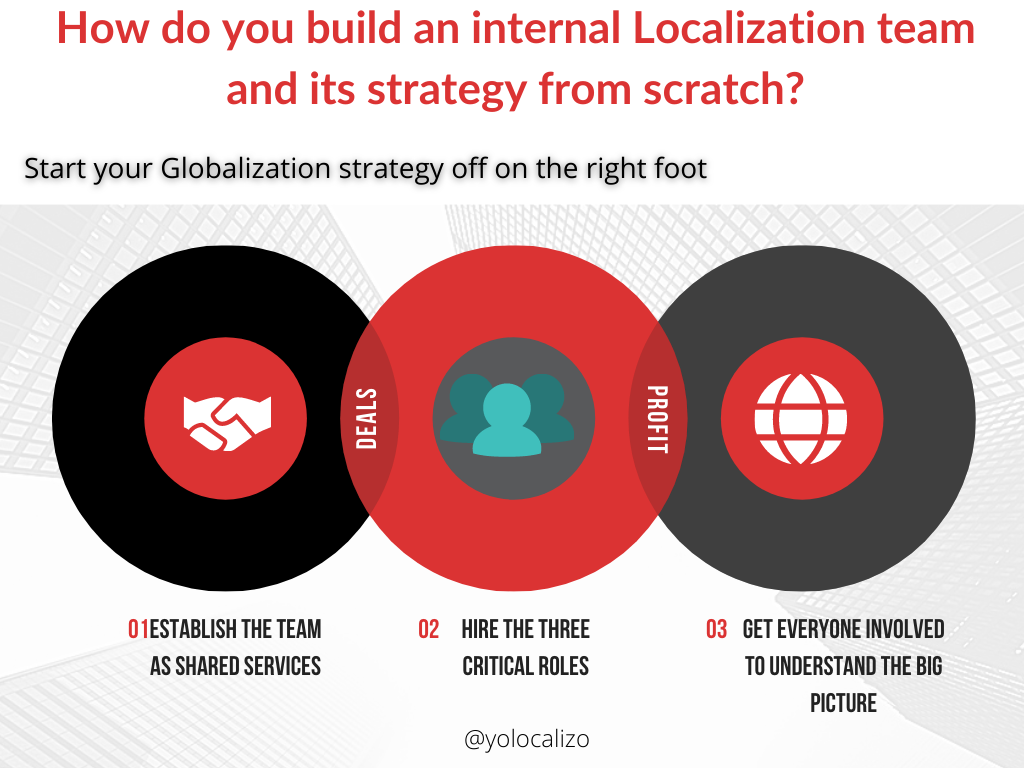
During my career, I have had the opportunity to set up teams from scratch in 3 different companies, in this article I share a series of tips that can be useful to set it up.
Creating quality online content adapted to different markets is more important than ever. Our world revolves around content. These days, buying decisions are often based not only on experiences with products, but with information about products. Naturally, with the growing importance of content, a lot of attention is being paid to content strategy. This is a good thing. Companies need to stop throwing content out to the world without a good reason. They need to manage content strategically.
But what about global content? What about all the content that your company produces for people in other parts of the world?
Every successful localization process starts with the familiarization phase understanding the software, preparing files, creating a glossary, and the respective style guide. Don’t take a shortcut and skip this important phase!
A Globalization / Localization Project Manager is in charge of overseeing the efforts in localizing a digital product. Their responsibilities revolve around managing projects and programs, setting objectives, handling budgets, and devising strategies to work with LSPs.
This may be the most visible part of the work that a Globalization PM does, but did you know that they also have responsibilities in two tremendously important areas that unfortunately are not as well known? This week in my blog I have taken some time to reflect and write what these 2 areas are.










Several factors affect the duration of localization for a digital product, including translators' availability and the technology setup level. This blog post explores the various elements that impact the amount of time needed for product localization.