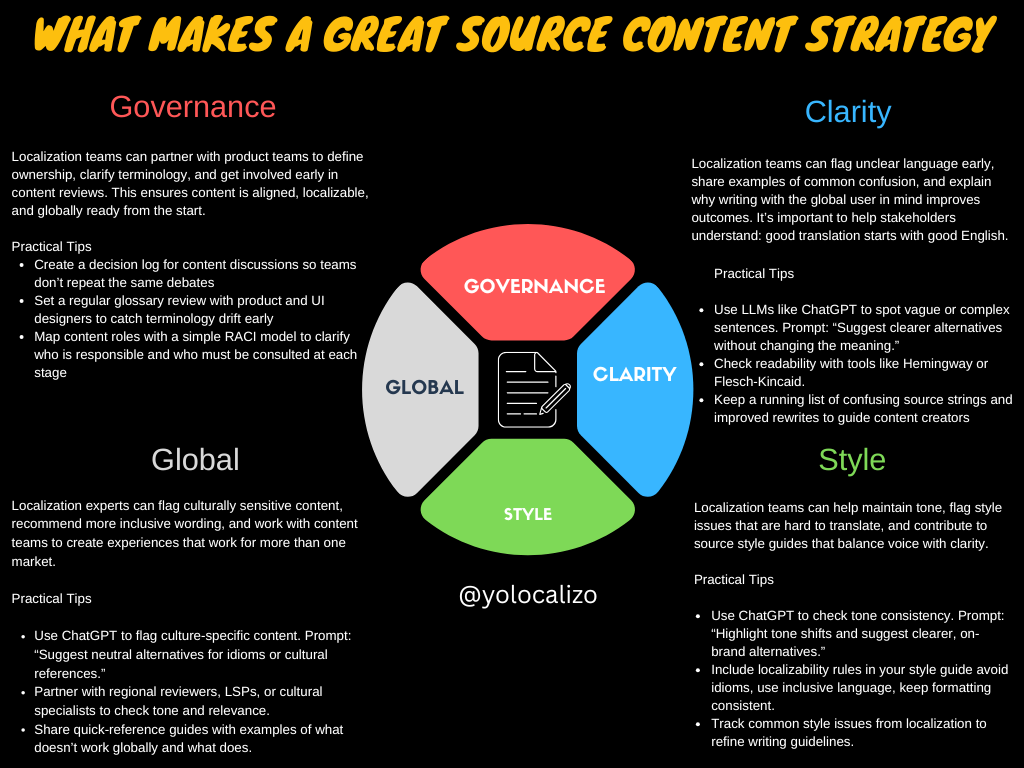
Before any great translation comes great source content. In this post, I compare what I’ve learned from golf lessons to the localization world: success depends on how well you set up from the start. I share real examples, red flags to watch out for, and four practical pillars : governance, clarity, style, and global mindset that can make or break your localization process. If you want smoother workflows, better quality, and fewer headaches, the fix might not be downstream… it might be in your stance.
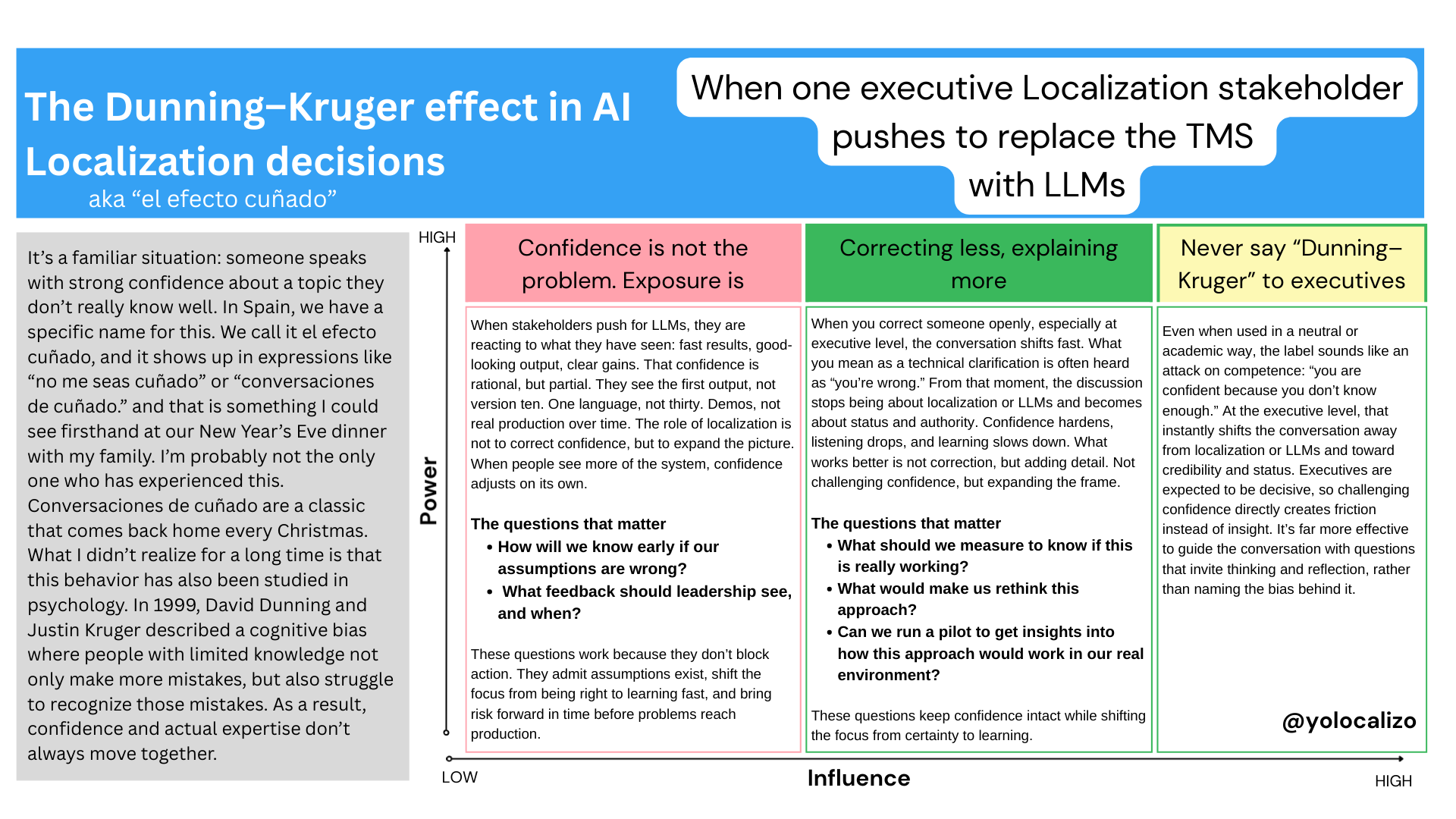
At a New Year’s Eve dinner with my family, I saw a familiar situation play out: someone speaking with strong confidence about something they only partly understood. In Spain, we call this el efecto cuñado. What I didn’t realize for a long time is that this behavior has a name in psychology too. It’s the Dunning–Kruger effect, and it shows up just as often in localization and AI conversations as it does at Christmas dinner tables.
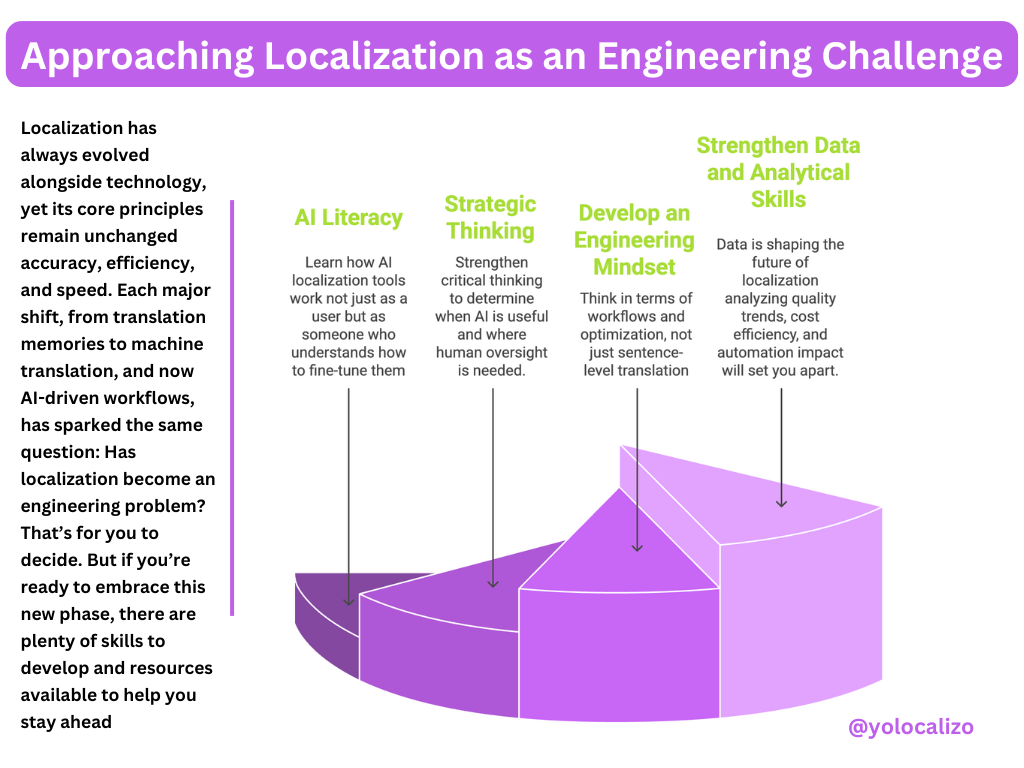
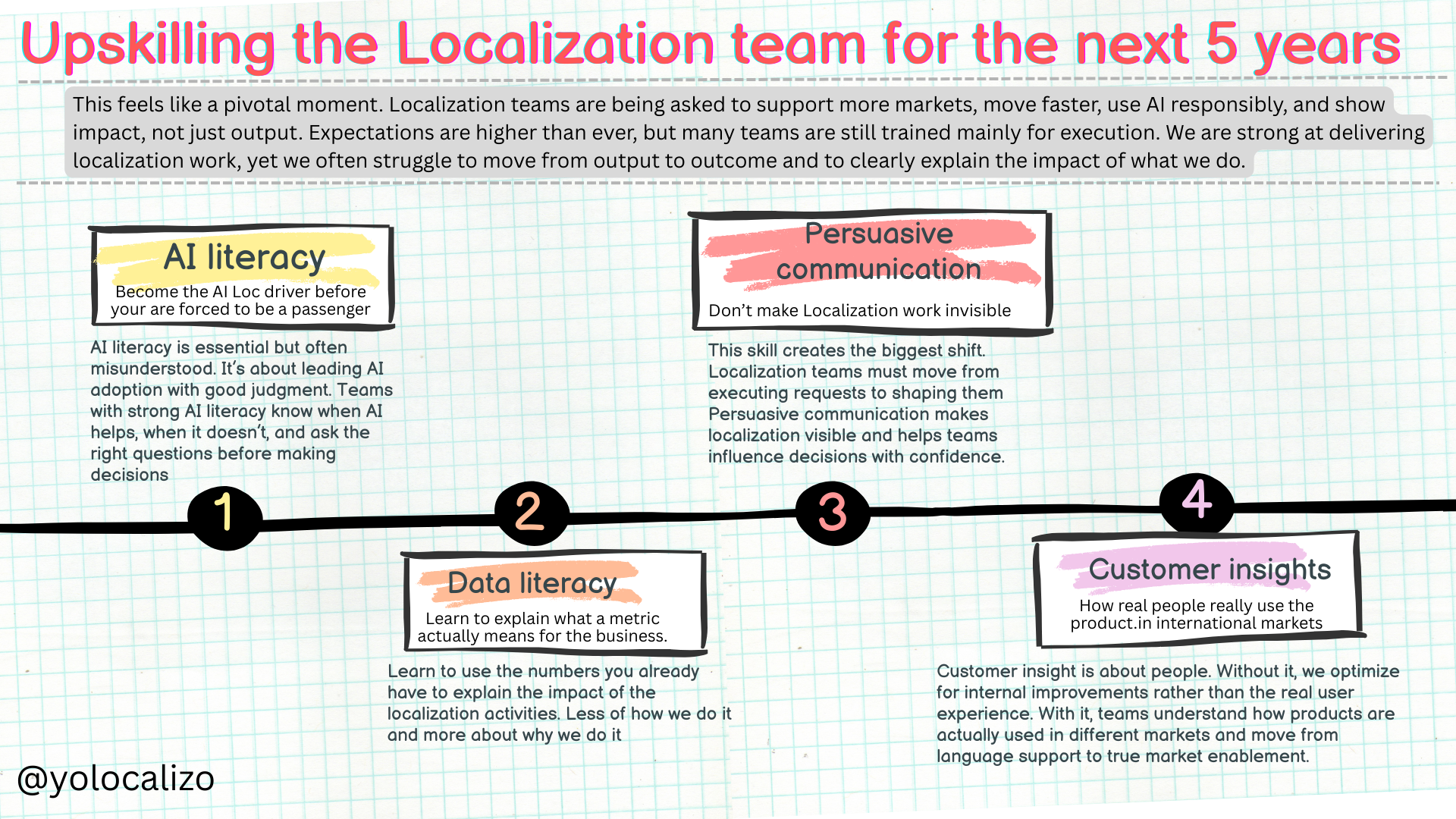
This feels like a pivotal moment. Localization teams are being asked to support more markets, move faster, use AI responsibly, and show impact, not just output. Expectations are higher than ever, but many teams are still trained mainly for execution. We are strong at delivering localization work, yet we often struggle to move from output to outcome and to clearly explain the impact of what we do.
AI isn’t just changing tools, it’s changing expectations
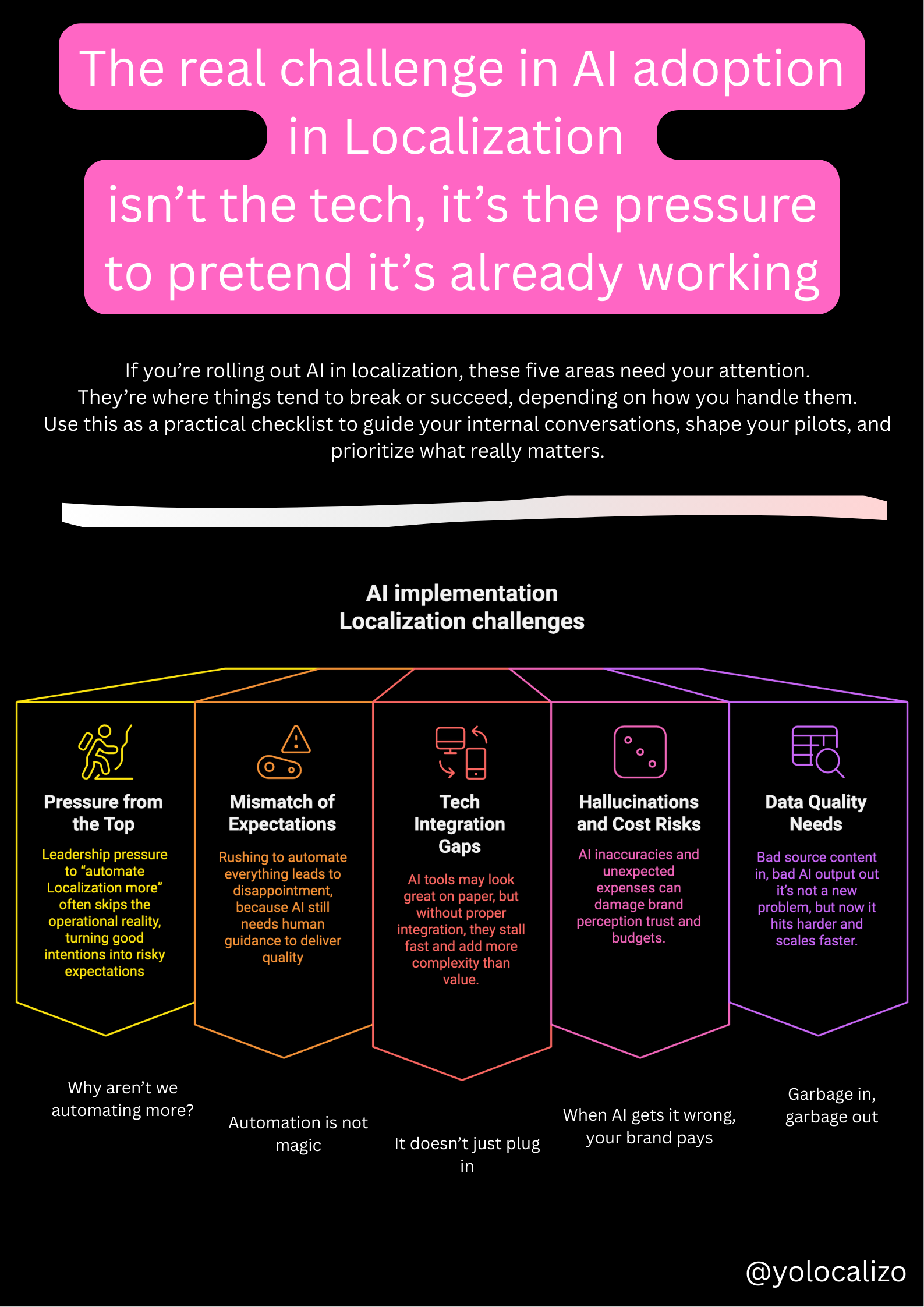
Three years into working with AI in localization, I’ve seen the pressure build: automate faster, scale more, do it now.
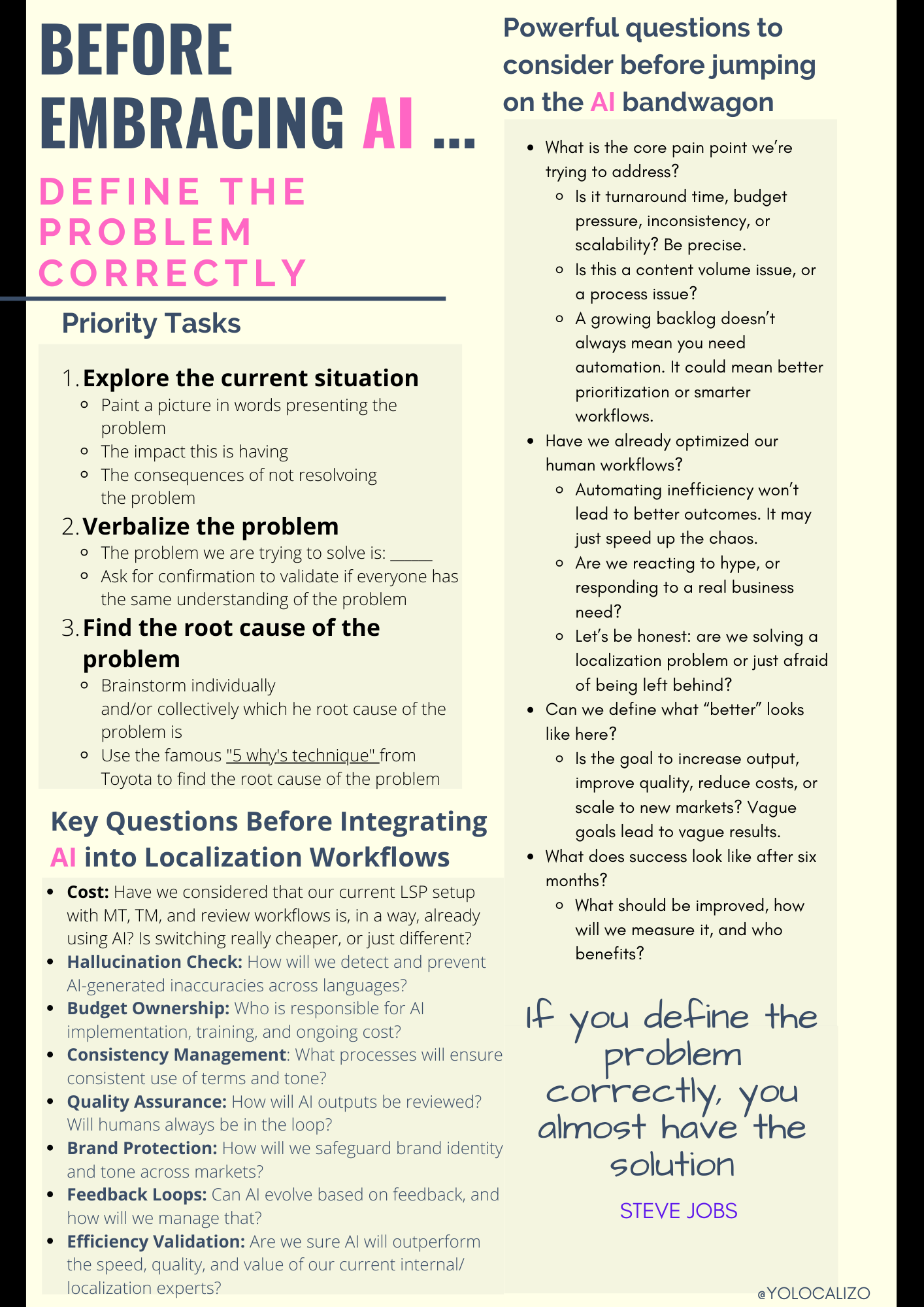
But the real challenge isn’t the tech itself. It’s the gap between hype and reality , and what happens when teams are expected to act like everything’s already working.
In this post, I break down five common challenges that keep showing up, and what we can actually do about them.
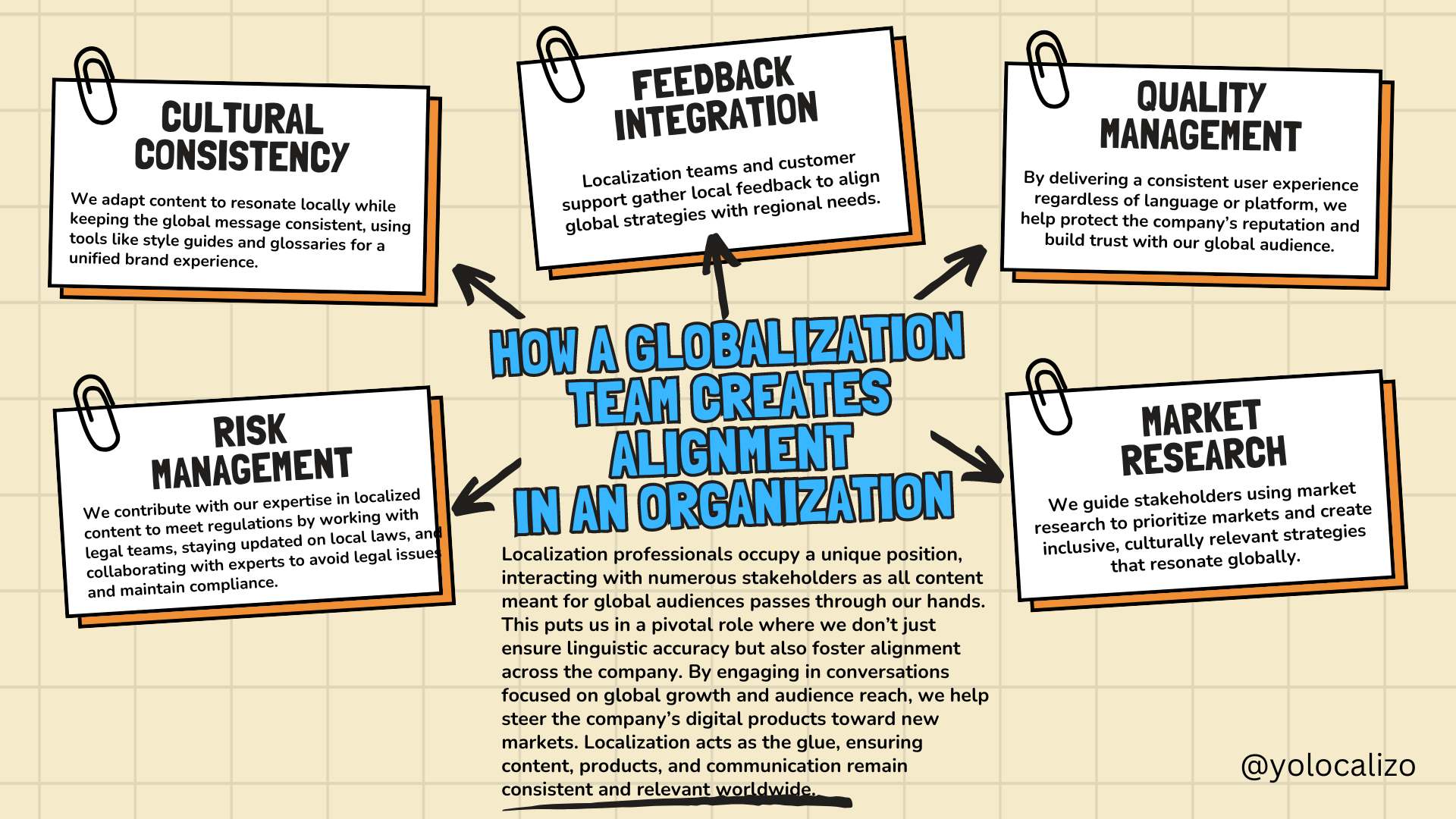
Words have the power to shape perceptions and influence actions, which is why reframing is such a powerful tool. In localization, we can reframe our role from simply translating to driving alignment across the company. By ensuring content is consistent, culturally relevant, and strategically aligned with business goals, localization professionals play a key role in helping businesses grow globally. This post explores how we create that alignment and why our work is much more than just translation.
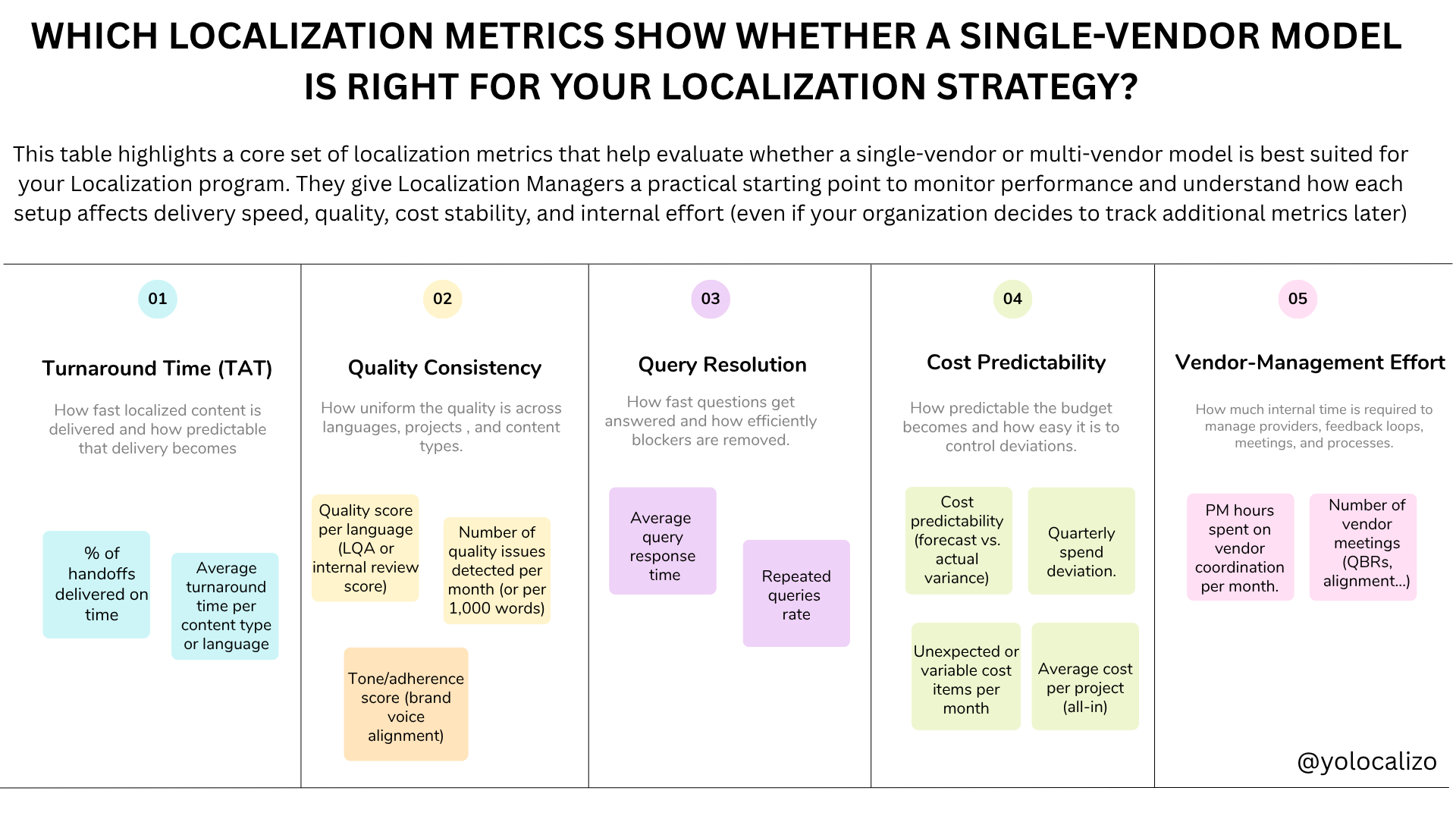
Choosing between a single-vendor or multi-vendor localization model is not only about price. The real difference shows up in the day-to-day metrics: turnaround time, quality stability, cost control, and how much coordination your teams need to do. In this post, I walk through the core metrics that tend to improve with a single-vendor setup, and how they can help you understand which model fits your localization strategy right now
Even when localization teams aren’t directly affected by a company reorg, everything around them can change fast sponsors move, teams merge, budgets shift.
That’s when weak governance shows its cracks.
This post explores how strong localization governance keeps programs stable, visible, and credible no matter how often the org chart moves.
Over the years, I’ve noticed that localization buyers, like the emotions in Inside Out, are often driven by one dominant need. Some are in survival mode, juggling too much. Others are just getting started and need guidance. Some care about speed, others about cost, and some are laser-focused on how things feel in-market.
Most localization discussions stop at per-word rates. However, what appears inexpensive on paper can often turn into costly delays, rework, and frustrated teams.
Total Cost of Ownership (TCO) provides a more comprehensive view, one that encompasses engineering fixes, QA cycles, support tickets, and brand impact.
When procurement and leadership focus only on price, localization becomes a cost center. When they consider TCO, it becomes a key driver of quality and efficiency. And this post explains how to approach that
Many teams treat localization vendors as interchangeable compare rates, sign the contract, move on. But every switch comes with invisible costs: lost context, quality dips, and team fatigue. In this latest post, I unpack what really happens behind a vendor change ( and how to prepare for it like a continuity project, not a quick fix)
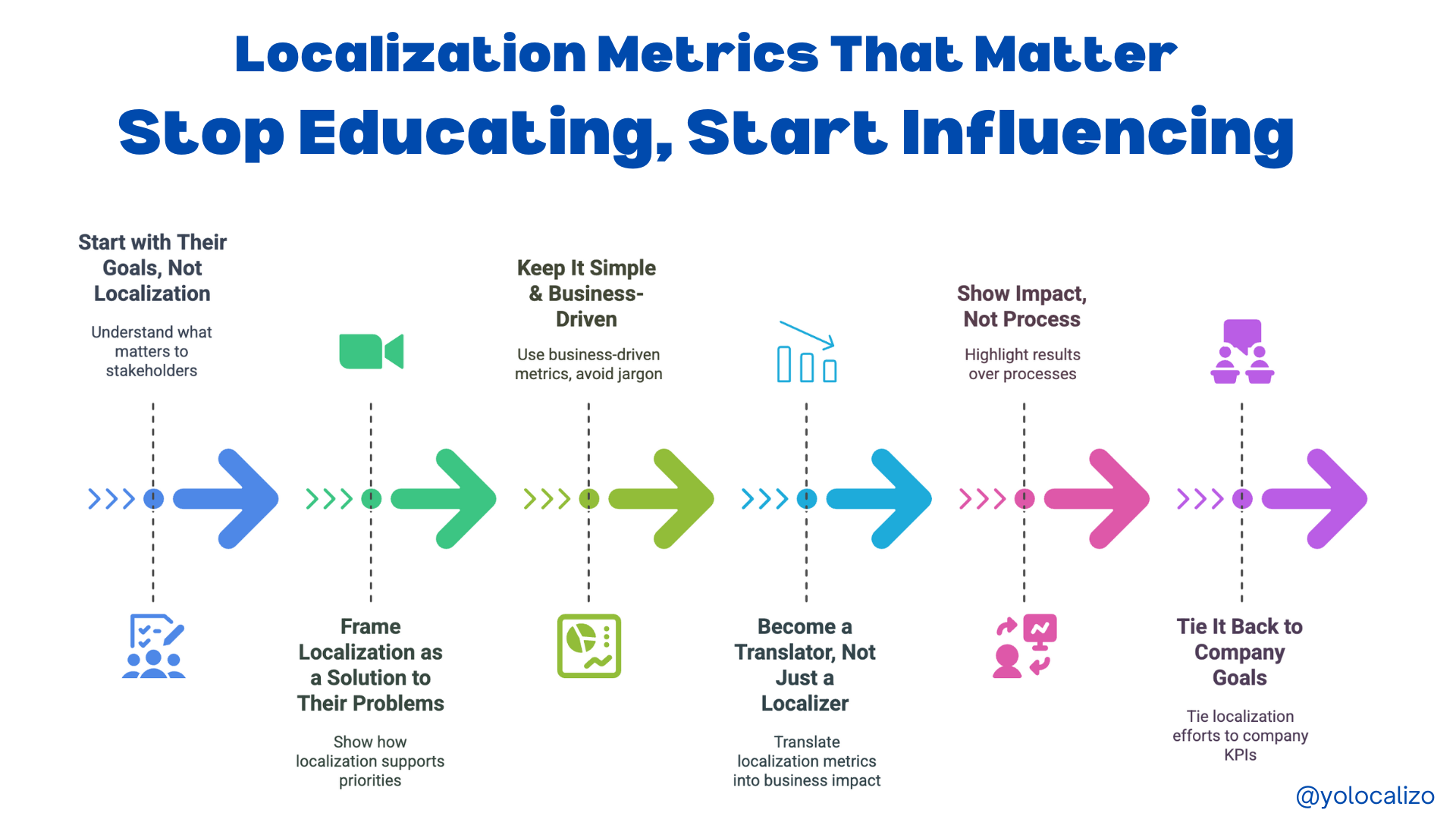
Localization professionals often focus on translation quality and best practices, but decision-makers care about customer impact and revenue. If we frame localization as a cost, it risks being deprioritized. Instead, we must highlight its value driving engagement, trust, and business growth.