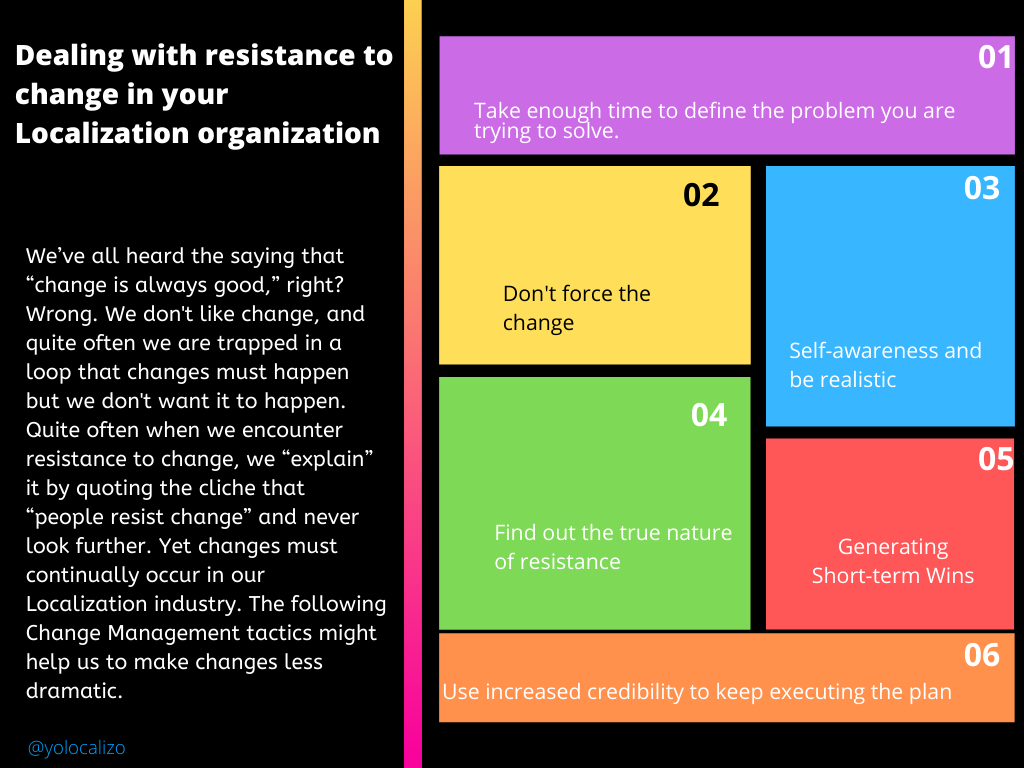
Dealing with change: overcoming resistance in Localization strategy execution

We’ve all heard the saying that “change is always good,” right? Wrong. We don't like change; we don't like to step out of our comfort, but still, change must happen. I've been studying "Change management and resistance to change" in the last weeks because change is the norm in our #localization industry. In this post, I summarized my learnings so far! I hope you find it useful ☺️

Common Localization KPIs pitfalls!

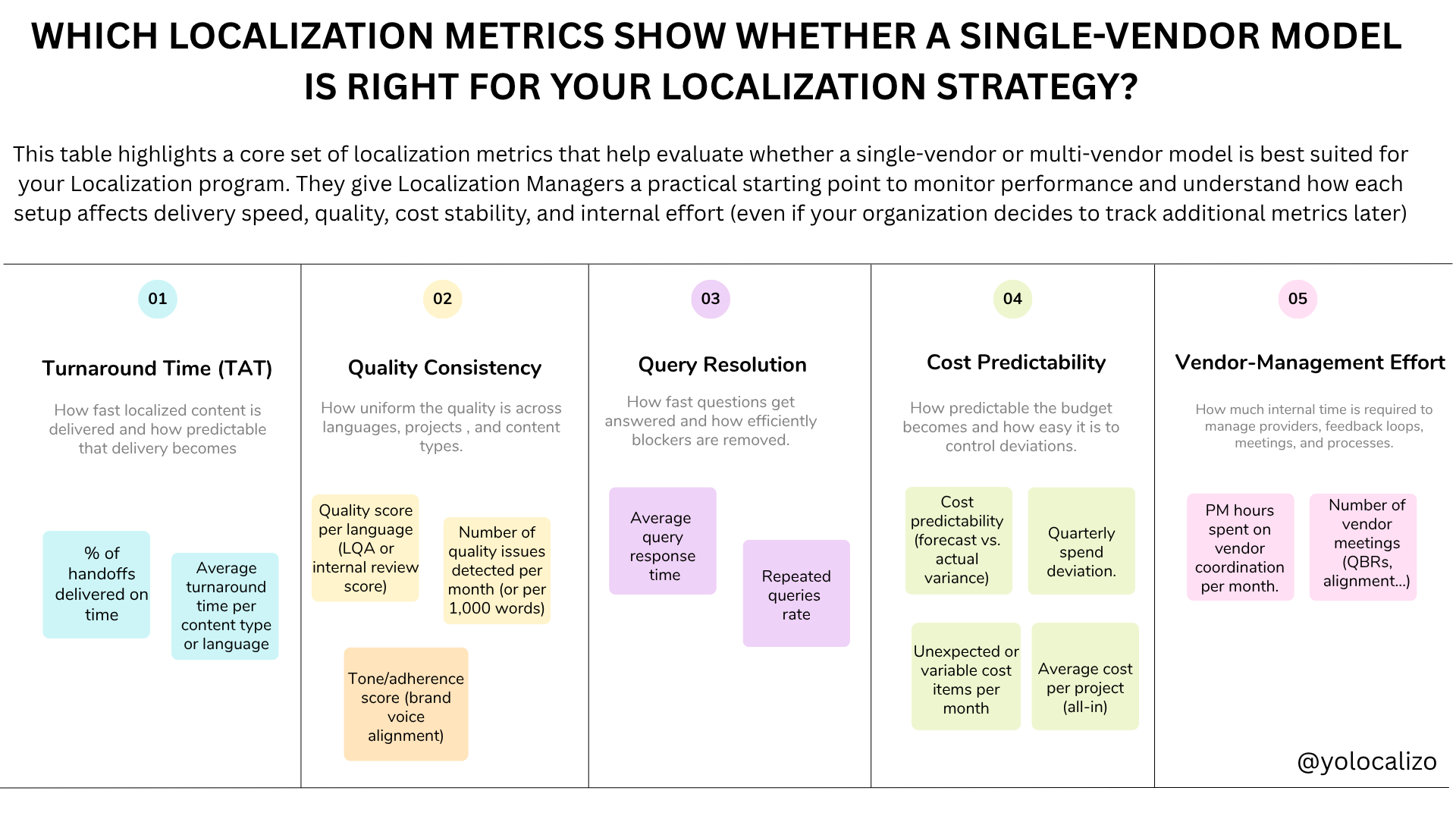
I'm passionate about Localization metrics, but it can be frustrating. We live in a data-rich world, allowing us to measure our impact better. However, this data abundance brings challenges when building a Localization metrics system.

In my experience, two main pitfalls emerge (but they are not the only ones 😅). One is overemphasizing Localization ROI, which can lead to unproductive discussions. The other is tracking effort-related KPIs without translating their impact on company success into terms that matter to leadership and product owners.


Optimizing Localization User Feedback with ChatGPT

A major challenge in Localization is defining quality. There's confusion around perceived quality, linguistic/grammatical quality, and clients' tolerance for low-quality translations. Some clients accept minor errors, while others are horrified by poor translations on product labels.

Models like J2450, LISA, and TAUS measure quality but often don't convince product owners or teams to support localization programs. Localization teams focus on quality, while product teams focus on revenue and user engagement.

User feedback can align both teams. Poor feedback can jeopardize a product's future, but explaining how poor linguistic quality impacts long-term growth is challenging. Gathering feedback from international users is crucial for aligning goals.

Analyzing feedback is often overwhelming due to the volume and qualitative nature of the data. Feedback comes from various channels, requiring careful reading and interpretation.

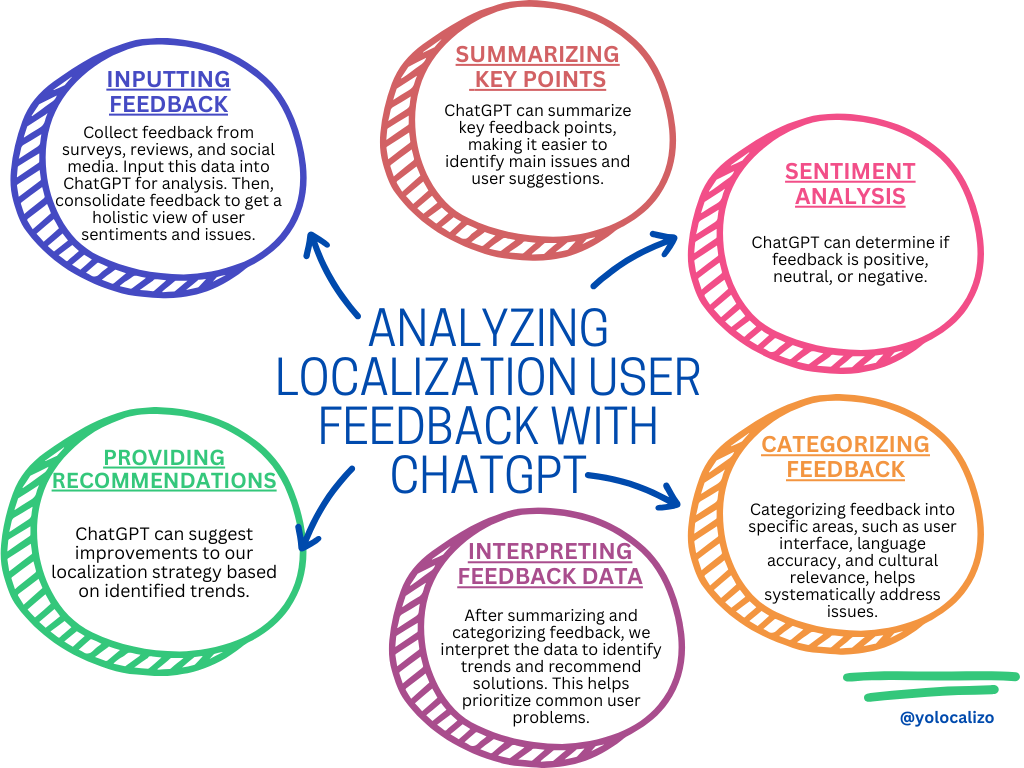
ChatGPT can help by automating and streamlining feedback analysis. It handles large volumes of feedback, interprets qualitative data, filters noise, and bridges language barriers, leading to actionable insights and better decisions.
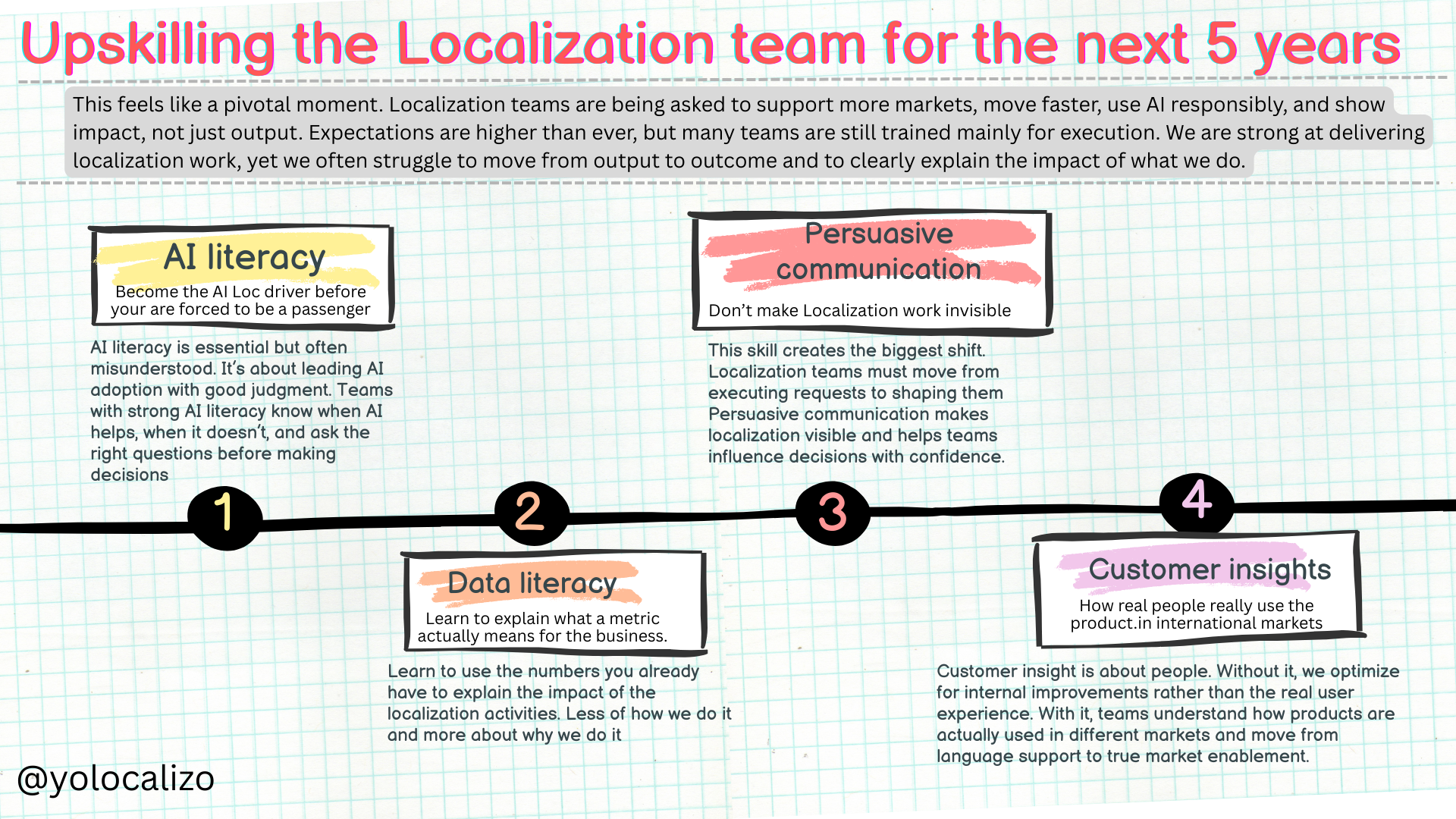
From Solo Manager to Building a Localization Team

Ever found yourself juggling the complexities of localization solo?

What happens when the need for expansion knocks on your door? It's time to build your tribe!

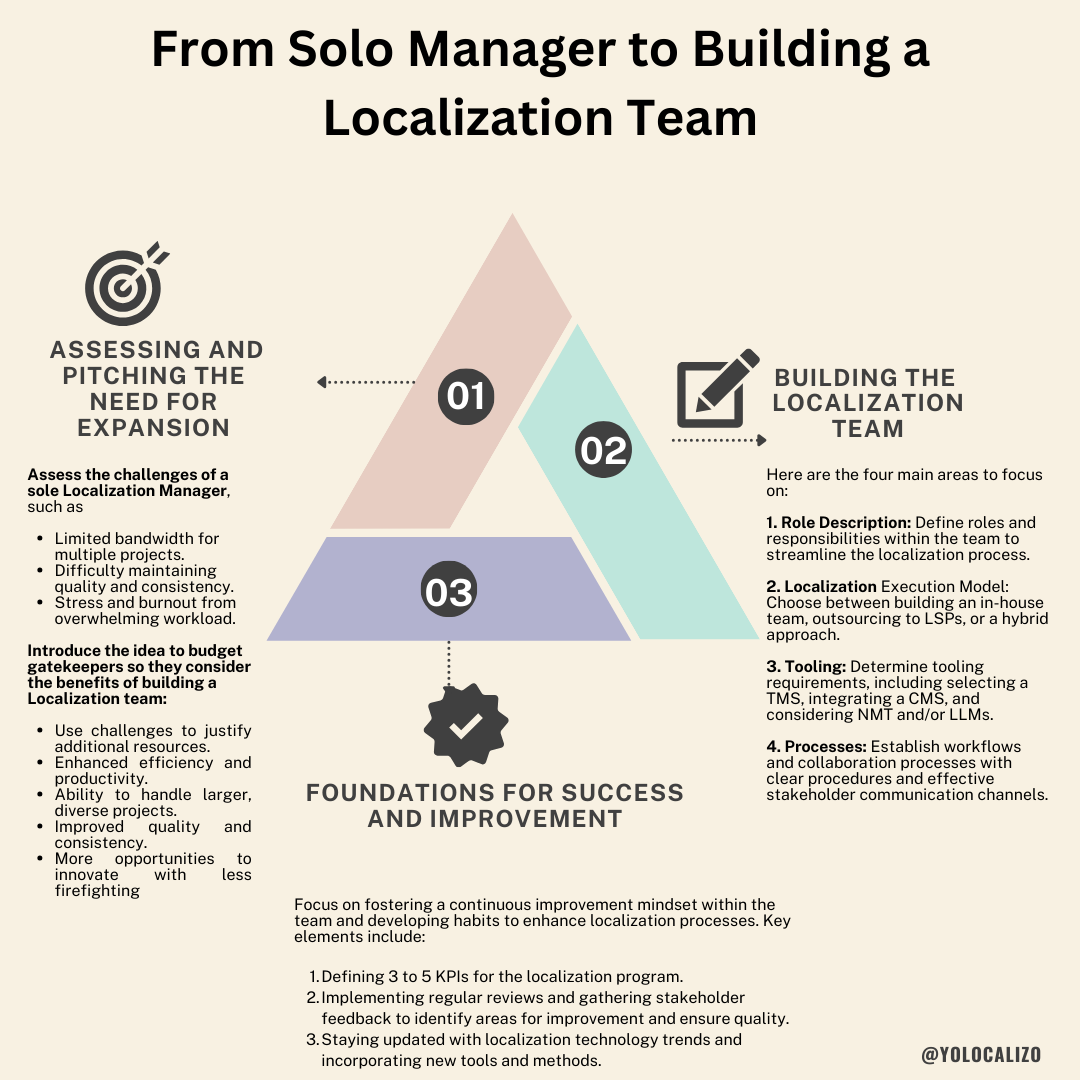
This blog post covers the phases of transitioning from a one-person localization department to a functional localization team. From pitching the need for expansion to laying the foundations for continuous improvement,

The Role of Localization in Accessibility

Every decision a team makes affects not only a digital product's accessibility but also how easily it can be adapted to different markets. Therefore, everyone involved in creating software can help improve both accessibility and localizability. Accessibility is a core consideration in software development and must be integrated into the entire process. The same applies to localization. The best time to consider localization is during the product's ideation phase. The sooner we start thinking about adapting experiences for different markets and making the product usable for as many people as possible, the better. Taking advantage of this week's Accessibility Awareness Day, this post explores how accessibility and localization can join forces to remove barriers.

Building a growth-oriented content localization framework

Creating quality online content adapted to different markets is more important than ever. Our world revolves around content. These days, buying decisions are often based not only on experiences with products, but with information about products. Naturally, with the growing importance of content, a lot of attention is being paid to content strategy. This is a good thing. Companies need to stop throwing content out to the world without a good reason. They need to manage content strategically. 

But what about global content? What about all the content that your company produces for people in other parts of the world?

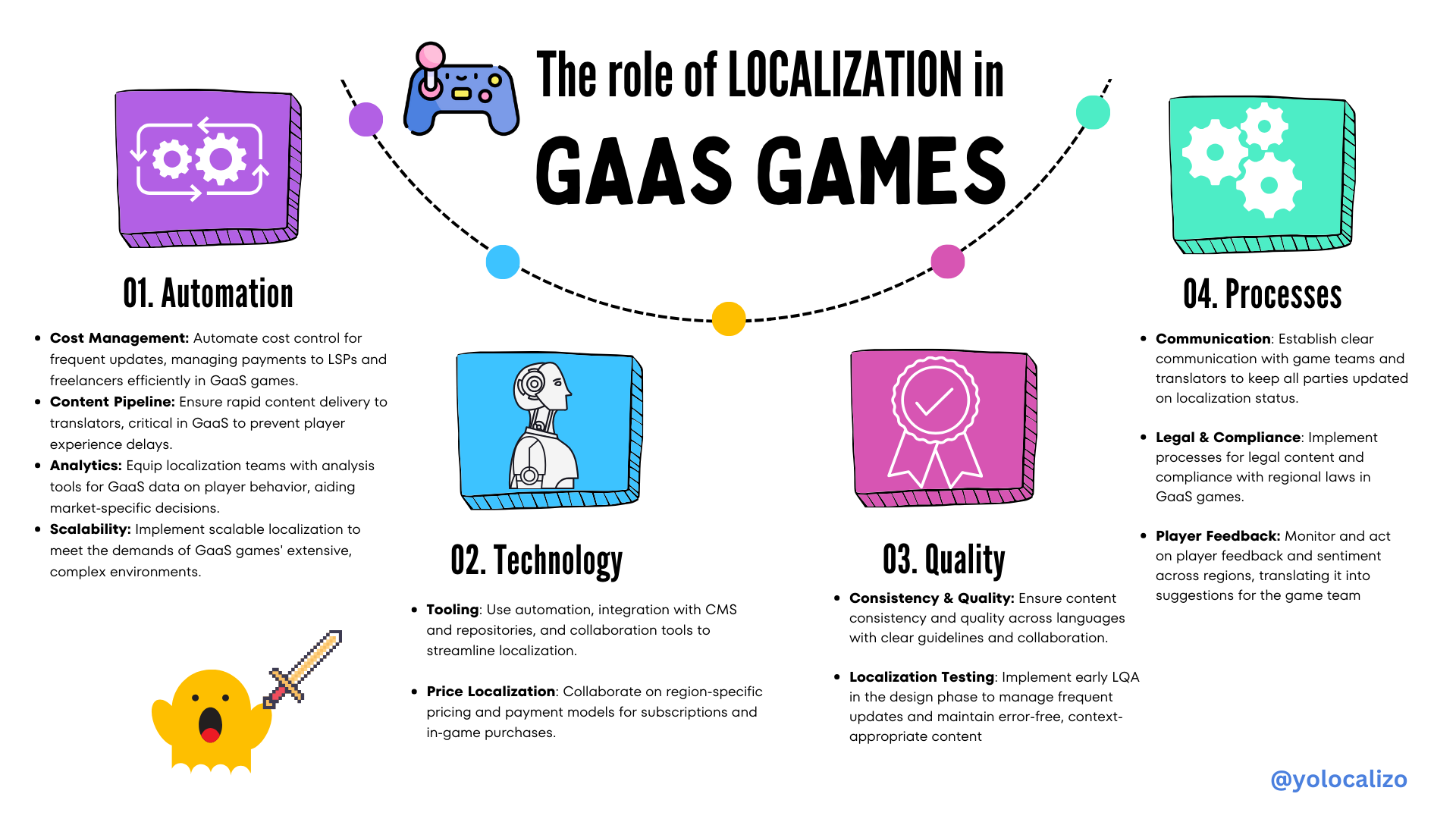
The Role of Localization in GaaS Games

What areas should a localization team consider when collaborating efficiently with a game publisher operating on a GaaS model?

This blog post covers the main elements you cannot ignore when considering implementing a Localization strategy to support developers operating under the GaaS framework.

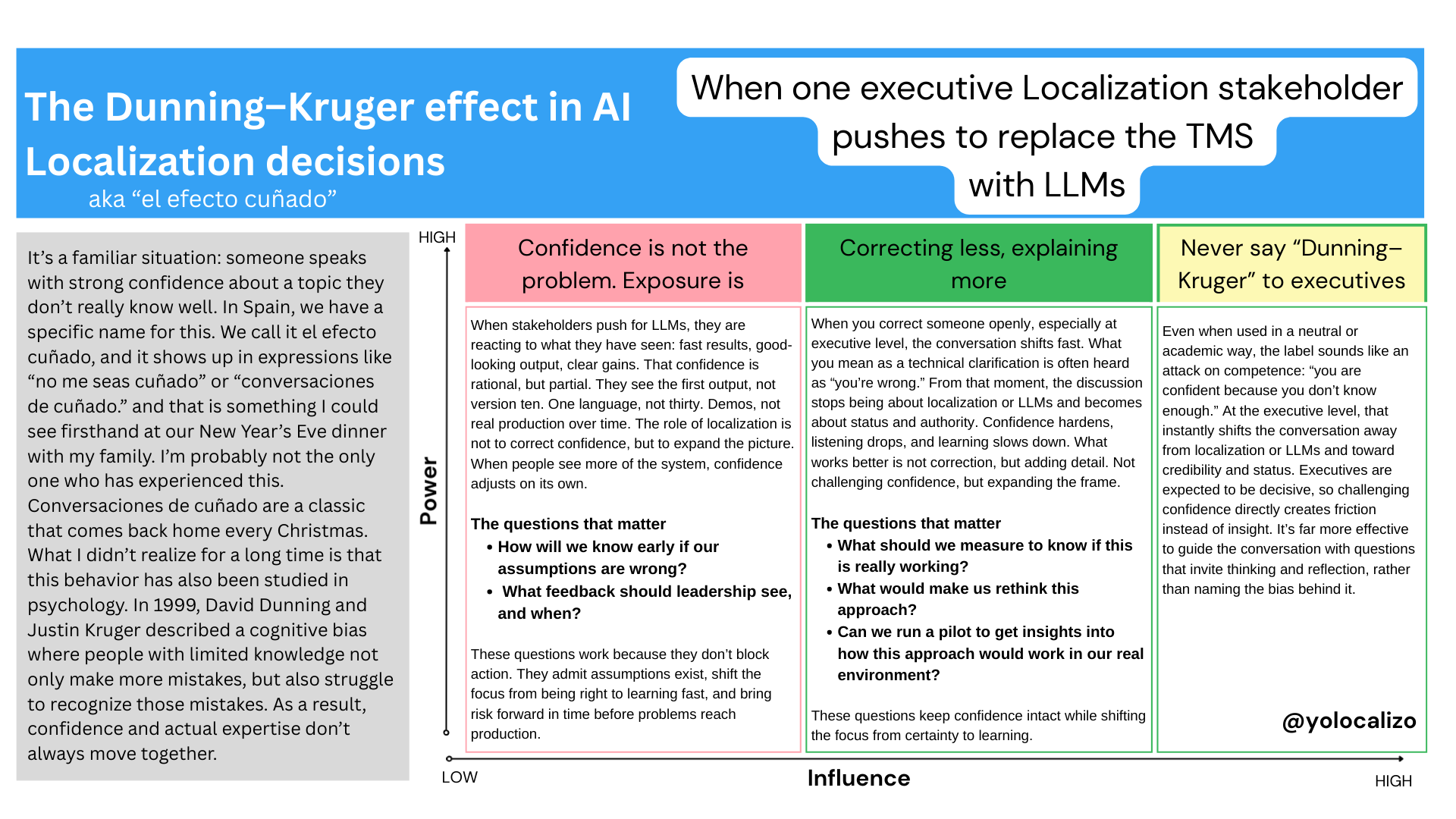
Fast-tracking our localization career by combining ChatGPT with mental models and cognitive biases

The basic principle of strategic decision-making is based on understanding the impact of our decisions on the future in the decisions we make today.

But, of course, that's more complex than it seems because of cognitive biases. The topic of cognitive biases is fascinating; we all have cognitive biases, and to make matters worse, we don't know we have them. Identifying them is vital since overcoming cognitive biases helps us think more critically and objectively, and we end up making better decisions as a result.

But how can we identify a bias if we don't know we have it? chatGPT to the rescue!"