

There's a reason that I started observing last year and have consolidated this year as another reason for questioning the impact of localization, and that is Unfamiliarity with how Localization supports DEI (Diversity, Equity, and Inclusion):

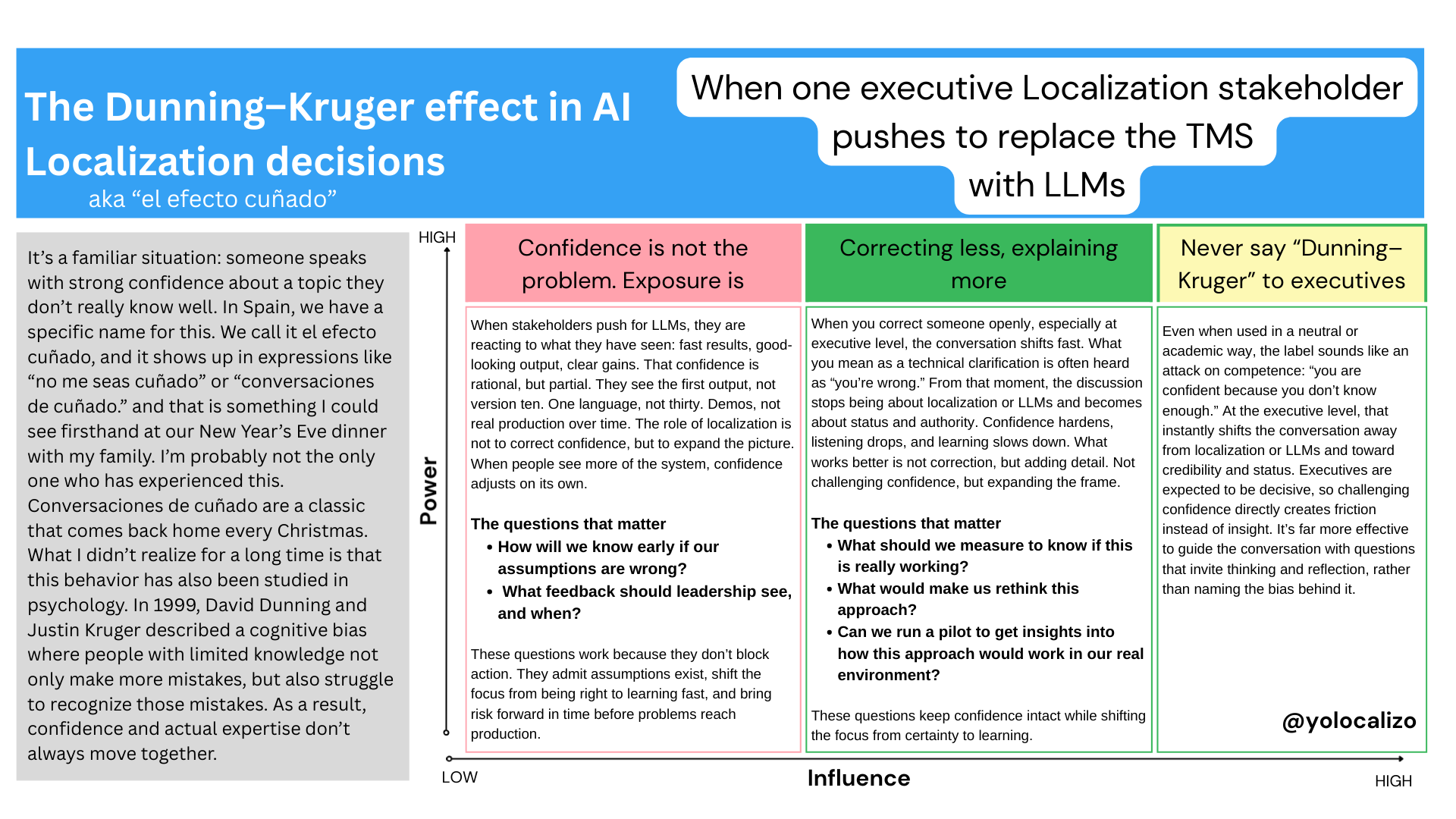
At a New Year’s Eve dinner with my family, I saw a familiar situation play out: someone speaking with strong confidence about something they only partly understood. In Spain, we call this el efecto cuñado. What I didn’t realize for a long time is that this behavior has a name in psychology too. It’s the Dunning–Kruger effect, and it shows up just as often in localization and AI conversations as it does at Christmas dinner tables.
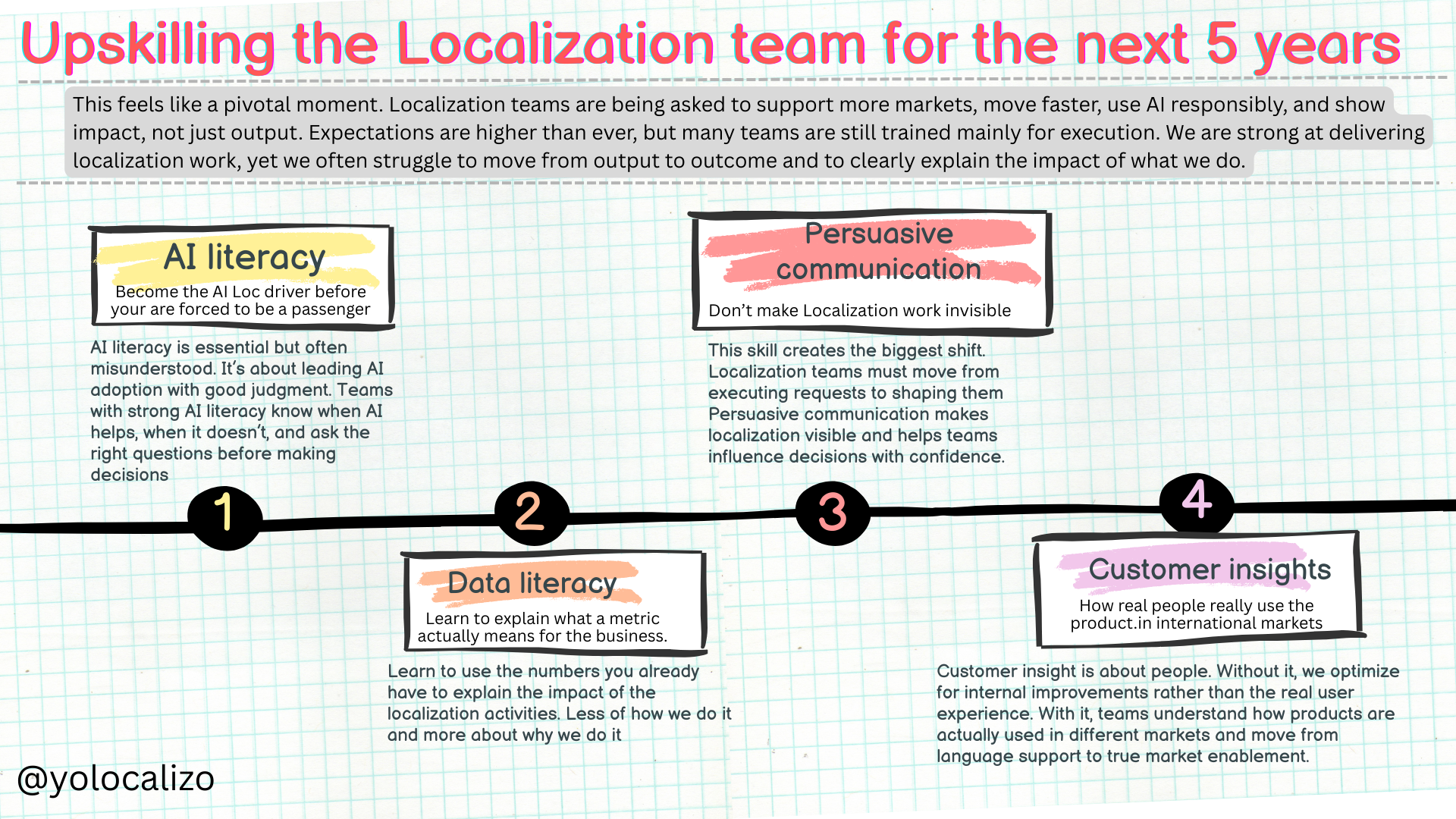
This feels like a pivotal moment. Localization teams are being asked to support more markets, move faster, use AI responsibly, and show impact, not just output. Expectations are higher than ever, but many teams are still trained mainly for execution. We are strong at delivering localization work, yet we often struggle to move from output to outcome and to clearly explain the impact of what we do.
AI isn’t just changing tools, it’s changing expectations
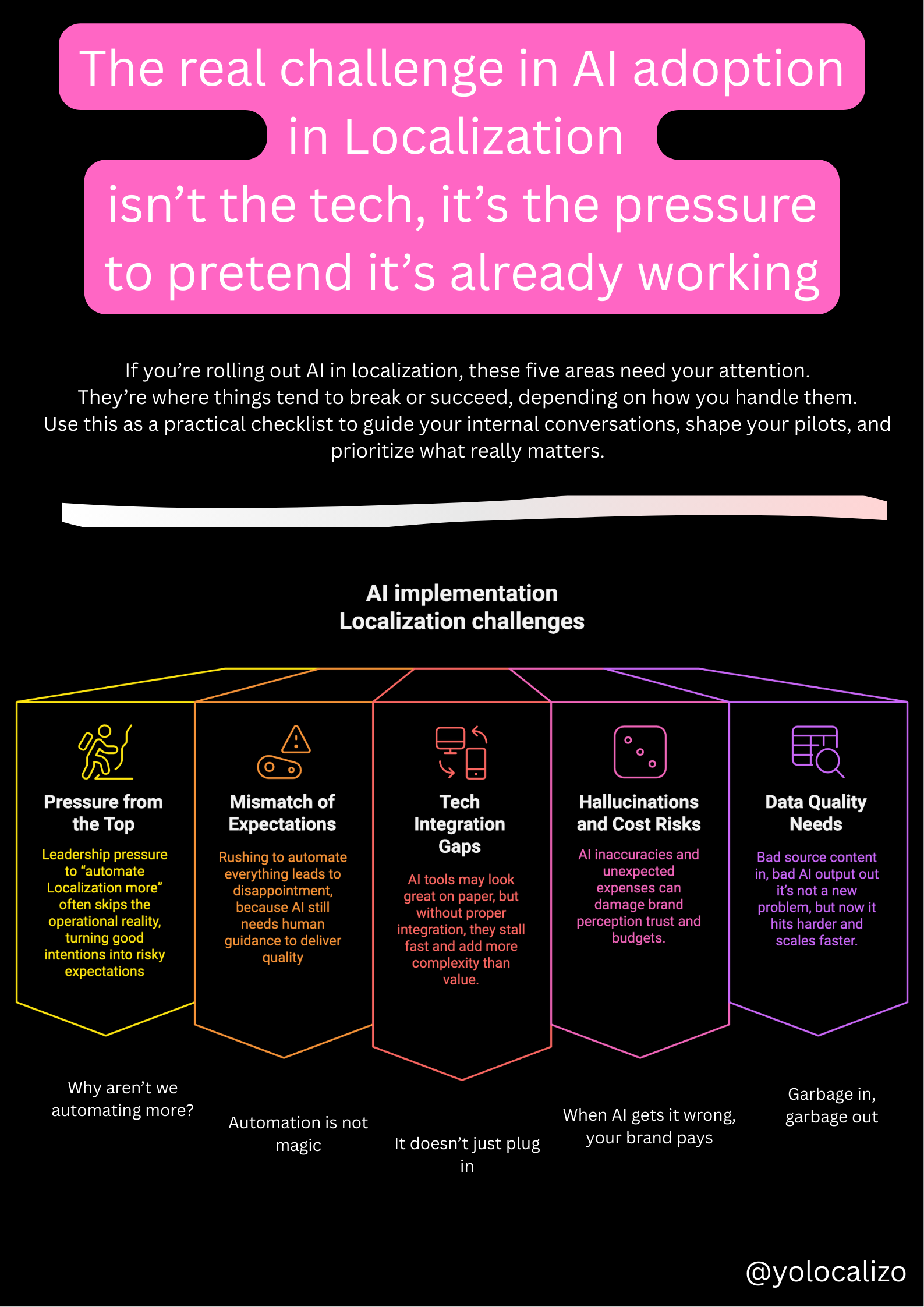
Three years into working with AI in localization, I’ve seen the pressure build: automate faster, scale more, do it now.
But the real challenge isn’t the tech itself. It’s the gap between hype and reality , and what happens when teams are expected to act like everything’s already working.
In this post, I break down five common challenges that keep showing up, and what we can actually do about them.
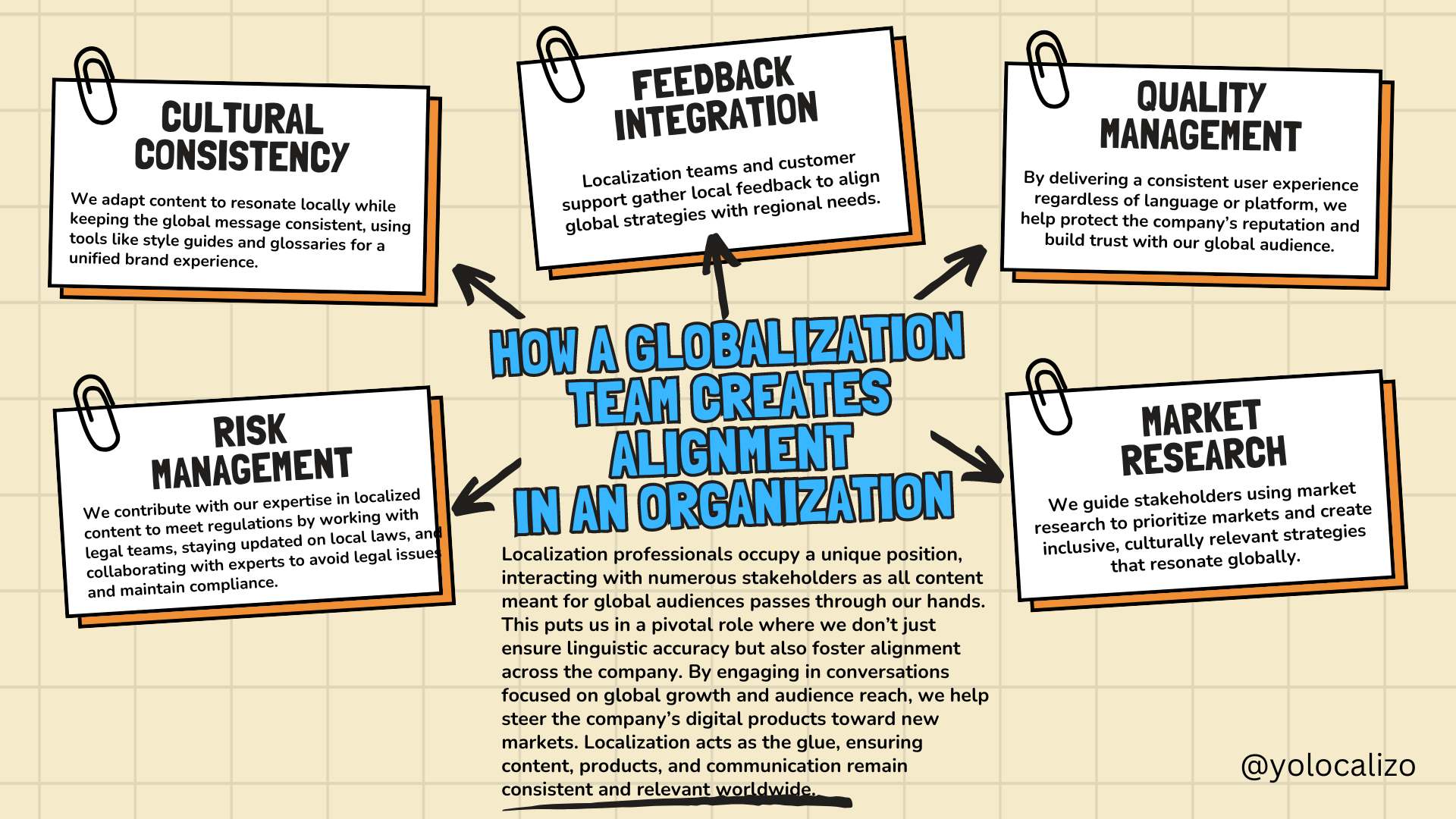
Words have the power to shape perceptions and influence actions, which is why reframing is such a powerful tool. In localization, we can reframe our role from simply translating to driving alignment across the company. By ensuring content is consistent, culturally relevant, and strategically aligned with business goals, localization professionals play a key role in helping businesses grow globally. This post explores how we create that alignment and why our work is much more than just translation.
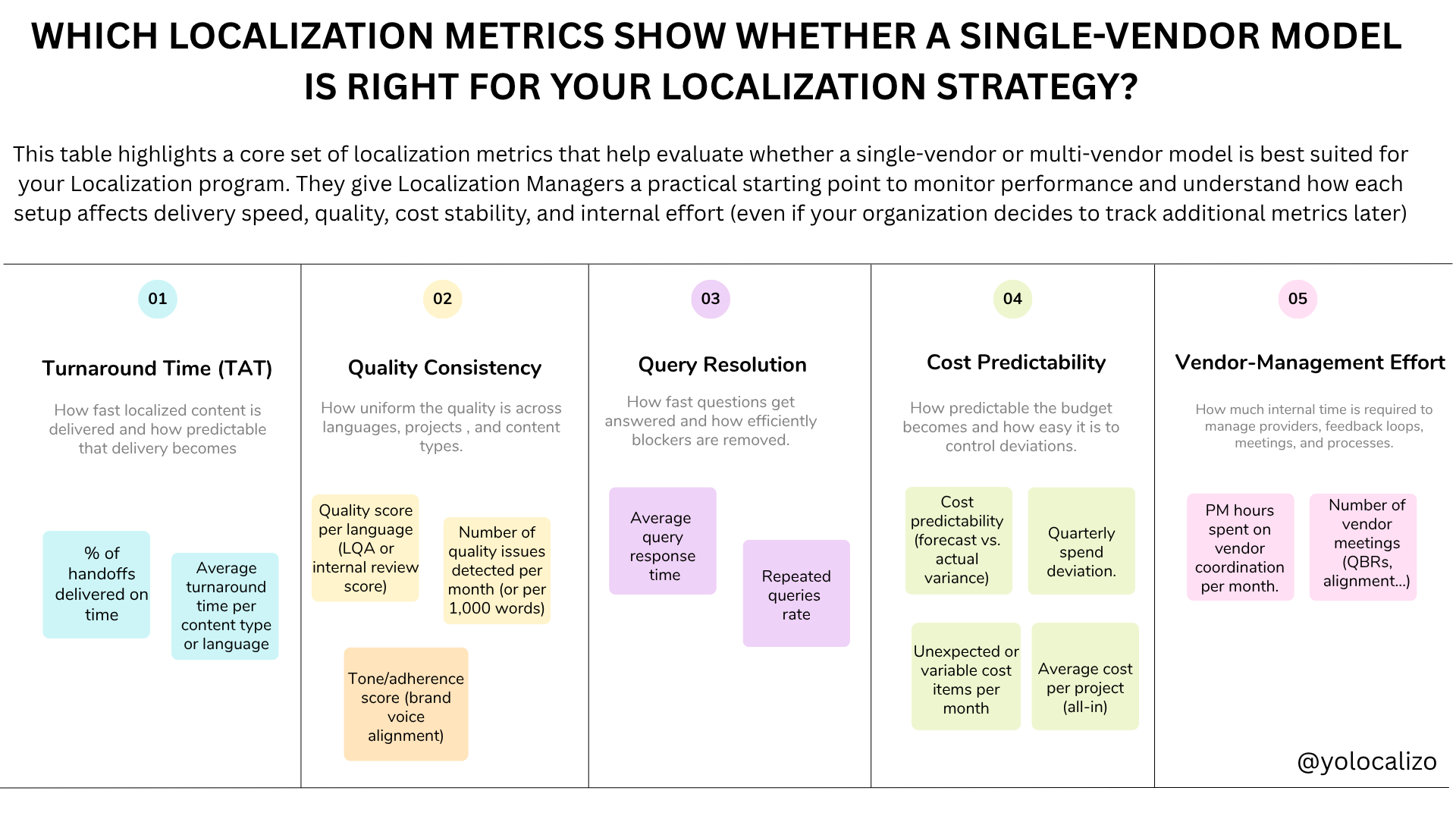
Choosing between a single-vendor or multi-vendor localization model is not only about price. The real difference shows up in the day-to-day metrics: turnaround time, quality stability, cost control, and how much coordination your teams need to do. In this post, I walk through the core metrics that tend to improve with a single-vendor setup, and how they can help you understand which model fits your localization strategy right now
Even when localization teams aren’t directly affected by a company reorg, everything around them can change fast sponsors move, teams merge, budgets shift.
That’s when weak governance shows its cracks.
This post explores how strong localization governance keeps programs stable, visible, and credible no matter how often the org chart moves.
Over the years, I’ve noticed that localization buyers, like the emotions in Inside Out, are often driven by one dominant need. Some are in survival mode, juggling too much. Others are just getting started and need guidance. Some care about speed, others about cost, and some are laser-focused on how things feel in-market.
Most localization discussions stop at per-word rates. However, what appears inexpensive on paper can often turn into costly delays, rework, and frustrated teams.
Total Cost of Ownership (TCO) provides a more comprehensive view, one that encompasses engineering fixes, QA cycles, support tickets, and brand impact.
When procurement and leadership focus only on price, localization becomes a cost center. When they consider TCO, it becomes a key driver of quality and efficiency. And this post explains how to approach that
Many teams treat localization vendors as interchangeable compare rates, sign the contract, move on. But every switch comes with invisible costs: lost context, quality dips, and team fatigue. In this latest post, I unpack what really happens behind a vendor change ( and how to prepare for it like a continuity project, not a quick fix)

“Welcome to my blog. The space where I document my passion about Localization, Project Management and Leadership”
There's a reason that I started observing last year and have consolidated this year as another reason for questioning the impact of localization, and that is Unfamiliarity with how Localization supports DEI (Diversity, Equity, and Inclusion):
It’s really important to check how well our creative work is doing. Even though measuring the quality and efficiency of our localized content isn't easy, that doesn't mean we should give up! We use KPIs to see how our content is performing—whether it's catching people's attention, encouraging them to do something, or influencing how they see our brand. Each KPI tells us something different, and when we look at them all together, it helps us figure out what's working well and what needs a little tweaking. This blog post is all about how to measure KPI creative efforts!
In this post I look at how we can embrace AI, particularly chatGPT to stay relevant !
Usually, when we want to improve something in our Localization strategy, we first set an ambitious goal. From there, we design a strategy to reach it as quickly as possible. If we don't see rapid changes, we feel like we're not improving. To break this cycle, we can try changing the way we set goals—smaller, but consistent objectives that, when we look back, show us that we are indeed making progress. This progress can be the driving force for us every week, every month, every year.
Here are some ideas on how we could apply this Kaizen methodology in the Localization world.
The world of localization is full of small, hidden details.
Some things are deeper than they seem, and I often see between in-context review and LQA in the world of Localization. They might seem the same, but if we scratch beneath the surface, we'll see they're not what they seem.
In this post, I want to focus on explaining the differences between in-context review and LQA, which is something I see being confused quite frequently, and although the tasks are similar ... they are not the same.
The awareness phase, the first step in any customer journey, introduces potential clients to our company, product, or service in a new market. Despite its importance, localization is often overlooked here. Neglecting localization while entering a non-English-speaking international market means missing a key opportunity to build trust, establish a strong presence, and effectively connect with a global audience right from the start
I'm passionate about Localization metrics, but it can be frustrating. We live in a data-rich world, allowing us to measure our impact better. However, this data abundance brings challenges when building a Localization metrics system.
In my experience, two main pitfalls emerge (but they are not the only ones 😅). One is overemphasizing Localization ROI, which can lead to unproductive discussions. The other is tracking effort-related KPIs without translating their impact on company success into terms that matter to leadership and product owners.
What happens when we can't say NO to clients because we need them, and their payments are essential to meet the company's financial goals?
What happens when an aggressive client disrespects an LSP because they know that the thousands of euros they're paying to localize their product are vital to the LSP's bottom line?
In this blog post , I reflect on the most challenging moments in my career in the localization industry and provide some tactics that might help us handle the emotional aspect when it's time to end a client relationship.
A Globalization/Localization Project Manager is responsible for making sure a digital product works well in different languages and cultures. They do this by managing projects, setting goals, handling money, and planning how to work with language experts.
This might be the part of their job you see the most, but there are two other really important things they do that many people don't know about.
Some services and some invoices are difficult to understand. Specially to understand how certain services are charged, and how they are explained. Sometimes we might have the feeling that we are being scammed ... have you ever had that feeling in our Globalization world? For example, in the area of Localization Engineering? If the answer is yes maybe this post is for you ...
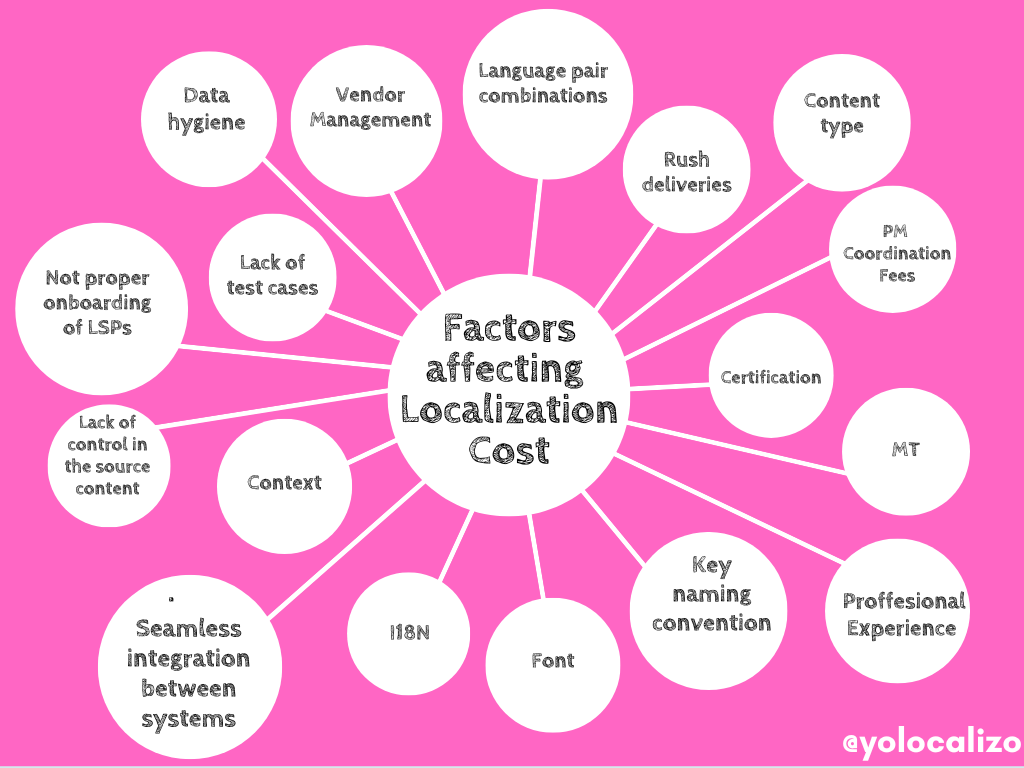
Localizing a digital product does not depend solely on translation costs per word, a cost for an hour of Localization QA, or PM fees, not by any means. Numerous factors affect the final cost of localization. This blog post delves into these factors.
The professionals of the Localization industry are usually always solving problems and putting out fires ☺️ but how do we know if we are solving the problems that we really have to solve? How do we know that we are correctly defining the problem to be solved?
How to define a problem correctly, some thoughts to focus on the right problem to solve; happy Sunday/week everyone!!
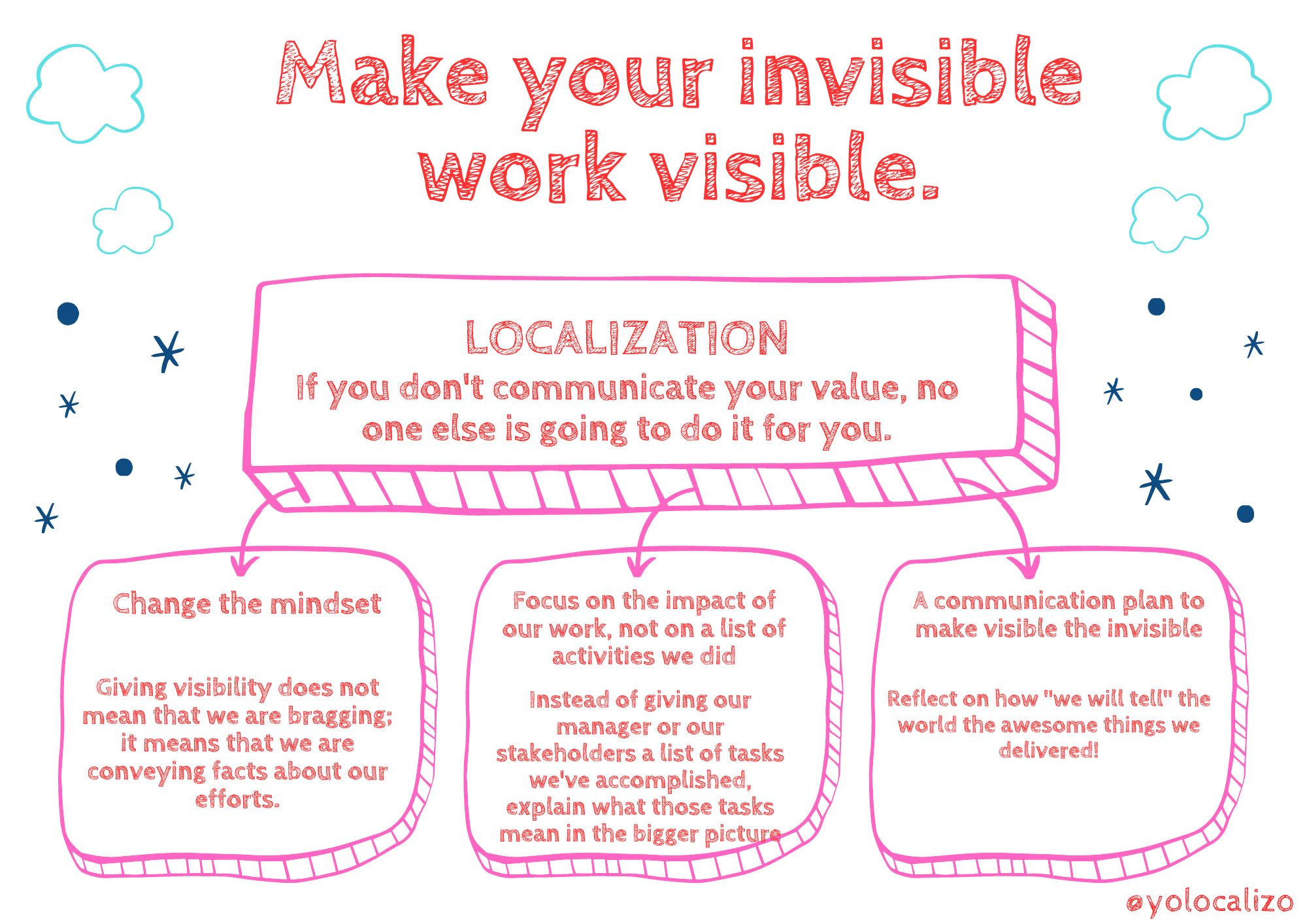
If we don't speak up about our work, no one will know. Giving visibility about the work we do is important. In this post, I give three ideas to make visible the invisible.
Imagine a world where the most crucial aspect of an RFP is not the price, flexibility, or technology offered by a language service provider (LSP), but rather the shared values and ethical standards they uphold. In such a world, what specific areas could we consider when evaluating an LSP in terms of culture and ethics?
In this post, I delved into culture and ethics, exploring the facets we can include in an RFP to investigate these areas thoroughly.
Quality, speed, and cost metrics are valid to know if my "localization house is in order," but they are not telling us anything about content effectiveness. This article teaches you how to measure content effectiveness.
While it is true that there is no magic formula to obtain a promotion and continue advancing in our Localization career, as each company, sector, and individual is different, it is equally true that certain patterns can help us become candidates for promotions when the opportunity arises.
What areas should a localization team consider to collaborate efficiently with a game publisher operating on a GaaS model?
This blog post covers the main elements you cannot ignore when considering Localization as part of GaaS
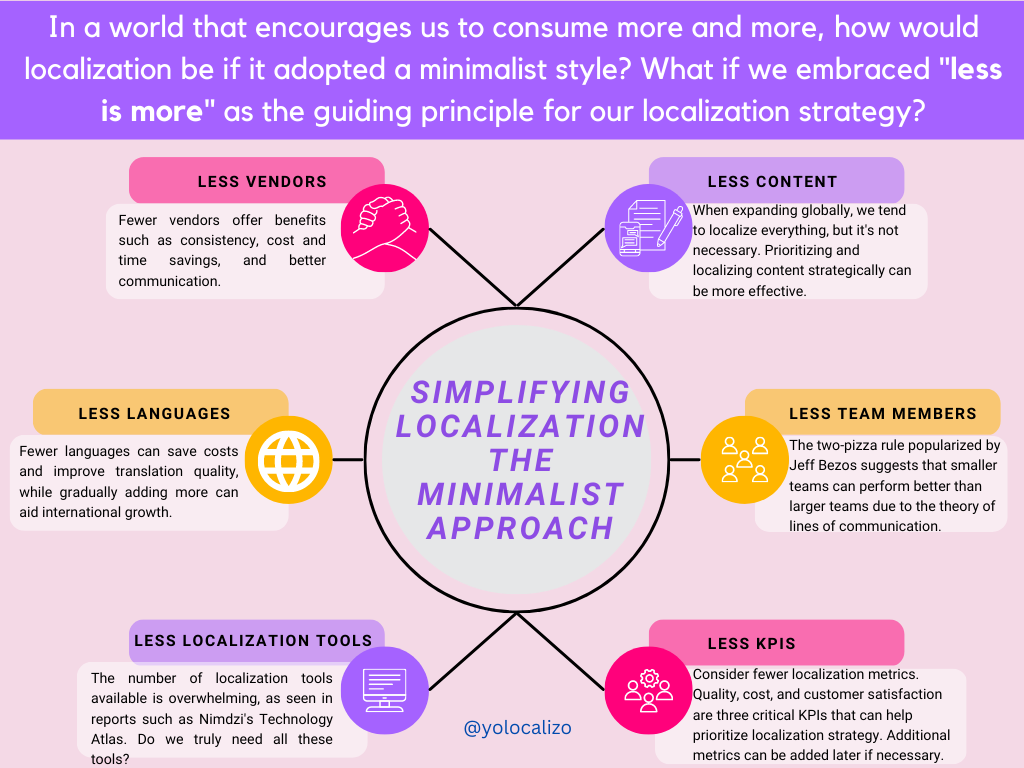
This blog post covers the essential elements that should not be missing in a localization strategy. As in minimalism in some cases, less is more regarding localization and content strategies






Localization professionals often focus on translation quality and best practices, but decision-makers care about customer impact and revenue. If we frame localization as a cost, it risks being deprioritized. Instead, we must highlight its value driving engagement, trust, and business growth.