


Culturalization is the KEY
Localising a videogame is way more than translating it from one language to another. CULTURALIZATION is the key.
Choosing a TMS is not an IT vs Localization decision. Localization understands the business problem and the workflow; IT understands the technical ecosystem. The best result comes when both work together, with clear roles, shared criteria and a selection process that looks beyond the vendor demo.
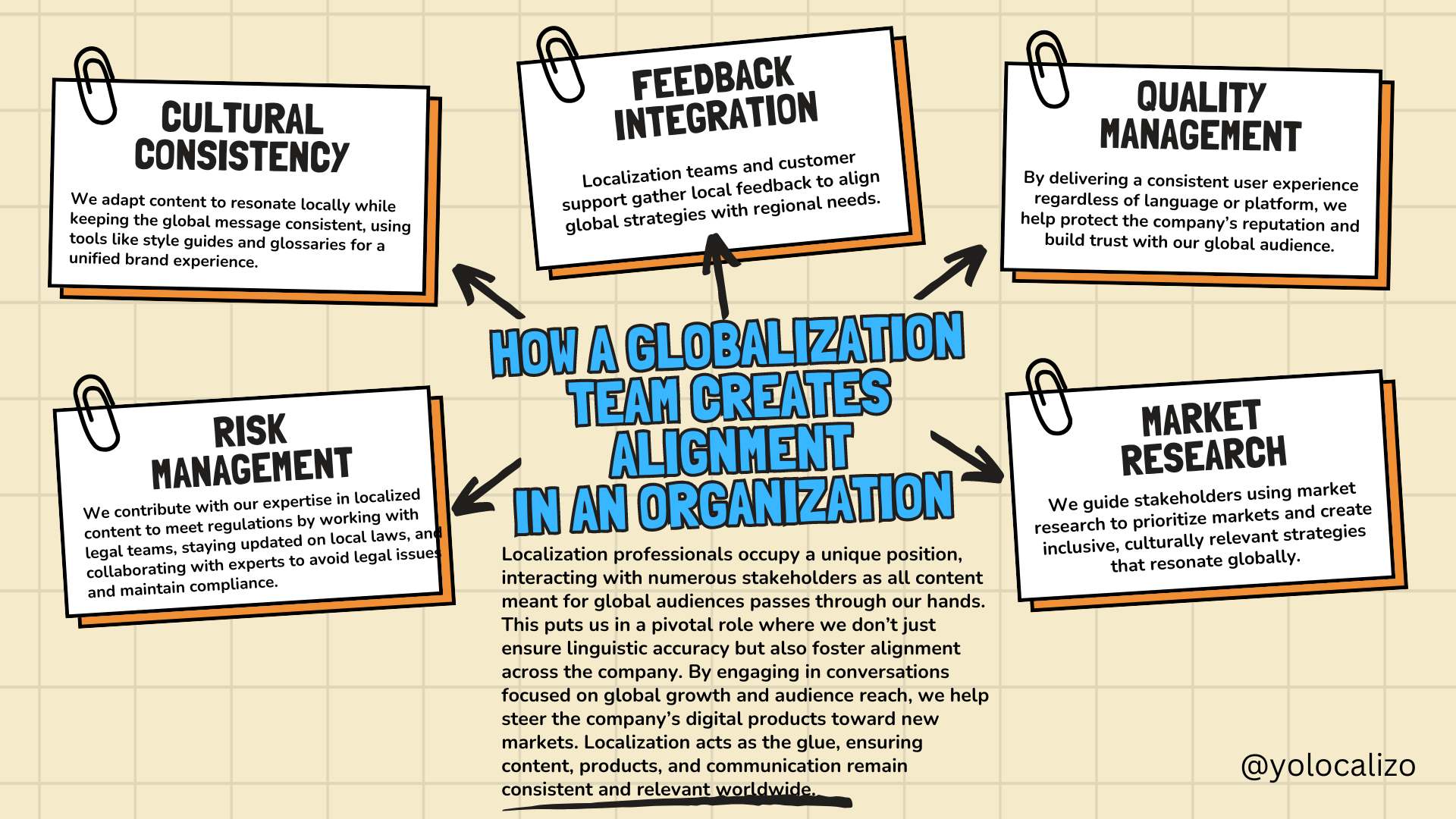
Words have the power to shape perceptions and influence actions, which is why reframing is such a powerful tool. In localization, we can reframe our role from simply translating to driving alignment across the company. By ensuring content is consistent, culturally relevant, and strategically aligned with business goals, localization professionals play a key role in helping businesses grow globally. This post explores how we create that alignment and why our work is much more than just translation.
AI is making it easier for teams to create multilingual content without going through Localization. That sounds very similar to a problem IT has been dealing with for years: shadow IT. In this post, I look at what Localization can learn from that experience and how we can keep visibility, quality and control without slowing the business down
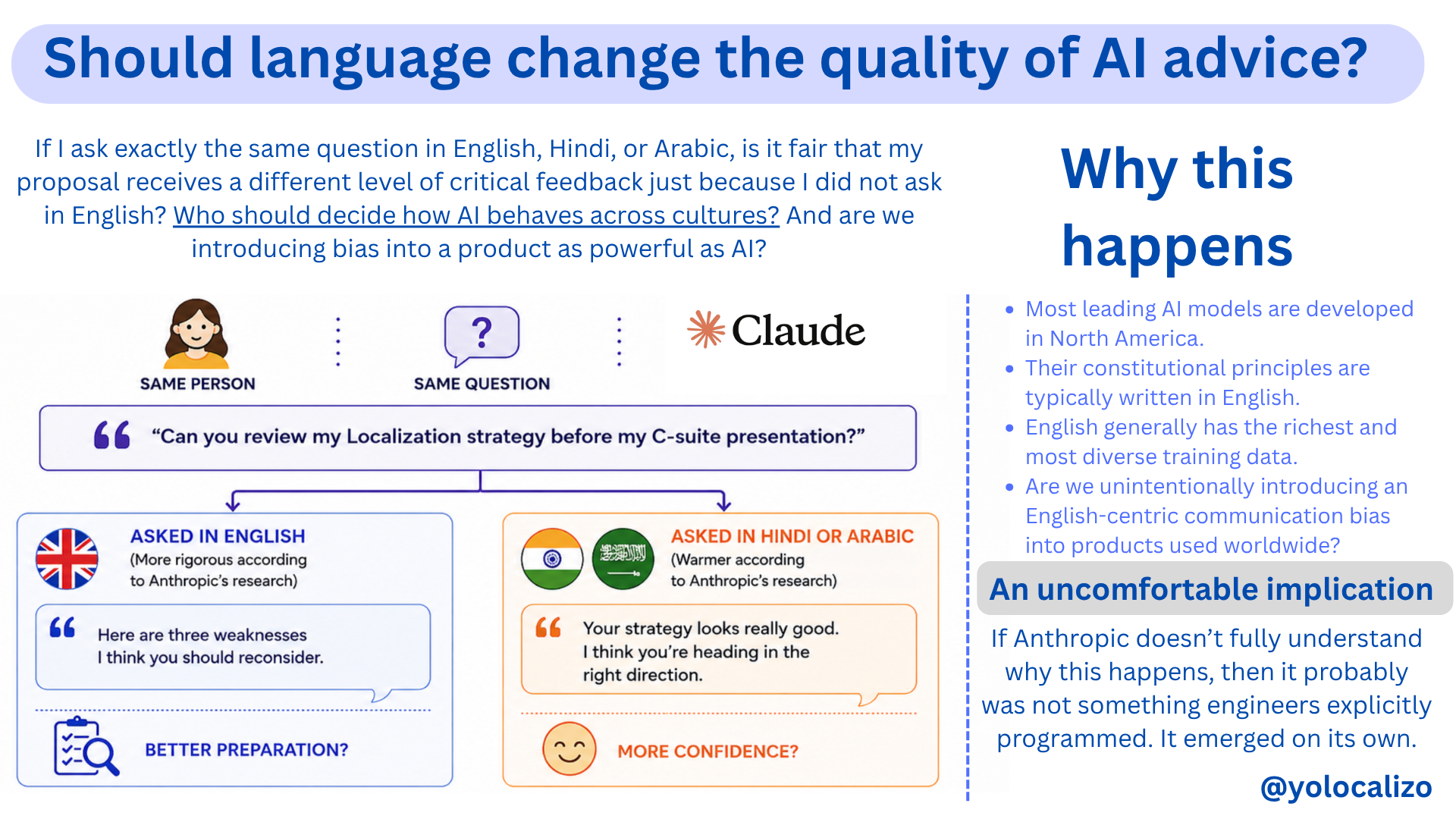
What if asking AI the same question in English, Hindi, or Arabic leads to different levels of critical feedback? Anthropic’s latest research raises fascinating questions about culture, AI behavior, and why Localization expertise may become increasingly relevant beyond translation.
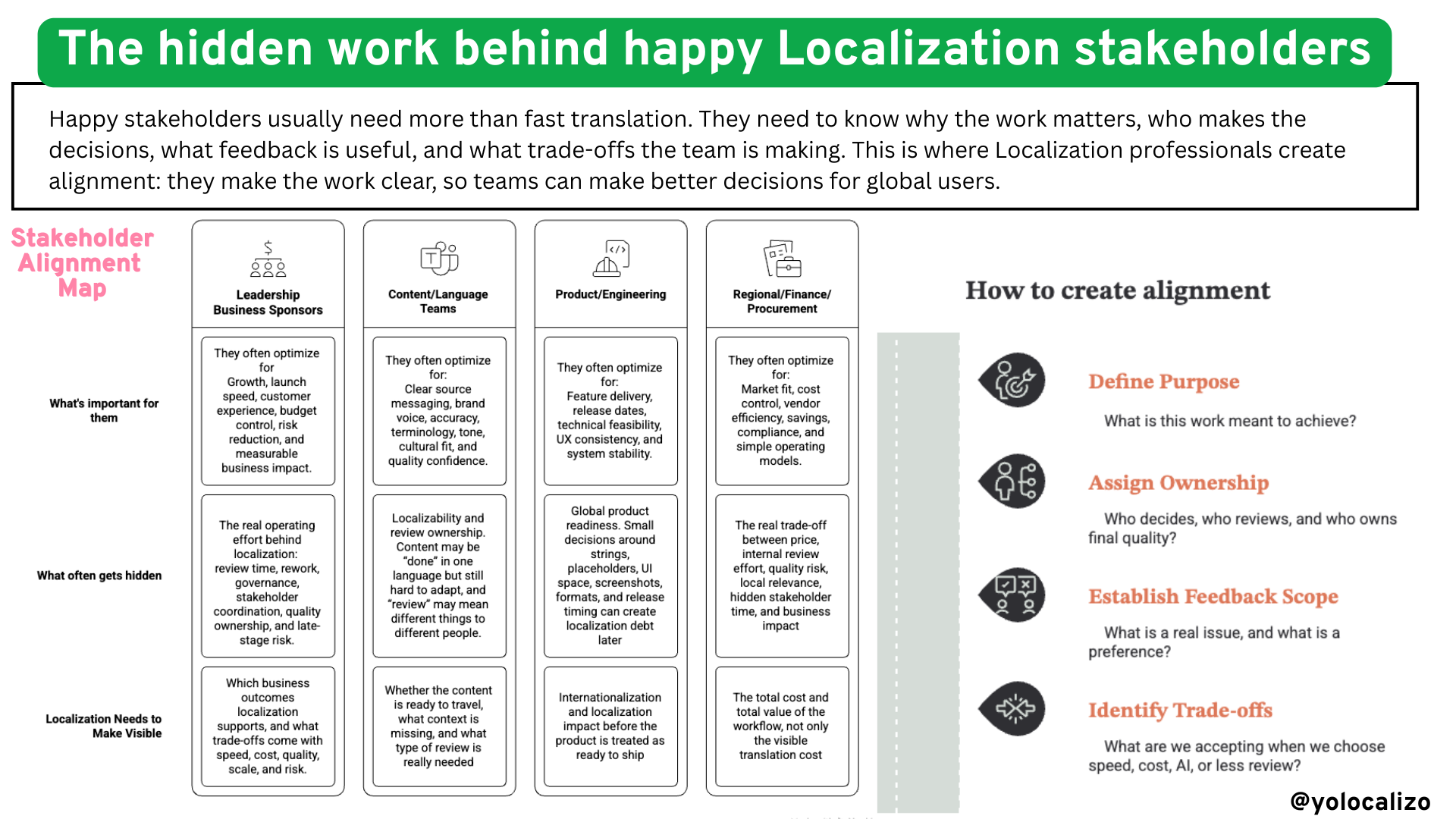
Localization Managers are often expected to keep many stakeholders happy: leadership, content teams, linguists, product teams, regional teams, finance, and procurement. But maybe happiness is not the real goal. In this post, I reflect on why stakeholder alignment matters more, and how Localization can make expectations, hidden work, ownership, and trade-offs more visible
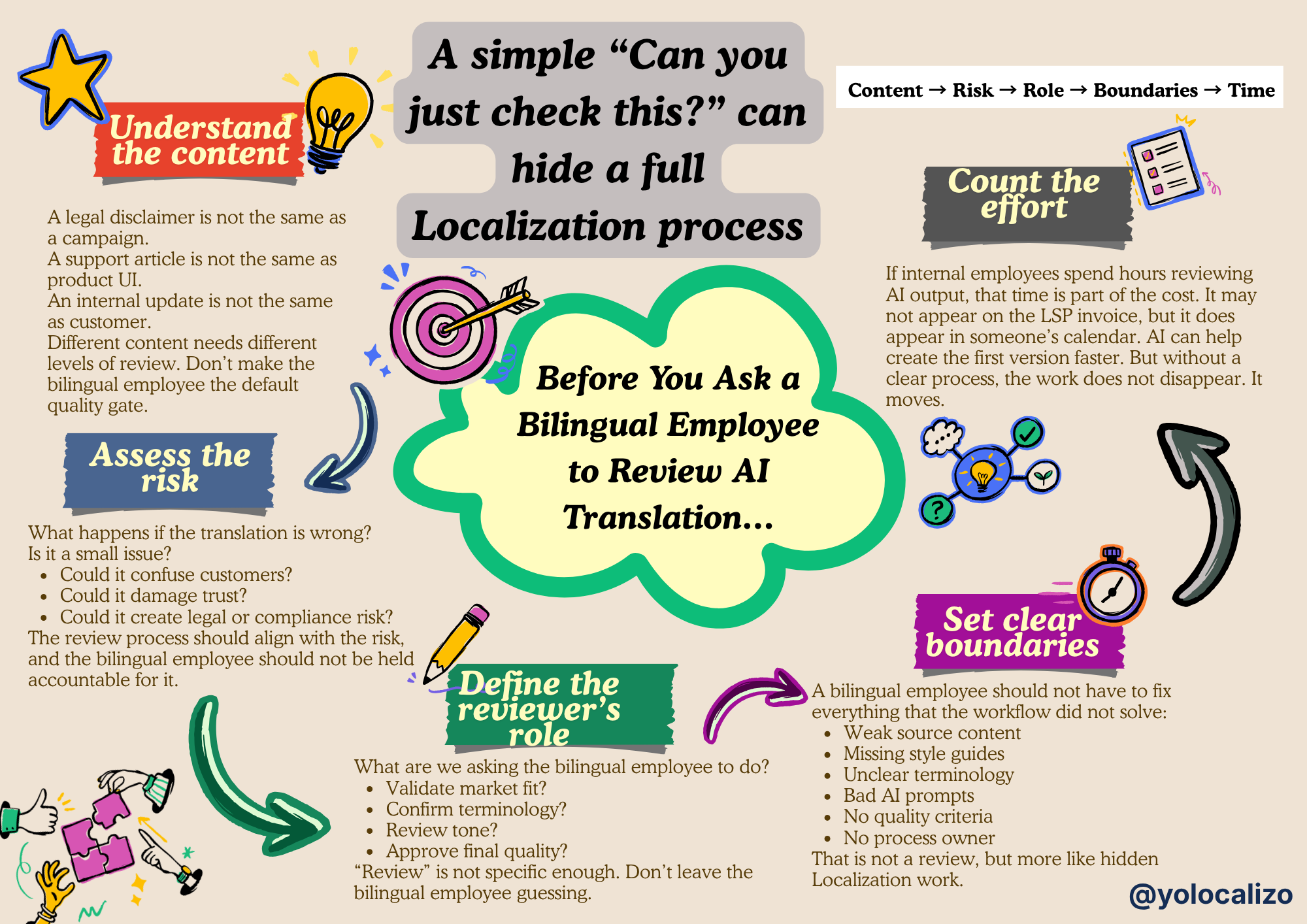
AI can help create the first translation faster, but the work does not always disappear. Sometimes it simply moves to someone else’s calendar. In this post, I reflect on the hidden cost of asking bilingual employees to review AI output without a clear process, role, or quality ownership
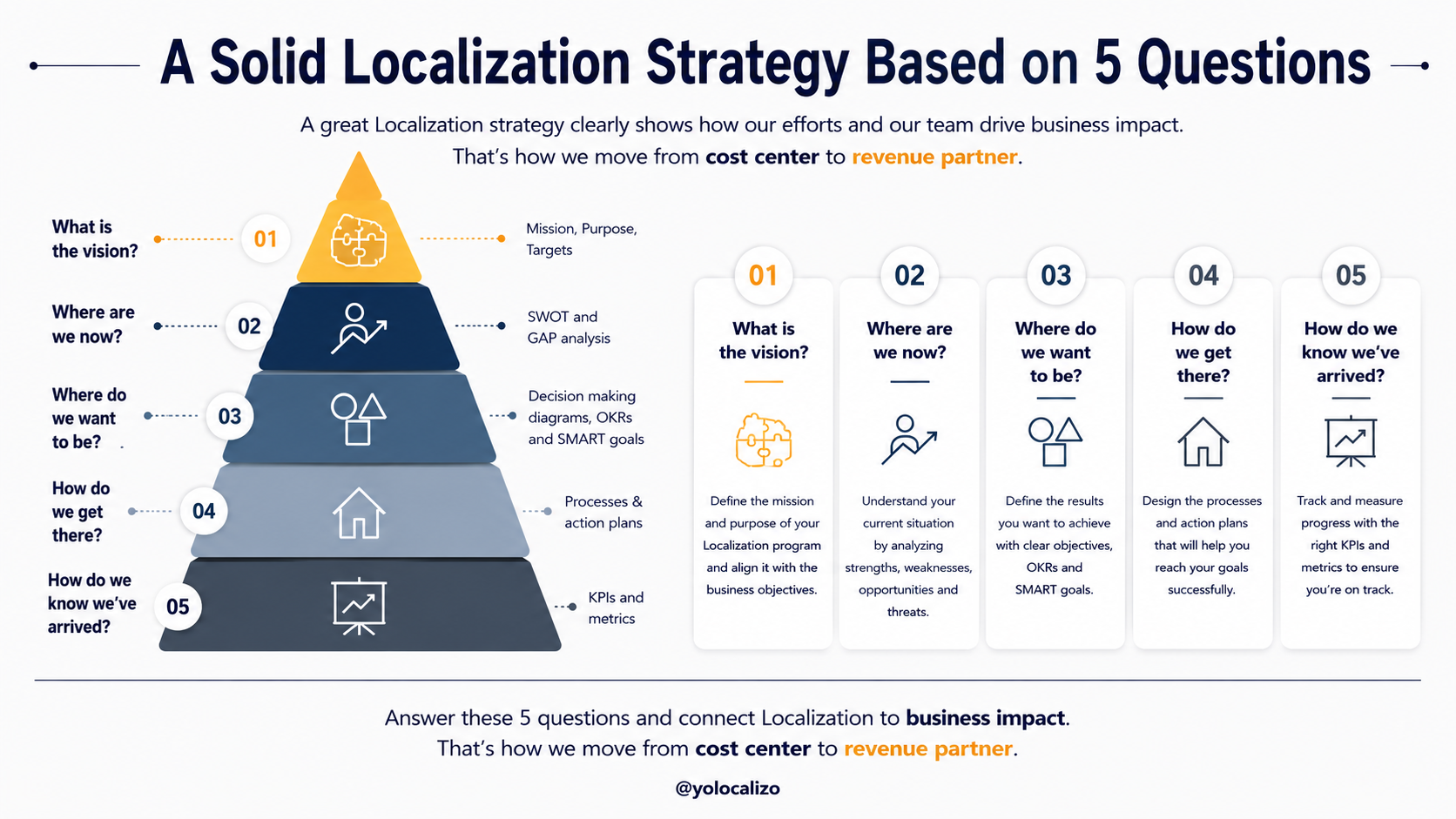
June is strategy season for many corporate teams. And for Localization, this usually means uncomfortable questions about budget, AI, workflows, markets, metrics, and business value. Before jumping into new tools or complex plans, maybe it is worth going back to the basics
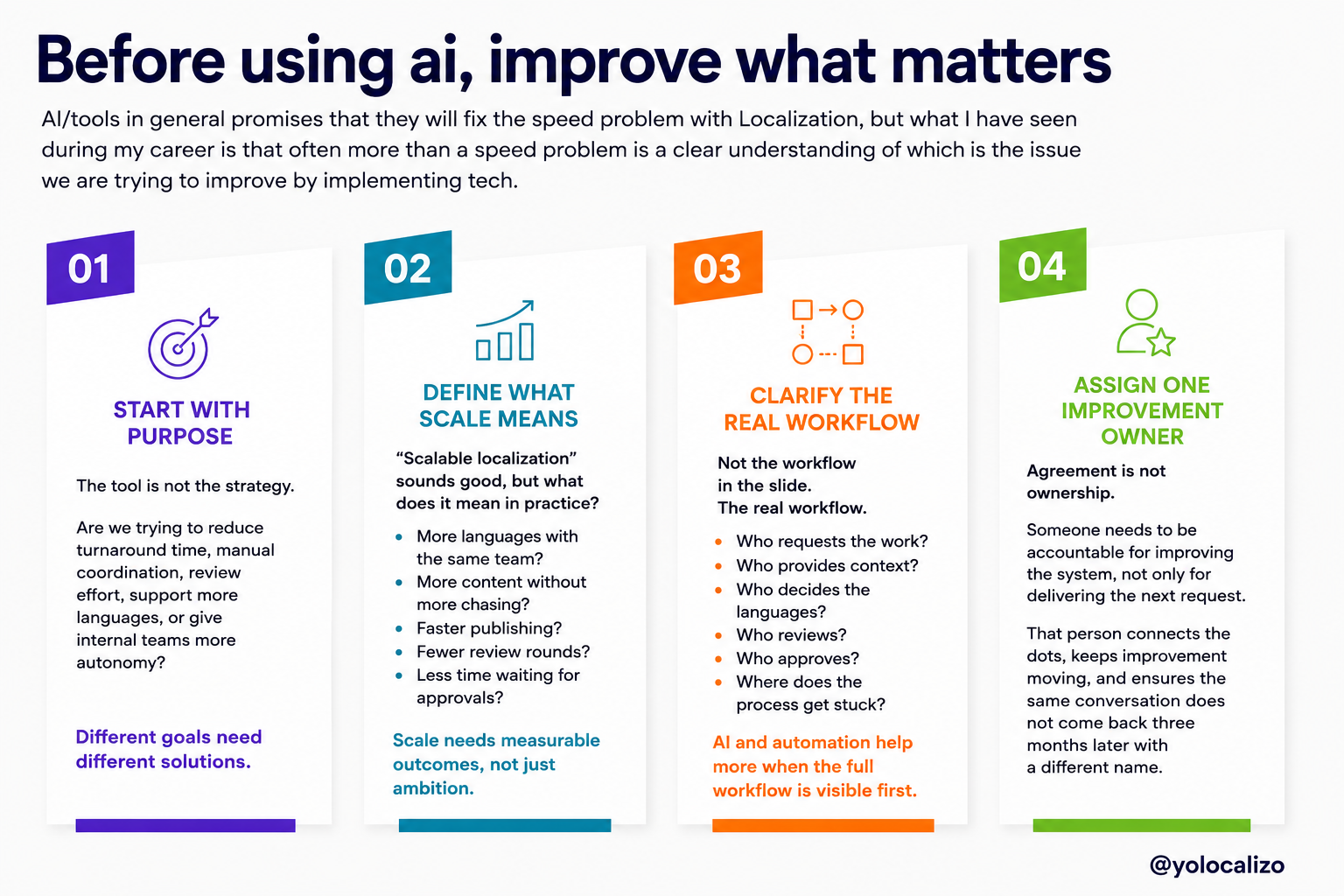
AI promises faster localization, and that message is attractive. But in many teams, the real issue is not speed. The work gets delivered. The harder question is how much hidden coordination, unclear ownership, and workflow complexity it takes to get there.
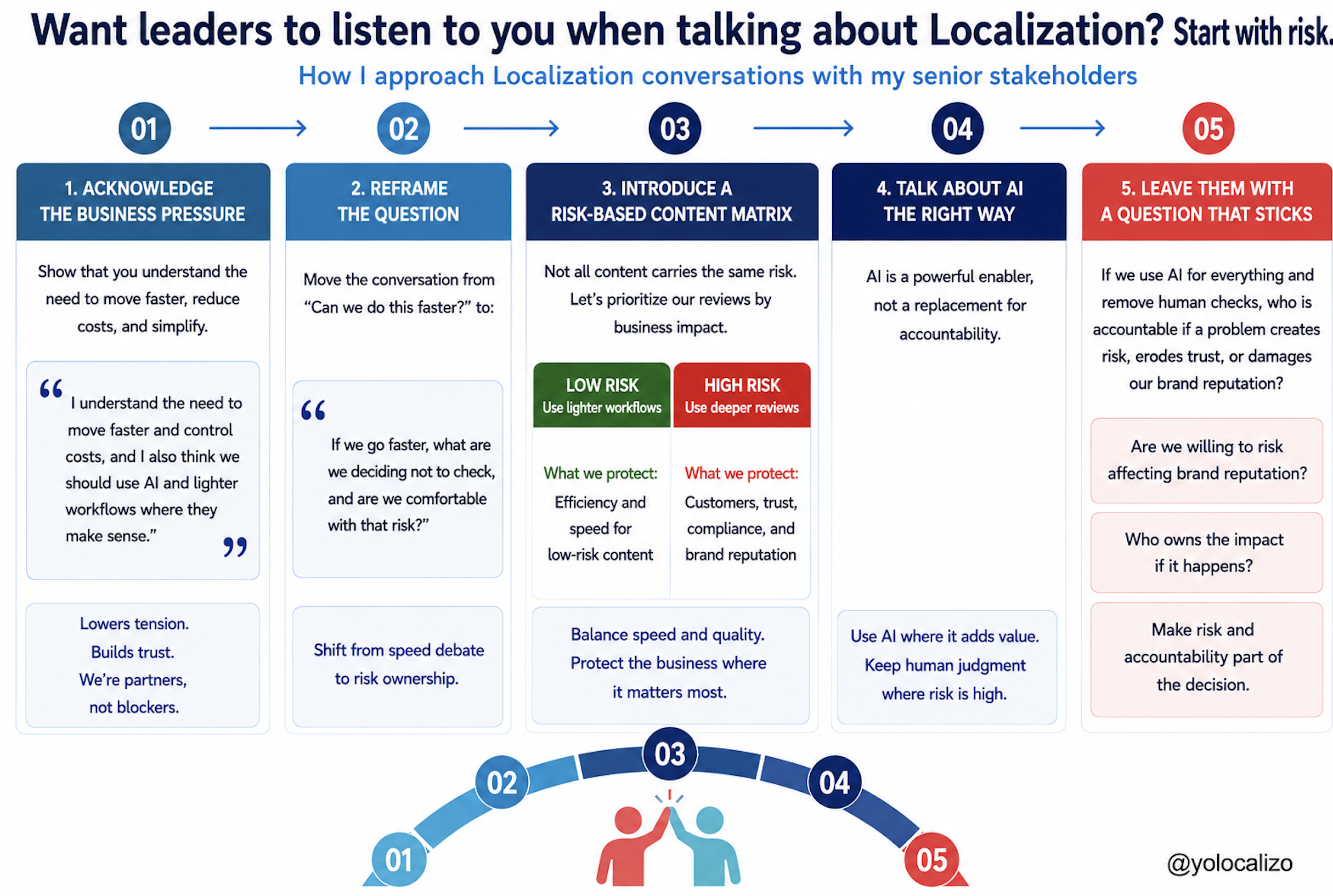
When leaders push back on localization time, resources, or AI, the strongest answer is not to defend every step of the process. It is to reframe the conversation around risk.
In this post, I explore why explaining Localization from a quality perspective, with too many process details, may not always be the best strategy when speaking with senior stakeholders.

“Welcome to my blog. The space where I document my passion about Localization, Project Management and Leadership”
Localising a videogame is way more than translating it from one language to another. CULTURALIZATION is the key.


Many companies claim to be customer-centric, but too often that promise stops at English. Surveys and focus groups are run in the US or UK and treated as if they represent the entire customer base, leaving most global customers unheard. In this post, I share a practical framework 5 audit questions to help leaders test if their strategy is truly customer-centric or just a slogan.